Structuring Multiple DSCR Loans Under Separate LLCs
September 25, 2026
•
10 min read
Table of Contents
Structuring Multiple DSCR Loans Under Separate LLCs
Real estate investors face a critical decision when building a rental portfolio: should each property be held in its own limited liability company, or can multiple properties share a single entity? This question becomes especially important when financing your acquisitions with DSCR loans, where the property's rental income drives qualification rather than your personal tax returns.
Many investors discover that using separate LLCs for each rental property DSCR loan offers meaningful protection against cross-collateralization and liability exposure. While managing multiple entities requires more administrative effort, the strategic benefits often outweigh the complexity, particularly as your portfolio grows beyond three or four doors.
The structure you choose affects not just your legal protection, but also your financing flexibility, your ability to sell individual properties, and your long-term tax planning. Getting this foundation right from the start can save you thousands in restructuring costs down the road.
Why Entity Structure Matters for DSCR Financing
DSCR loans evaluate the debt service coverage ratio by dividing gross monthly rent by monthly housing expenses, which means each property is underwritten on its own cash flow merit. This property-by-property assessment creates natural alignment with separate entity structures.
Liability isolation: When one property faces a lawsuit or claim, separate LLCs prevent creditors from accessing equity in your other rental properties, protecting the rest of your portfolio from a single bad event.
Exit flexibility: Selling a property held in its own LLC can be structured as either an asset sale or an entity sale, giving you negotiating leverage and potential tax advantages that aren't available when multiple properties share a single entity.
Lender requirements: Some DSCR lenders prefer or require single-asset entities to simplify their collateral position, making separate LLCs a financing necessity rather than just a legal preference.
Portfolio clarity: Separate entities create clean performance tracking for each property, making it easier to identify underperformers, calculate individual returns, and make informed hold-or-sell decisions as market conditions change.
The separation also matters if you ever bring in partners on specific deals. When each property sits in its own LLC, you can offer ownership stakes in individual assets without complicating your entire portfolio structure or giving partners access to properties they didn't invest in.
How Many DSCR Loans Can One LLC Hold
Lenders rarely set a hard cap on the number of DSCR loans one LLC can carry, but practical and lender-specific limits often emerge as you scale. Most DSCR lenders evaluate each loan application based on the property's individual cash flow, so technically one entity could hold multiple financed properties.
Lender portfolio limits: Individual lenders may impose their own limits on how many loans they'll extend to a single borrower or entity, often ranging from four to ten financed properties, though these thresholds vary widely across the non-QM lending landscape.
Cross-default risk: When multiple loans exist under one LLC, a default on one property might trigger cross-default clauses that affect your other loans within that entity, creating cascading problems that separate LLCs would prevent.
Equity access constraints: Holding multiple properties in one LLC can make it harder to refinance or tap equity in a single high-performing asset, since lenders see the entire entity's obligation structure rather than isolated collateral.
Administrative threshold: Beyond four or five properties in one LLC, the administrative benefits of consolidation start diminishing while the liability concentration risk keeps growing, making separate entities more attractive at that scale.
Some investors successfully operate with two or three properties per LLC as a middle-ground approach, balancing administrative simplicity against liability protection. This strategy works particularly well when properties are in the same market, have similar acquisition dates, or share operational characteristics that make combined management efficient.
Have a property in mind?
Tell us about the property and we will find the financing that fits you best.
DSCR Loan Entity Structuring for Liability Protection
Asset protection drives many investors toward separate LLCs, and DSCR loan underwriting actually supports this strategy better than conventional financing. Because DSCR loans qualify each property on its own rental income, lenders are already evaluating deals in isolation.
Single-member vs. multi-member LLCs: Single-member LLCs offer simplicity and pass-through taxation, though some states provide stronger charging order protections for multi-member structures, making the choice depend partly on your state's laws and your partnership arrangements.
Insurance coordination: Separate entities require separate insurance policies, which might increase costs slightly but also prevent one property's claim from affecting coverage or premiums across your entire portfolio.
Operating agreement discipline: Maintaining distinct operating agreements, bank accounts, and record-keeping for each LLC strengthens the legal separation, ensuring courts respect the entity barriers if litigation ever tests your structure.
State filing considerations: Each LLC requires its own state filing fees and annual reports, with costs varying significantly by state, some charging under one hundred dollars annually while others run several hundred to over a thousand dollars per entity depending on the state.
The liability protection only works if you maintain corporate formalities. Commingling funds between entities, using one LLC's account to pay another's expenses, or failing to document major decisions can pierce the corporate veil and expose your personal assets despite the formal structure.
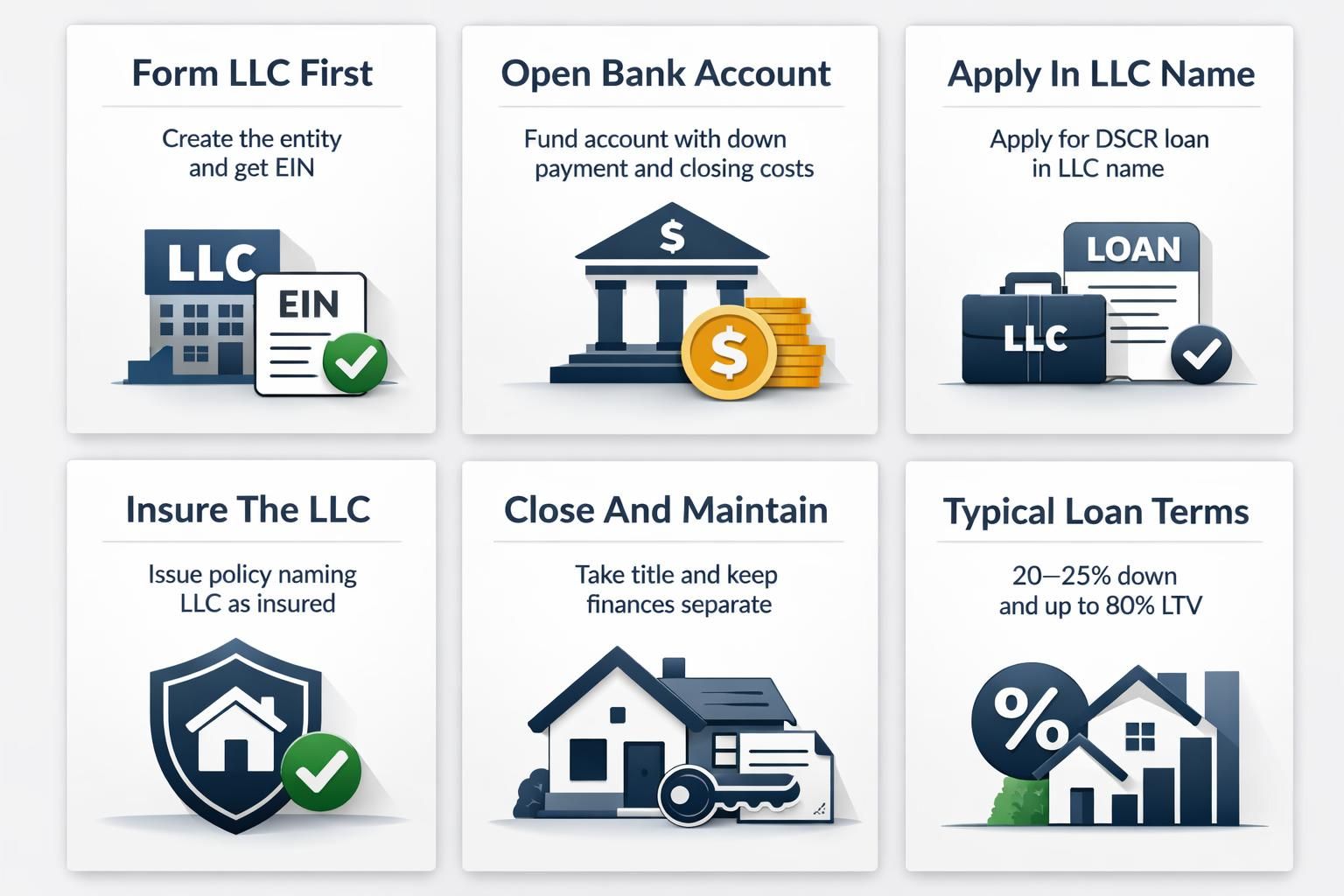
Steps to Structure Your First Separate LLC DSCR Loan
Setting up your first DSCR loan under a dedicated LLC involves more upfront work than using your personal name, but the process becomes routine once you've done it a few times. Getting the sequence right prevents delays and ensures clean title transfer.
Step 1: Form the LLC before making your offer. Create the entity in your target property's state and obtain the federal EIN immediately, so your purchase contract can be written in the LLC's name from the start rather than requiring assignment later.
Step 2: Open a dedicated business bank account. Fund the account with your down payment and closing costs well before your closing date, establishing a clear money trail that separates this investment from your personal finances and other properties.
Step 3: Apply for the DSCR loan in the LLC's name. Most DSCR lenders will require you to personally guarantee the loan even when the LLC is the borrower, but having the entity as the primary obligor keeps the debt off your personal credit in many cases.
Step 4: Secure insurance with the LLC as named insured. Coordinate with your insurance agent to have the policy issued to the LLC before closing, with the lender named as mortgagee, ensuring compliance with your loan terms from day one.
Step 5: Close and maintain separation. Take title in the LLC name, deposit all rental income into the LLC account, pay all property expenses from that same account, and never mix this property's funds with other entities or personal accounts.
DSCR loans typically require 20% to 25% down, with up to 75% to 80% LTV, and generally accept credit scores as low as 620 with a minimum DSCR ratio around 1.0. These figures can change based on market conditions and individual lender criteria, so confirm current terms directly with Trulo Mortgage before finalizing your entity structure and purchase plans.
Series LLC vs Separate LLC for DSCR Loans
A handful of states permit series LLC structures, where one master LLC contains multiple internal series that function as separate liability shields. This structure sounds ideal for rental investors managing multiple DSCR loans, but practical challenges often make traditional separate LLCs the better choice.
The series LLC appeal: You file and maintain just one master entity with the state, potentially saving on formation costs and annual fees, while each series theoretically provides the same liability isolation as a standalone LLC. Each property would be held by its own series within the umbrella structure.
Lender acceptance issues: Many DSCR lenders and title companies remain unfamiliar with series LLCs or refuse to work with them due to legal uncertainties, making it harder to close loans and potentially limiting your lender options to a smaller pool.
Interstate complications: Series LLCs formed in one state may not receive liability protection recognition in other states where you own property, creating gaps in your asset protection strategy if you invest across state lines.
Untested case law: Court decisions on whether series truly provide separate liability protection remain limited in many jurisdictions, meaning you're relying on a legal theory that hasn't been thoroughly stress-tested in litigation.
Tax uncertainty: The IRS hasn't provided definitive guidance on whether each series should file separately or as part of the master LLC, creating compliance ambiguity that most accountants recommend avoiding.
For most investors, the potential administrative savings of a series LLC get outweighed by the financing friction and legal uncertainty. Separate traditional LLCs cost more to maintain but offer predictable legal protection, broader lender acceptance, and clearer tax treatment that's been established through decades of case law and IRS practice.
Structuring multiple DSCR loans under separate LLCs delivers powerful liability protection and portfolio flexibility that often justifies the additional administrative work. While managing several entities requires more discipline around bookkeeping and corporate formalities, the isolation of risk and financing independence for each property creates a foundation for sustainable long-term growth.
The choice between separate LLCs, consolidated structures, or hybrid approaches depends on your portfolio size, geographic diversity, and risk tolerance. Investors with fewer than three properties might find the entity overhead premature, while those operating five or more rental units typically benefit from the separation regardless of the extra effort involved.
As DSCR lending continues gaining traction in the non-QM market, lenders are becoming increasingly comfortable with single-asset entity structures that align with their underwriting focus on individual property cash flow. This trend makes separate LLCs easier to finance today than they were just a few years ago, removing a barrier that once pushed investors toward consolidated structures.
Before you purchase your next rental property, take time to evaluate whether your current entity structure still serves your growing portfolio. If you're ready to explore how DSCR financing can support your expansion plans across multiple properties and entities, get a personalized DSCR loan quote and discuss your specific structuring goals with experienced investor-focused lenders.
The right structure protects what you've built while positioning you to scale efficiently. Don't let entity confusion slow your momentum or expose your portfolio to unnecessary risk.