What Is a DSCR Loan Term Sheet and How to Read One
Real estate investors know that DSCR loans offer a unique advantage: they qualify based on rental income rather than personal tax returns or W2s. This structure opens doors for investors managing multiple properties or those with non-traditional income streams. But before closing on any DSCR loan, you'll receive a term sheet, a critical document that outlines every aspect of your financing arrangement.
A term sheet is your first detailed look at loan terms, costs, and conditions. Unlike informal quotes or marketing materials, this document lays out binding expectations for interest rates, loan-to-value ratios, prepayment penalties, closing costs, and more. Reading it carefully can save you thousands of dollars and prevent surprises during or after closing.
Many investors skim this document or assume all term sheets are the same. That's a mistake. Understanding what is a DSCR loan term sheet and how to read one is essential for protecting your investment returns and comparing offers from different lenders. This guide breaks down every section you need to evaluate, the red flags that signal trouble, and how to use your term sheet to negotiate better terms.
What a DSCR Loan Term Sheet Actually Contains
A term sheet is the lender's formal summary of the loan structure they're willing to offer. It's typically a one- to three-page document that arrives after you've submitted property details and basic financial information but before you receive a full loan estimate or commitment letter.
Here's what you'll typically find on a DSCR loan term sheet:
Loan amount and LTV: The total financing offered and the loan-to-value ratio. DSCR loans typically require 20% to 25% down, up to 75% to 80% LTV, though these figures can vary by lender and property type.
Interest rate and rate type: Whether the rate is fixed or adjustable, the starting rate, and any rate caps or adjustment periods. Some lenders also indicate whether the rate includes points or broker fees.
Loan term and amortization: The length of the loan, such as a 30-year fixed or 5-year adjustable-rate mortgage, and whether it fully amortizes or includes a balloon payment.
DSCR requirement: The minimum debt service coverage ratio the property must meet. Many lenders require a DSCR of at least 1.0, meaning the property's rental income must cover or exceed the monthly debt payment.
Credit score and reserve requirements: Minimum credit score, often around 620 for DSCR loans, and the number of months of reserves (cash or liquid assets) you'll need to hold at closing.
The term sheet may also list prepayment penalties, closing cost estimates, lock period, and conditions for final approval. Each element affects your cash flow, equity position, and exit strategy.
Understanding Rate and Terms on a DSCR Loan Term Sheet
Interest rates and loan terms are the heart of any term sheet. They determine your monthly payment, total interest cost, and how long you're committed to the loan structure.
Key rate and term details to examine closely include:
Fixed vs. adjustable: A fixed-rate DSCR loan locks in your rate for the entire term, providing predictable cash flow. An adjustable-rate mortgage (ARM) typically starts with a lower rate but can increase after an initial period, which may work well if you plan to sell or refinance within a few years.
Points and origination fees: Some lenders offer a lower rate in exchange for upfront points (each point equals 1% of the loan amount). Calculate whether paying points improves your return, especially if you plan to hold the property long term.
Rate lock period: The term sheet should specify how long your rate is guaranteed. A 30-day lock may expire before closing if your deal is complex, forcing you to accept a higher rate or pay a lock extension fee.
Amortization schedule: Most DSCR loans amortize over 30 years, meaning your monthly payment includes both principal and interest. Some loans, particularly shorter-term options, may have interest-only periods or balloon payments that require full repayment or refinancing at a specific date.
Don't assume the advertised rate matches the rate on your term sheet. Rates depend on your credit score, property type, loan size, and market conditions. Always confirm whether the rate includes all fees and what scenarios might trigger rate adjustments.
Have a property in mind?
Tell us about the property and we will find the financing that fits you best.
What to Check Before Signing a DSCR Loan Term Sheet
Signing a term sheet often triggers a non-refundable deposit and locks you into the lender's process. Before you commit, verify every detail and compare it against your investment goals.
Critical items to review include:
Prepayment penalties: Many DSCR loans include penalties if you pay off the loan early, especially within the first three to five years. These penalties can range from a few months of interest to a percentage of the remaining balance. If you plan to refinance or sell soon, negotiate for lower or no prepayment penalties.
Reserve requirements: Lenders may require you to hold several months of mortgage payments in reserve at closing. High reserve requirements can tie up cash you'd rather deploy into additional properties or renovations.
Property eligibility and occupancy: Confirm the term sheet covers the property type and occupancy status you intend. Some lenders restrict certain property classes, such as non-warrantable condos or properties with commercial use, or require the property to be rented within a specific timeframe.
Appraisal and inspection contingencies: The term sheet should outline what happens if the appraisal comes in below the purchase price or if inspections reveal costly repairs. Understand whether you can renegotiate terms or walk away without losing your deposit.
Also, double-check the closing cost estimate. Term sheets typically include lender fees, title insurance, escrow setup, and appraisal costs. If the estimate seems low, ask for an itemized breakdown to avoid surprises at the closing table.
Term Sheet vs Loan Estimate for DSCR Loans
Investors often confuse term sheets with loan estimates, but they serve different purposes and arrive at different stages of the financing process.
Here's how they differ:
Timing: A term sheet arrives early, often within days of submitting basic property and financial information. A loan estimate is a standardized federal disclosure that lenders must provide within three business days of receiving a full loan application.
Detail level: Term sheets are brief and highlight key loan terms such as rate, LTV, and DSCR requirement. Loan estimates are comprehensive, multi-page documents that break down every fee, payment schedule, and closing cost in a standardized format.
Legal weight: A term sheet is a preliminary agreement, often non-binding or binding only on specific points like rate lock and deposit. A loan estimate is a regulated disclosure designed to help borrowers compare offers and understand total costs.
Purpose: The term sheet helps you decide whether to proceed with a lender before investing time and money into a full application. The loan estimate provides the detailed data you need to finalize your decision and prepare for closing.
Because DSCR loans are often classified as non-qualified mortgages (non-QM), not all lenders follow the same disclosure rules as traditional residential lenders. Some may provide only a term sheet and a settlement statement, skipping the standardized loan estimate. If that's the case, ask for a detailed fee breakdown in writing to ensure transparency.
Red Flags to Look for in a DSCR Loan Term Sheet
Not all term sheets are created equal. Some contain hidden costs, unfavorable terms, or vague language that can hurt your investment returns or lock you into a bad deal.
Watch out for these warning signs:
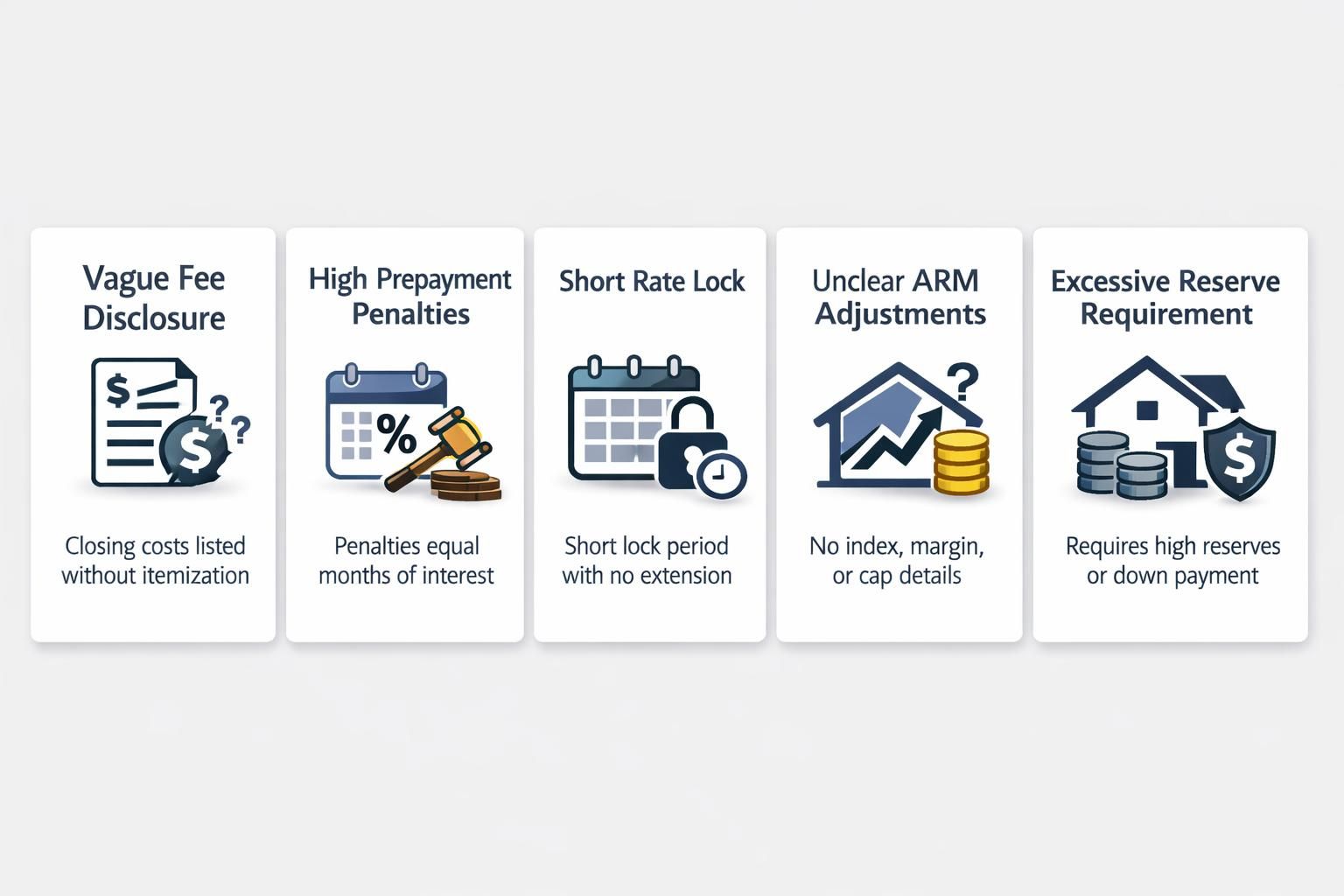
Vague or missing fee disclosures: If the term sheet lists a single lump sum for closing costs without itemization, ask for details. Hidden fees such as processing charges, underwriting fees, or administrative costs can add thousands to your out-of-pocket expense.
Unusually high prepayment penalties: A prepayment penalty equal to six months of interest or more is a red flag, especially if it extends beyond three years. This restriction limits your flexibility and can make refinancing or selling prohibitively expensive.
Short rate lock with no extension option: A 15- or 30-day rate lock may not give you enough time to close, particularly if appraisals or title work take longer than expected. Confirm whether the lender offers a lock extension and at what cost.
Low initial rate with unclear adjustment terms: Some adjustable-rate DSCR loans advertise an attractive starting rate but lack clear details on how and when the rate adjusts. If the term sheet doesn't specify index, margin, caps, or adjustment frequency, request clarification in writing.
Excessive reserve or down payment requirements: While DSCR loans typically require 20% to 25% down, some lenders may demand higher equity or reserves without justification. Compare offers to ensure you're not overpaying for risk mitigation.
If any term feels unclear, pushy, or inconsistent with what you were told verbally, pause and ask questions. A reputable lender will provide clear answers and adjust the term sheet if needed. Conversely, if a lender resists transparency or pressures you to sign quickly, consider that a serious red flag.
A DSCR loan term sheet is more than just a formality. It's the blueprint for your financing arrangement and a critical checkpoint before you commit capital, time, and energy to a deal. By understanding what is a DSCR loan term sheet and how to read one, you gain the clarity to compare offers, spot red flags, and negotiate terms that support your investment strategy.
Take the time to review every section, from interest rates and LTV to prepayment penalties and reserve requirements. Ask questions when language is vague, and don't hesitate to walk away if the terms don't align with your goals. The best investors treat the term sheet as a negotiation tool, not a take-it-or-leave-it document.
Remember, the figures and terms outlined here, including typical down payments of 20% to 25%, LTV up to 75% to 80%, and minimum credit scores around 620, can vary by lender, property, and market conditions. Always confirm current terms and program details directly with your lender before making any financing decisions.
If you're ready to explore DSCR loan options tailored to real estate investors, get a personalized DSCR loan quote and see how the right financing can accelerate your portfolio growth.