Managing a growing rental property portfolio often means juggling multiple mortgages, each with its own rate, terms, and monthly payment schedule. For real estate investors looking to streamline their financing and reduce administrative overhead, one DSCR loan rate for multiple properties offers a compelling alternative. This approach, commonly referred to as a portfolio or blanket DSCR loan, allows you to finance several rental properties under a single loan structure with one consolidated payment.
Instead of tracking separate closing dates, interest rates, and underwriting requirements for each property, portfolio DSCR loans bundle your holdings into a unified financial product. The underwriting process evaluates a blended debt service coverage ratio across all properties, meaning the combined rental income from your entire portfolio is used to qualify for the loan. This can open doors for investors who might struggle to qualify individually on weaker-performing assets but whose overall portfolio cash flow is strong.
In this guide, we'll break down exactly how combining several rentals under a single loan works, the key advantages and potential drawbacks, and what you need to know before pursuing this strategy. Whether you're managing three units or fifteen, understanding portfolio DSCR financing can help you make smarter decisions about scaling your investment business.
What a Portfolio DSCR Loan Actually Means
A portfolio or blanket DSCR loan is a specialized mortgage product designed specifically for real estate investors who own or are acquiring multiple rental properties. Rather than securing individual loans for each asset, this structure places all properties under one loan with a single interest rate and monthly payment.
Single loan, multiple properties: The loan is secured by a blanket lien across all included properties, meaning each asset serves as collateral for the entire debt. If you default, the lender has recourse to any or all properties in the portfolio.
Blended underwriting approach: Lenders calculate a combined debt service coverage ratio by dividing the total gross rental income from all properties by the total debt obligation. This blended DSCR determines loan eligibility and terms, allowing stronger performers to offset weaker ones.
Streamlined management: Instead of managing multiple closing processes, appraisals, and payment schedules, you consolidate everything into a single loan file. This reduces paperwork, simplifies accounting, and often lowers overall closing costs compared to financing each property separately.
Flexibility in portfolio composition: Portfolio loans can include a mix of property types, such as single-family homes, small multifamily units, and even some commercial rentals, depending on lender guidelines. This versatility makes them attractive for diversified investors.
The blended DSCR model is central to how these loans work. DSCR itself is calculated by dividing the property's gross monthly rental income by its monthly debt service, which includes principal, interest, taxes, insurance, and sometimes HOA fees. In a portfolio loan, the lender sums the rental income across all properties and divides it by the total monthly debt obligation. A ratio above 1.0 indicates the portfolio generates enough income to cover its debt, with most lenders requiring a minimum blended DSCR between 1.10 and 1.25 depending on loan-to-value and other risk factors.
This structure is particularly useful for investors who have acquired properties over time and want to refinance them together, or for those purchasing multiple units simultaneously. It's not a one-size-fits-all solution, but for the right investor with the right portfolio, it can be a powerful tool.
Core Benefits of Combining Rentals Under One Loan
Consolidating multiple rental properties under one DSCR loan rate offers several operational and financial advantages that can significantly improve how you manage and scale your investment business.
Simplified cash flow management: With one loan payment each month instead of several, tracking expenses and projecting cash flow becomes far easier. This also simplifies tax preparation and financial reporting, especially if you're working with a bookkeeper or CPA.
Lower overall closing costs: Financing properties individually means paying appraisal fees, title insurance, origination fees, and other closing costs multiple times. A portfolio loan consolidates these expenses, often resulting in meaningful savings, particularly for larger portfolios.
Improved qualification through blending: If one or two properties in your portfolio have lower rental income or higher vacancy risk, their weaker individual DSCRs might prevent standalone financing. In a portfolio loan, stronger properties can offset weaker ones, allowing you to qualify based on the combined performance of the entire group.
Faster scaling and acquisition: Portfolio loans can be structured to include future acquisitions through a revolving credit structure or cross-collateralization agreements. This allows you to add properties to the loan over time without going through a full refinance each time, speeding up your growth trajectory.
These benefits are most pronounced for investors who already own several cash-flowing properties and are looking to optimize their capital structure. By consolidating debt, you free up mental bandwidth and reduce the risk of missing a payment or losing track of a renewal date. It also positions you better for future financing, since lenders typically view borrowers with consolidated, well-managed portfolios as lower risk than those juggling a patchwork of individual loans.
However, the advantages depend heavily on your portfolio's overall performance. If your combined rental income doesn't meet the lender's minimum DSCR threshold, or if property values have declined, you may struggle to qualify. It's essential to run the numbers carefully before committing to this approach.
How Lenders Evaluate One DSCR Loan Rate for Multiple Properties
Underwriting a portfolio DSCR loan involves a different process than evaluating individual property loans. Lenders focus heavily on the combined financial performance of all properties rather than analyzing each one in isolation.
Blended DSCR calculation: The lender totals the gross monthly rental income from all properties and divides it by the total monthly debt service for the proposed loan. This blended ratio must meet or exceed the lender's minimum threshold, typically ranging from 1.10 to 1.25. Properties with strong cash flow can compensate for those with weaker performance.
Loan-to-value considerations: Just like individual DSCR loans, portfolio loans are subject to maximum LTV limits, often between 70% and 80% depending on the number of properties, property types, and borrower experience. The LTV is calculated based on the combined appraised value of all properties in the portfolio.
Portfolio diversity and risk: Lenders may evaluate geographic concentration, property type mix, and tenant quality. A portfolio spread across multiple markets with diverse property types may be viewed more favorably than one concentrated in a single neighborhood or consisting entirely of similar units.
Borrower experience and reserves: Since portfolio loans represent larger exposures, lenders often require investors to demonstrate prior experience managing multiple properties and maintain higher cash reserves, sometimes six to twelve months of debt service, to cover unexpected vacancies or repairs.
The blended DSCR approach creates opportunities but also introduces complexity. For example, if you're adding a newly acquired property with no rental history, the lender will typically use market rent estimates based on comparable properties in the area. If those estimates are conservative, they could drag down your blended DSCR and affect your rate or loan approval.
Interest rates for portfolio DSCR loans can vary based on the same factors that influence individual DSCR loans: credit score, LTV, DSCR, property type, and loan term. Rates typically fall within a competitive range, and for qualified investors with strong portfolios, they may be comparable to or even better than the weighted average of multiple individual loans. Trulo Mortgage offers DSCR loan rates ranging from 6.25% to 8.00%, depending on these underwriting factors.
Step-by-Step: Securing a Portfolio DSCR Loan
Applying for one DSCR loan rate for multiple properties requires careful preparation and documentation. Here's how the process typically unfolds from initial inquiry to closing.
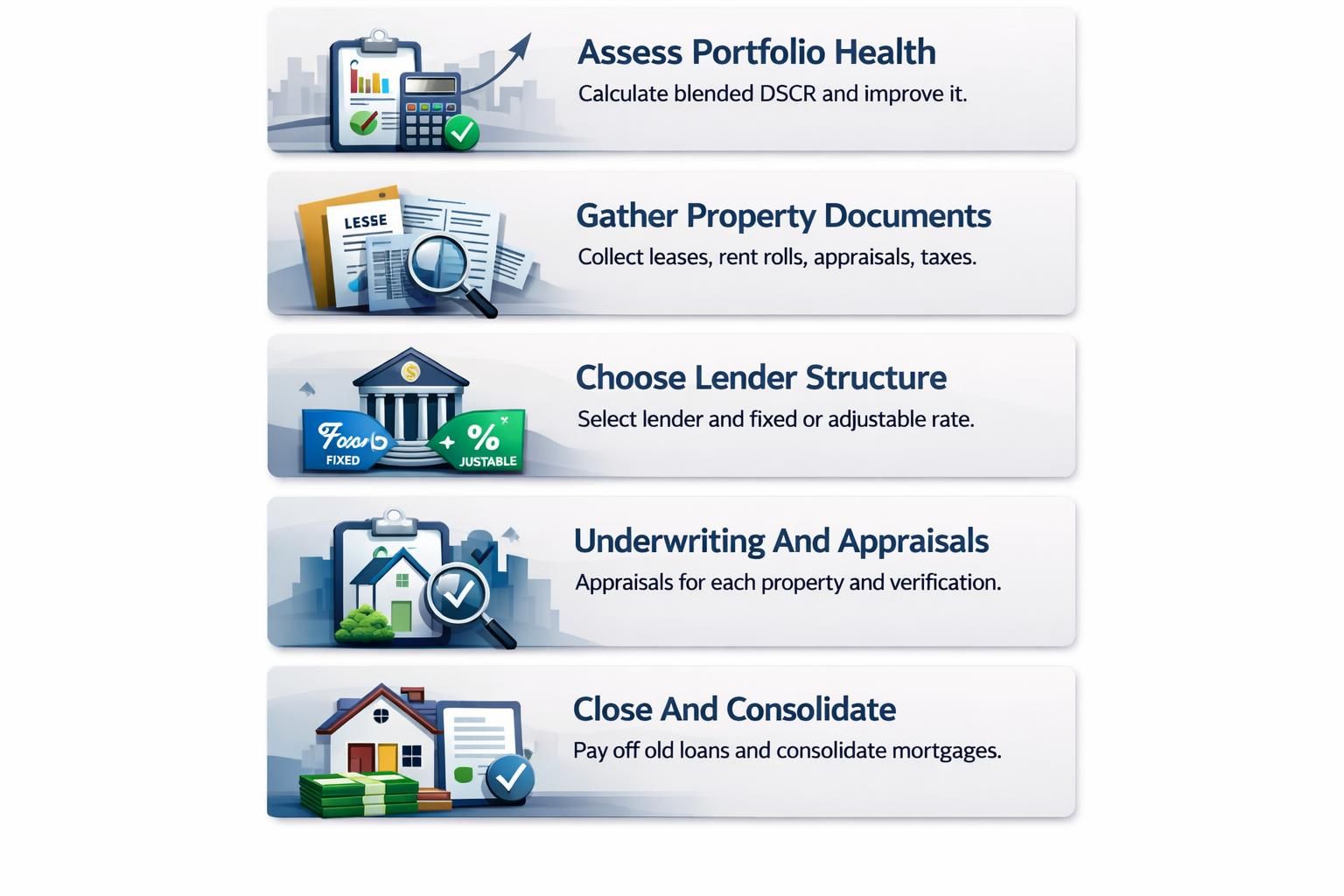
Assess your portfolio's financial health: Before approaching a lender, calculate the blended DSCR for your properties. Add up the gross monthly rental income from all units, then divide by the estimated total monthly debt service for the proposed loan. If your ratio falls below 1.10, consider whether you can increase rents, reduce debt, or exclude weaker properties to improve the blended figure.
Gather documentation for all properties: Lenders will require lease agreements, rent rolls, property tax records, insurance policies, and recent appraisals or broker price opinions for each property. You'll also need to provide personal financial statements, proof of cash reserves, and documentation of your real estate investment experience.
Choose the right lender and loan structure: Not all lenders offer portfolio DSCR loans, and terms can vary significantly. Look for lenders experienced in investor financing who understand blended underwriting. Discuss whether a fixed-rate or adjustable-rate structure makes sense, and clarify whether the loan allows for future property additions or release clauses if you want to sell individual properties later.
Complete underwriting and appraisals: The lender will order appraisals for each property to determine combined value and LTV. They'll verify rental income, review your credit and financial profile, and calculate the blended DSCR. This process can take several weeks, especially for larger portfolios.
Close and consolidate: Once approved, you'll close on the portfolio loan, paying off any existing individual mortgages and consolidating them under the new loan. Make sure you understand the lien structure, any cross-collateralization terms, and your obligations if you want to refinance or sell properties in the future.
Throughout this process, communication with your lender is critical. Portfolio loans are more complex than single-property financing, and underwriting can surface issues that require creative solutions, such as adjusting the property mix, increasing your down payment, or structuring the loan with a shorter term to reduce risk.
Investors should also work closely with their accountant or tax advisor to understand the implications of consolidating debt, especially if properties were previously held in separate legal entities. Proper structuring can protect your assets and optimize your tax position.
Common Pitfalls and How to Avoid Them
While portfolio DSCR loans offer clear advantages, they also introduce risks and challenges that can catch inexperienced investors off guard. Being aware of these pitfalls can help you avoid costly mistakes.
Overestimating rental income: Lenders base their DSCR calculations on documented lease agreements or market rent estimates. If you're overly optimistic about future rent growth or fail to account for realistic vacancy rates, your blended DSCR may fall short during underwriting. Always use conservative income projections and have supporting documentation ready.
Ignoring cross-collateralization risks: In a portfolio loan, all properties serve as collateral for the entire debt. If you default, the lender can foreclose on any or all properties, not just the one that's underperforming. This cross-collateralization increases your risk exposure, so make sure your cash reserves and portfolio performance are strong enough to weather downturns.
Failing to plan for future flexibility: Some portfolio loans include restrictive terms that make it difficult to sell individual properties without paying off the entire loan or obtaining lender consent. Others may not allow you to add properties later. Clarify these terms upfront and negotiate release clauses or expandable loan structures if flexibility is important to your strategy.
Underestimating reserve requirements: Portfolio loans often require higher cash reserves than individual property loans, sometimes six to twelve months of total debt service. If you're planning to deploy all your capital into acquisitions or rehab, you may not have enough liquidity left to meet reserve requirements, which can delay or derail your loan approval.
Choosing the wrong property mix: Including properties with vastly different risk profiles, such as a mix of stabilized long-term rentals and properties undergoing renovation, can complicate underwriting and result in higher rates or lower LTV. Consider whether certain properties are better financed separately, especially if they don't contribute positively to your blended DSCR.
The key to avoiding these pitfalls is thorough preparation and honest assessment of your portfolio's strengths and weaknesses. Don't rush into a portfolio loan just because it sounds convenient. Run detailed financial projections, stress-test your cash flow against potential vacancy or repair scenarios, and make sure the loan structure aligns with your long-term investment strategy.
Working with an experienced mortgage broker or lender who specializes in investor financing can also help you navigate these complexities and structure the loan in a way that protects your interests while maximizing your maximize your leverage and cash flow potential.
One DSCR loan rate for multiple properties represents a powerful financing tool for real estate investors looking to simplify their operations, reduce costs, and scale more efficiently. By consolidating several rentals under a single loan with blended underwriting, you gain flexibility, streamline cash flow management, and can often qualify for financing that might not be available on individual properties alone.
However, this strategy isn't without its trade-offs. Cross-collateralization, higher reserve requirements, and the need for careful portfolio composition all require thoughtful planning and due diligence. The right approach depends on your specific portfolio, investment goals, and risk tolerance.
For investors ready to explore portfolio DSCR financing, taking the time to understand how lenders evaluate blended performance, preparing comprehensive documentation, and working with experienced professionals can make all the difference. Whether you're refinancing existing holdings or preparing for your next acquisition, a well-structured portfolio loan can be the key to unlocking the next phase of growth in your investment business.
If you're interested in learning more about how a portfolio DSCR loan could work for your rental properties, get a personalized DSCR loan quote and discover your financing options today.