How to Qualify for a DSCR Loan With an LLC: 660+ Credit, 20-25% Down (2026)
August 25, 2026
•
6 min read
How to Qualify DSCR with LLC: A Complete Guide for Real Estate Investors
Understanding how to qualify DSCR with LLC ownership can significantly impact your real estate investment strategy. DSCR loans offer investors a unique opportunity to secure financing based on property income rather than personal income verification. When structured through an LLC, these loans may provide additional benefits for portfolio growth and asset protection. However, navigating the qualification requirements for LLC-owned DSCR loans requires careful attention to specific criteria that lenders typically evaluate during the approval process.
Essential Credit Score Requirements for LLC DSCR Loans
Credit score requirements for LLC DSCR loans can vary significantly among lenders, but understanding the typical thresholds helps investors prepare their applications effectively. The credit evaluation process for entity ownership often focuses on the personal credit profiles of LLC members or guarantors.
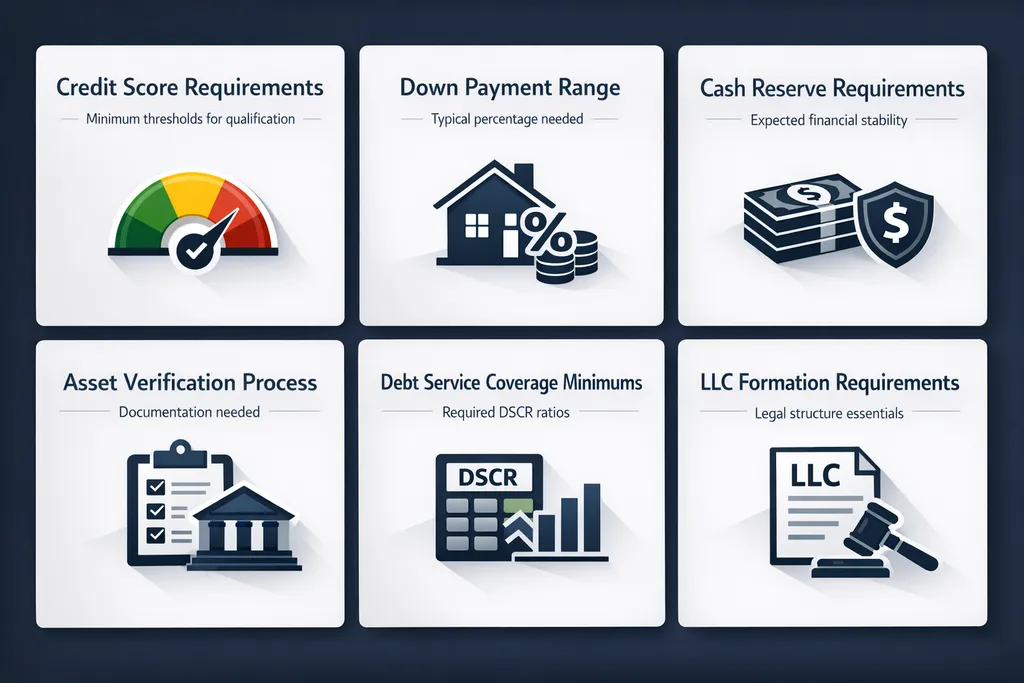
Minimum Credit Score Thresholds: Most lenders require credit scores of 660 or higher for basic qualification, though some may accept scores as low as 550 depending on other compensating factors
Optimal Credit Positioning: Credit scores between 680-700 typically qualify for the best loan terms and interest rates, making this range highly desirable for investors
Credit Score Impact on Terms: Higher credit scores often result in lower down payment requirements and more favorable interest rates, directly affecting your investment returns
Multiple Member Considerations: When your LLC has multiple members, lenders might evaluate the credit profiles of all guarantors or focus on the member with the strongest credit history
Down Payment and Financial Requirements
Financial requirements for LLC DSCR loans typically differ from traditional mortgage products, with specific emphasis on cash reserves and down payment amounts. These requirements help lenders assess the LLC's financial stability and the investment's viability.
Standard Down Payment Range: Most lenders require down payments between 20% to 25% of the property's purchase price for LLC-owned DSCR loans
Cash Reserve Requirements: Lenders often expect LLCs to maintain cash reserves equivalent to several months of property expenses, though specific amounts may vary by lender
Asset Verification Process: The LLC's bank statements and financial records become crucial documentation during the underwriting process
Debt Service Coverage Minimums: Properties must typically demonstrate a DSCR of 1.0 or higher, with many lenders preferring ratios between 1.0 and 1.25 or above for optimal approval odds
Entity Ownership Rules and LLC Structure
Proper LLC structure plays a vital role in DSCR loan qualification, as lenders evaluate both the entity's legal formation and operational framework. Understanding these entity ownership rules helps investors position their applications for success.
LLC Formation Requirements: The LLC must be properly formed and registered in its state of operation, with all required documentation filed and current
Ownership Transparency: Lenders typically require clear identification of all LLC members and their ownership percentages, ensuring transparency in the ownership structure
Management Structure Clarity: Whether your LLC is member-managed or manager-managed can impact the loan application process and required documentation
Business Purpose Alignment: The LLC's stated business purpose should align with real estate investment activities to support the loan application's credibility
Operating Agreement Requirements and Documentation
Operating agreement requirements form a critical component of the DSCR loan qualification process for LLCs. Lenders use these documents to understand the entity's governance structure and decision-making authority for the proposed investment.
Comprehensive Operating Agreement: A well-drafted operating agreement that clearly outlines member roles, responsibilities, and decision-making authority strengthens your loan application
Property Acquisition Authority: The operating agreement should explicitly grant authority to acquire real estate investments, demonstrating the LLC's legitimate business purpose
Financial Management Provisions: Clear provisions regarding financial management, debt obligations, and property management responsibilities help lenders assess operational competency
Member Liability and Guarantees: The agreement should address personal guarantees and member liability issues, which directly impact the lender's risk assessment
5 Steps to Successfully Qualify Your LLC for DSCR Loans
Successfully qualifying DSCR loans requires a systematic approach that addresses all key lender requirements. Following these essential steps can streamline your application process and improve approval odds.
Establish Strong Credit Foundations: Ensure all LLC members or guarantors maintain credit scores above 660, with optimal positioning in the 680-700 range for best terms
Structure Your LLC Properly: Complete proper entity formation with comprehensive operating agreements that clearly define investment authority and member responsibilities
Prepare Financial Documentation: Gather LLC bank statements, tax returns, and financial records that demonstrate the entity's financial stability and cash reserves
Analyze Property Cash Flow: Calculate the property's debt service coverage ratio to ensure it meets or exceeds the lender's minimum requirement of 1.0, ideally 1.25 or higher for the best terms
Secure Adequate Down Payment: Prepare the required 20-25% down payment and additional cash reserves to meet lender expectations for LLC-owned investments
Documents Your LLC Needs Before You Apply
Articles of Organization: Proof the LLC is properly formed and in good standing in its state of registration.
Operating agreement: Outlines ownership percentages, management structure, and authority to purchase real estate.
EIN confirmation letter: Verifies the LLC's federal tax identification number.
LLC bank statements: Typically 2 months, showing reserves and cash flow through the entity.
Personal guarantor documentation: Credit authorization and ID for each member who will guarantee the loan.
Property documentation: Purchase contract, lease agreements or market rent estimate, and insurance quote.
Having these documents organized before you apply is one of the most effective ways to shorten underwriting timelines on an LLC-owned DSCR loan.
Frequently Asked Questions: DSCR Loans Through an LLC
Do all LLC members need to qualify individually?
Most lenders require personal guarantees from members holding a meaningful ownership stake, commonly 20% or more, and will evaluate each guarantor's credit score against the program minimum.
Can a newly formed LLC qualify for a DSCR loan?
Yes, many DSCR lenders do not require LLC seasoning, though some may ask for a personal guarantee and additional reserves if the entity has no financial track record yet.
Does an LLC change the down payment requirement?
Generally no. Down payment requirements typically remain in the 20% to 25% range whether the property is held personally or through an LLC.
What credit score does my LLC need?
The LLC itself does not have a credit score. Lenders evaluate the personal credit of the guarantors, typically looking for scores of 660 or higher for the most competitive terms.
Learning how to qualify DSCR with LLC ownership opens significant opportunities for real estate investors seeking flexible financing solutions. The combination of entity ownership benefits and income-based qualification criteria creates a powerful tool for portfolio expansion. By focusing on credit positioning, proper LLC structure, and comprehensive documentation, investors can position themselves for successful DSCR loan approval. Remember that each lender may have specific requirements, so working with experienced mortgage professionals who understand investor needs can help navigate the application process effectively and secure optimal loan terms for your investment strategy.