DSCR Loan for Medium-Term Corporate Housing Success
October 6, 2026
•
9 min read
Table of Contents
DSCR Loan for Medium-Term Corporate Housing Rentals
Corporate housing occupies a unique niche in rental real estate. Unlike traditional long-term leases or nightly vacation rentals, these furnished properties cater to traveling professionals, relocated employees, and contract workers who need accommodations for 30 to 90 days. The income profile of medium-term rentals blends stability with premium pricing, making them attractive targets for real estate investors. Yet financing these investments often requires a different approach than conventional mortgages.
A DSCR loan for medium-term corporate housing rentals solves a critical challenge. Traditional lenders evaluate your personal income, employment history, and tax returns. DSCR loans, by contrast, underwrite based on the property's ability to generate rent. For investors managing multiple properties or those whose tax strategy minimizes reported income, this distinction opens doors that conventional financing keeps shut.
This article breaks down how DSCR loans work for corporate housing investments, what underwriting looks like in practice, and how to position your medium-term rental property for approval. Whether you're acquiring your first furnished unit or expanding a portfolio of executive stays, understanding the mechanics of financing a 30 to 90 day corporate rental with DSCR can sharpen your competitive edge.
Corporate housing demand has grown as remote work, project-based employment, and relocation patterns shift. Investors drawn to this segment recognize several advantages that distinguish medium-term rentals from both traditional leases and short-term vacation properties.
Higher nightly rates with lower turnover: Guests staying 30 to 90 days typically pay less per night than vacation renters but more than long-term tenants on an annualized basis. You avoid the constant cleaning, restocking, and guest communication that nightly bookings demand, yet you capture premium pricing unavailable in annual leases.
Stable occupancy windows: Corporate contracts, training programs, and medical travel often span predictable timeframes. Once a guest books, you enjoy weeks of guaranteed income without the vacancy risk that plagues short-term platforms during off-peak seasons.
Furnished inventory commands premium rents: Traveling professionals value turnkey accommodations. By furnishing the unit and including utilities, internet, and housewares, you justify higher rents and attract decision-makers with corporate budgets rather than price-sensitive tourists.
Favorable regulations in many markets: Cities cracking down on nightly vacation rentals often exempt stays longer than 30 days. Medium-term corporate housing frequently operates under standard rental or business licensing, sidestepping restrictions that hobble short-term operators.
These operational benefits translate into cash flow that lenders can measure and underwrite. Rental income from medium-term corporate stays often appears more predictable than nightly bookings, a factor that matters when applying for corporate housing DSCR loan underwriting.
How DSCR Loan Qualification Works for Corporate Housing
The debt service coverage ratio measures whether a property's rental income can cover its mortgage payment. Lenders calculate DSCR by dividing the property's net operating income by the total debt service, which includes principal, interest, taxes, insurance, and any association fees.
When you apply for a DSCR loan, the underwriter focuses on the rent the property generates or could generate, not your W-2 wages or 1099 income. This income-first approach makes medium-term rental DSCR qualification especially well-suited to investors whose personal tax returns don't reflect their true cash flow. If you're already operating several corporate housing units or using cost segregation and depreciation to shelter taxable income, DSCR underwriting bypasses those complications entirely.
Trulo Mortgage's DSCR loan program typically requires a minimum credit score of 620 and a minimum DSCR ratio of 1.0, meaning the property's income must at least equal the debt service. Down payment requirements generally range from 20% to 25%, corresponding to loan-to-value ratios up to 75% to 80%. Some lenders in the broader market may offer programs with higher LTVs or accept lower credit scores, but those figures often come with higher rates or additional reserves.
Because terms and availability can shift, it's wise to confirm current eligibility criteria directly with your lender before committing to a purchase contract. Market conditions, property type, and your overall portfolio can all influence the final offer.
Have a property in mind?
Tell us about the property and we will find the financing that fits you best.
Lenders evaluate medium-term rental income using one of two methods: actual income or market rent. If the property already operates as corporate housing and you provide a lease agreement or booking history, the underwriter can use those figures. If you're acquiring a vacant property or converting a long-term rental, the lender typically orders an appraisal with a market rent opinion that reflects 30 to 90 day rental comps.
Actual rental income documentation: Provide signed lease agreements, booking platform reports, or bank statements showing deposits. Underwriters often apply a vacancy factor, commonly around 25%, to account for turnover between guests. If your property maintains higher occupancy, detailed records and a strong management history can support a lower vacancy assumption.
Market rent appraisals: Appraisers research comparable corporate housing units in your area, noting furniture quality, included amenities, and typical lease durations. The appraised market rent forms the basis of your DSCR calculation. Investors sometimes request that appraisers provide both long-term and medium-term rent opinions to demonstrate the income premium corporate housing commands.
Expense considerations: Unlike long-term rentals, furnished corporate stays incur costs for utilities, internet, furniture replacement, and more frequent cleaning. Underwriters account for these expenses when calculating net operating income. Transparent expense documentation strengthens your application and helps the lender arrive at a realistic DSCR.
Because corporate housing can generate significantly higher monthly income than unfurnished long-term leases, many investors find that financing a 30 to 90 day corporate rental with DSCR produces stronger ratios than traditional rental underwriting would suggest. The key lies in presenting clear, credible income evidence and realistic expense projections.
Steps to Secure a DSCR Loan for Your Next Corporate Housing Property
Applying for a DSCR loan follows a streamlined process compared to conventional mortgages, but preparation remains essential. Following these steps can expedite approval and help you close quickly in competitive markets.
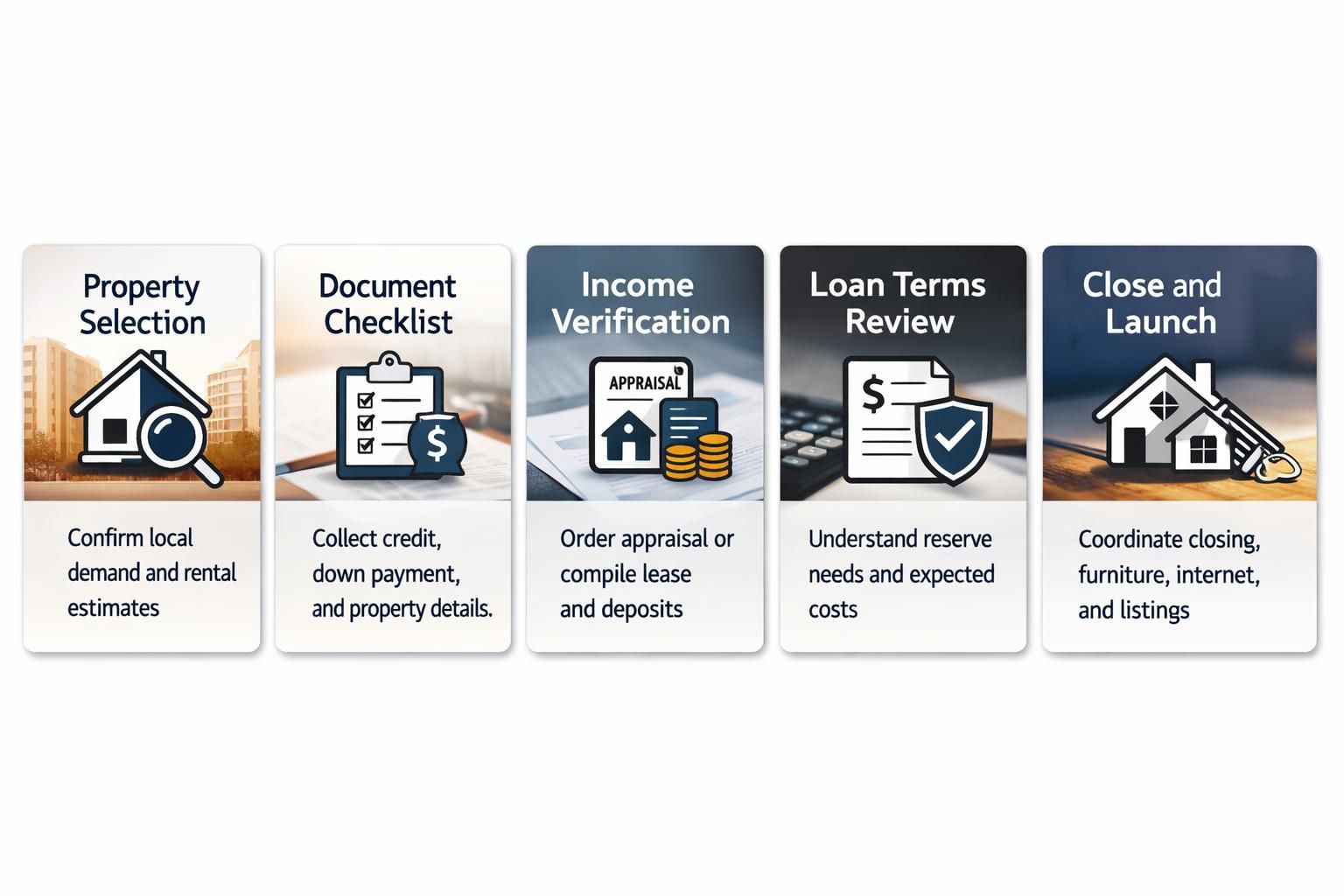
Identify your target property and confirm rental potential: Research local corporate housing demand, average nightly or monthly rates, and occupancy trends. If the property isn't yet furnished, estimate fit-out costs and timeline. Strong pre-application homework positions you to negotiate confidently and provide accurate income projections to your lender.
Gather financial documents and property information: Although DSCR loans don't require tax returns or pay stubs, you'll still need to provide credit authorization, proof of down payment funds, and details about the subject property. If you're refinancing or already own the property, include current lease agreements, booking histories, and operating expense records.
Request a market rent appraisal or compile income evidence: Work with your lender to order an appraisal that reflects medium-term rental income. If the property already operates as corporate housing, compile lease agreements and deposit records spanning several months. Clear documentation reduces back-and-forth and speeds underwriting.
Review loan terms and reserve requirements: DSCR lenders may require reserves, typically several months of principal, interest, taxes, and insurance, held in liquid accounts. Understanding reserve expectations upfront helps you allocate capital efficiently across multiple acquisitions.
Close and implement your corporate housing strategy: Once approved, coordinate closing with your title company and property manager. If you're converting the unit to furnished corporate housing, schedule furniture delivery, internet installation, and listing photography before your first guest arrives. Quick operational readiness maximizes income from day one.
Some lenders have reported closing timelines as short as six days for straightforward transactions, although most closings span two to four weeks. Speed depends on appraisal turnaround, title work, and how quickly you provide requested documentation.
Market Dynamics and Competitive Trends in DSCR Lending
The DSCR lending landscape has evolved as more conventional lenders recognize investor demand for income-based underwriting. Increased competition among lenders can influence loan terms, interest rates, and program features, potentially benefiting investors seeking financing for corporate housing projects.
Broader lender participation: As DSCR loans gain traction, traditional banks and credit unions have begun offering their own programs alongside specialty non-QM lenders. This expanded field gives investors more options and leverage to negotiate terms, especially if you bring strong credit and substantial reserves.
Rate sensitivity and market conditions: Interest rates on DSCR loans tend to run higher than conventional owner-occupied mortgages, reflecting the investment nature of the property and the absence of personal income verification. Rates as of late 2026 vary by lender, credit score, loan amount, and LTV. Monitoring rate trends and timing your application during favorable periods can save thousands over the loan's life.
Program flexibility: Some lenders allow properties titled in LLCs, require no minimum DSCR in certain markets, or offer loan amounts ranging from $100,000 to $4,500,000. This flexibility supports portfolio growth and asset protection strategies, particularly for investors managing multiple corporate housing units under separate entities.
Strategic refinancing opportunities: As competition increases and your property's operating history strengthens, refinancing an existing DSCR loan can capture better terms or pull equity for additional acquisitions. Staying informed about evolving market conditions enables you to act when advantageous loan products emerge.
Investors who monitor these trends position themselves to capitalize on favorable financing windows. The DSCR market's maturation benefits borrowers willing to shop around and negotiate.
Financing medium-term corporate housing with a DSCR loan offers a powerful alternative to conventional mortgages that demand extensive personal income documentation. By underwriting based on the property's rental income, DSCR loans align with the cash flow realities of furnished corporate stays and enable investors to scale portfolios without tax return constraints.
Success hinges on understanding how underwriters evaluate corporate housing income, preparing thorough documentation, and positioning your property to meet or exceed minimum DSCR thresholds. Trulo Mortgage's DSCR program typically requires a minimum credit score of 620, a minimum DSCR ratio of 1.0, and down payments generally ranging from 20% to 25%, corresponding to loan-to-value ratios up to 75% to 80%. Because lending criteria and market conditions can change, confirm current terms and program details directly with Trulo Mortgage before finalizing your investment strategy.
Whether you're acquiring your first corporate housing unit or expanding an existing portfolio, DSCR financing can unlock opportunities that traditional lenders overlook. Ready to explore how a DSCR loan can support your next medium-term rental acquisition? Get a personalized DSCR loan quote and take the next step toward growing your corporate housing portfolio.