DSCR Loan for Manufactured and Modular Home Rentals
October 6, 2026
•
9 min read
Table of Contents
DSCR Loan for Manufactured and Modular Home Rentals
Manufactured and modular homes represent one of the most overlooked opportunities in today's rental market. While traditional site-built properties dominate investor portfolios, factory-built housing offers lower acquisition costs, faster deployment, and strong tenant demand in many markets. Yet securing financing for these properties has historically been a challenge, with conventional lenders often imposing strict requirements or outright refusing loans on manufactured housing.
A DSCR loan for manufactured and modular home rentals changes that dynamic. This investor-focused financing product evaluates your deal based on the property's rental income, not your personal tax returns or W-2 forms. For investors building rental portfolios around affordable housing or mobile home park acquisitions, this loan structure opens doors that conventional mortgages keep shut. The key is understanding how underwriting standards apply to factory-built homes and what lenders look for when evaluating manufactured housing deals.
This guide walks through the mechanics of using DSCR loans to finance manufactured and modular rentals, the eligibility criteria that matter most, and the underwriting standards that separate approved deals from rejected applications. Whether you're eyeing single-section manufactured homes or multi-unit modular developments, knowing how lenders assess these properties will help you structure deals that pencil out and close on time.
Why DSCR Loans Work for Manufactured Housing Investors
Traditional mortgage underwriting relies heavily on borrower income documentation. For investors with complex tax strategies, multiple income streams, or significant write-offs, that requirement becomes a barrier. DSCR loans eliminate that obstacle by focusing exclusively on the property's ability to cover its own debt.
Qualification based on rental income: Lenders evaluate whether the property's monthly rent can support the mortgage payment, property taxes, insurance, and HOA fees if applicable. Your personal income, employment history, and tax returns stay out of the equation. This approach lets you scale faster because your borrowing capacity isn't capped by how much you show on your 1040.
Access to non-traditional property types: Many conventional lenders shy away from manufactured homes due to perceived risk or secondary market guidelines. DSCR lenders who understand factory-built housing can structure deals that conventional banks won't touch, provided the property meets foundation, title, and construction standards.
Flexibility for portfolio growth: Because you're not tapping your personal debt-to-income ratio, you can stack multiple DSCR loans without hitting the qualification wall that stops conventional investors at four or five financed properties. This makes manufactured housing portfolios particularly attractive when you're buying parks or multiple units in a community.
Streamlined documentation: Instead of gathering two years of tax returns, pay stubs, bank statements, and employer verification letters, you provide a lease agreement or appraisal demonstrating market rent. The process moves faster and requires less paperwork, which matters when you're competing for deals in hot markets.
The rise in interest rates has tightened underwriting across the board, but DSCR loan volume remains strong as investors adapt to higher borrowing costs by focusing on properties with solid rental income. Manufactured and modular rentals often deliver higher yields per dollar invested compared to site-built homes, which helps the math work even when rates climb.
Understanding Modular Home Rental Financing Rules
Modular homes are factory-built in sections and assembled on a permanent foundation, typically classified as real property once completed. This distinction matters because it affects how lenders underwrite the loan and which guidelines apply.
Permanent foundation requirement: Lenders financing modular homes expect the structure to sit on a permanent foundation that meets local building codes. The home must be affixed to the land and treated as real estate, not personal property. If the modular unit can be moved or lacks proper foundation attachment, it may not qualify for traditional real estate financing, including DSCR loans.
Title considerations: The property must have a standard real estate title, not a certificate of title issued by a motor vehicle department. Homes still classified as personal property won't meet lender requirements. Before pursuing financing, verify that the modular home has been converted to real property in county records.
Construction standards and code compliance: Modular homes built to local or state building codes generally qualify more easily than those meeting only federal HUD code. Lenders prefer properties constructed under the same standards as site-built homes, which offer better appraisal comparables and resale liquidity.
Appraisal and valuation: Appraisers assess modular rentals using comparable sales of similar properties. In markets with limited modular inventory, appraisers may struggle to find comps, which can affect loan-to-value ratios. Properties in established modular communities or subdivisions typically appraise more reliably than standalone units in rural areas.
Modular home rental financing rules vary by lender, but most DSCR programs will consider these properties when they meet the foundation, title, and construction criteria outlined above. Investors should confirm these details before making an offer to avoid financing surprises during underwriting.
Have a property in mind?
Tell us about the property and we will find the financing that fits you best.
The short answer is yes, but eligibility hinges on how the manufactured home is classified and whether it meets lender standards for real property.
Real property vs. personal property distinction: Manufactured homes titled as vehicles or personal property typically do not qualify for DSCR loans. The home must be permanently affixed to land you own, with the title converted to real property. This conversion process varies by state but generally involves removing the wheels and chassis, securing the home to a foundation, and filing the appropriate paperwork with local authorities.
Land ownership requirement: Most DSCR lenders require you to own the land beneath the manufactured home. Homes located in leased-land communities or mobile home parks where you rent the lot may not qualify, though some portfolio lenders make exceptions for park-owned properties with long-term lease agreements.
Age and condition thresholds: Lenders often set maximum age limits for manufactured homes, commonly restricting financing to homes built after 1976 when HUD code standards took effect. Older homes or those in poor condition may not meet minimum property standards. Recent models in good repair with updated systems have the best approval odds.
Single-wide vs. double-wide considerations: Double-wide and multi-section manufactured homes generally qualify more easily than single-wide units. Lenders view larger homes as more comparable to site-built properties, with better resale potential and tenant appeal. Single-wide homes may face stricter loan-to-value limits or higher down payment requirements.
Before pursuing a DSCR loan on a manufactured home, confirm the property is classified as real estate, sits on a permanent foundation on land you own, and meets the lender's age and condition standards. Properties that check all those boxes can access DSCR financing just like modular or site-built rentals.
DSCR Loan Eligibility for Mobile Home Parks
Mobile home parks offer unique cash flow opportunities, but financing these properties involves different considerations than single-unit rentals. DSCR loans can work for park acquisitions when the income structure and property type align with lender guidelines.
Park-owned homes vs. tenant-owned homes: Parks generate income through lot rent, home sales, or a combination of both. Lenders typically prefer parks where tenants own their homes and pay lot rent, as this model produces stable, predictable income with lower landlord maintenance obligations. Parks with lender-owned rental homes may qualify but often require larger down payments due to the added operational complexity.
Occupancy and income verification: Lenders evaluate mobile home parks based on current occupancy rates and historical rent rolls. Parks with 80% or higher occupancy and documented rental income over multiple months present stronger cases for DSCR approval. Vacant or recently acquired parks with limited income history may need alternative financing or higher equity contributions.
Infrastructure and utilities: The condition of park infrastructure, including roads, utilities, water, and sewer systems, affects both appraisal value and lender willingness to finance. Parks with deferred maintenance or aging systems may face lower loan-to-value ratios or require reserves for capital improvements. Well-maintained parks with updated infrastructure qualify more easily.
Number of lots and portfolio classification: Smaller parks with fewer than 10 lots might qualify as residential investment properties under standard DSCR programs. Larger parks often fall into commercial property categories, which may involve different underwriting criteria, lower LTV limits, or commercial loan structures rather than residential DSCR products.
Mobile home park financing through DSCR loans works best when the property demonstrates strong occupancy, reliable income, and well-maintained infrastructure. Investors should prepare detailed rent rolls, occupancy reports, and maintenance records to support the underwriting process and maximize approval chances.
Manufactured Housing DSCR Underwriting Standards
Lenders evaluate manufactured and modular rental properties using specific criteria that determine loan approval and terms. Understanding these underwriting standards helps you identify qualifying properties and structure deals that meet lender expectations.
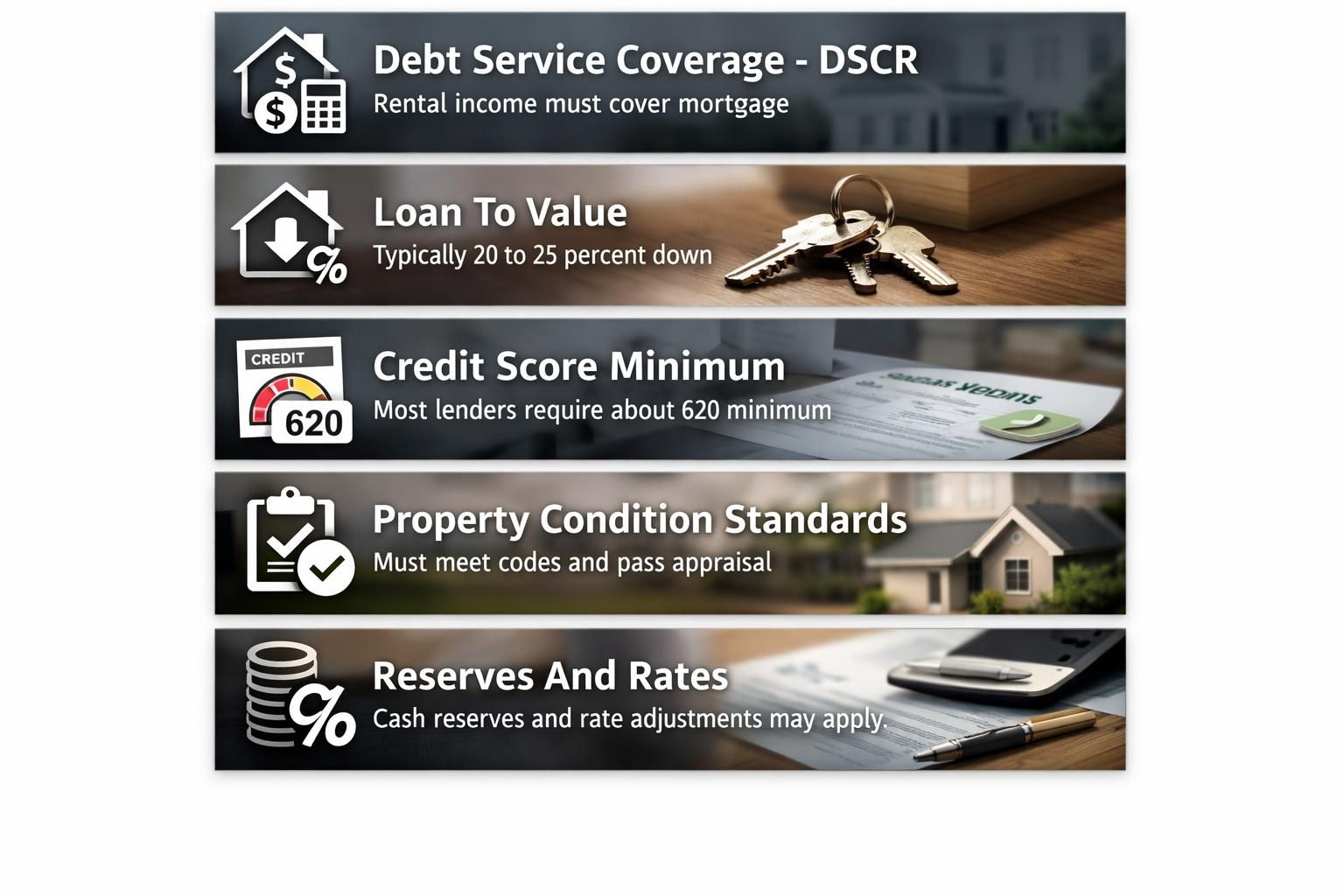
Debt Service Coverage Ratio requirements: DSCR measures whether rental income covers the mortgage payment and related expenses. The ratio is calculated by dividing the property's net operating income by its total debt service. Lenders typically require a minimum DSCR of 1.0, meaning the property's income equals or exceeds its debt obligations. Higher ratios, such as 1.25 or above, often unlock better rates and terms because they demonstrate a stronger income cushion.
Loan-to-value and down payment expectations: DSCR loans for manufactured and modular homes typically require 20% to 25% down, corresponding to up to 75% to 80% LTV. These figures can vary based on property type, borrower credit profile, and market conditions. Well-located properties with strong rental demand may qualify at the higher end of the LTV range, while homes in rural areas or with limited comps might face stricter limits.
Credit score minimums: Most DSCR lenders set a minimum credit score around 620, though better scores improve rate pricing and approval odds. Investors with scores above 700 typically access the most competitive terms. Credit history matters less than with conventional loans since the focus on property performance, but lenders still review credit to assess borrower reliability and risk.
Property condition and appraisal standards: Appraisers assess manufactured and modular homes using the same principles as site-built properties, evaluating condition, location, and comparable sales. Homes must meet minimum property standards, with functional systems, safe structures, and no major deferred maintenance. Properties requiring significant repairs may need to close through renovation loan programs rather than standard DSCR products.
Reserve requirements and rate adjustments: Lenders may require cash reserves covering several months of mortgage payments, particularly for newer investors or properties with marginal DSCR ratios. Interest rates on DSCR loans have risen alongside broader market trends, with recent rate spikes affecting financing costs across all property types. Investors should model deals assuming higher rates and factor in potential refinancing opportunities if market conditions improve.
These underwriting standards reflect both stable lending mechanics and current market conditions. The figures mentioned here, such as LTV ranges, down payment percentages, credit minimums, and DSCR ratios, can change based on market dynamics and individual lender policies. Always confirm current terms directly with your lender before finalizing any investment decision.
Financing manufactured and modular home rentals through DSCR loans gives investors access to an affordable housing segment that traditional lenders often overlook. By qualifying based on rental income rather than personal financials, you can build or expand portfolios focused on high-yield properties without bumping into conventional lending limits. The key is ensuring your target properties meet the foundation, title, and condition standards lenders require, and that the numbers support a debt service coverage ratio strong enough to satisfy underwriting criteria.
As interest rates remain elevated and underwriting tightens across the market, focusing on properties with solid rental income becomes even more critical. Manufactured and modular rentals often deliver better cash flow per dollar invested compared to site-built alternatives, which helps offset higher borrowing costs. Whether you're acquiring single homes, modular developments, or mobile home parks, running the math on DSCR and ensuring the property can carry its own debt will determine whether your deal pencils out.
Market conditions shift, and financing terms adjust along with them. If you're ready to explore how DSCR financing can work for your manufactured or modular rental strategy, get a personalized DSCR loan quote and confirm the current requirements that apply to your specific deal. Factory-built housing offers real opportunity for investors willing to do the work, and the right financing structure makes all the difference between a deal that closes and one that falls apart.