Evicting a tenant is never pleasant, but for real estate investors, it creates an even bigger headache when you're trying to secure financing. DSCR loan documentation after a tenant eviction becomes a critical focus because lenders rely on rental income to qualify your property, not your personal W-2. When that income stream gets disrupted by a vacancy, your loan application faces extra scrutiny.
The good news is that DSCR loans are designed for investors who understand that rental properties sometimes face turnover. Lenders in this space know the reality of property management. They've built underwriting criteria that can accommodate temporary vacancies, provided you document the situation properly and demonstrate the property's income potential.
This guide walks you through the exact documentation lenders need after an eviction, how underwriters verify rent when a unit sits empty, and the strategies that keep your financing on track even when tenant problems arise.
How Lenders Verify Rental Income After an Eviction
When a property has an active tenant, verifying rent is straightforward. Lenders review lease agreements, bank deposits, and sometimes collect rent rolls. But how lenders verify rent after an eviction shifts to a different process entirely. The rental income that once appeared reliable now has a gap, and underwriters need alternative proof that the property can generate the cash flow required to meet DSCR thresholds.
Most DSCR lenders turn to market rent analysis when current rental income is unavailable. This approach uses appraisals or third-party rent comparisons to estimate what the property should realistically command in the local market. The appraiser examines similar properties in the area, recent lease rates, and vacancy trends to establish a fair market rent figure.
Appraisal-based rental estimates: The appraiser includes a rental income opinion in the full appraisal report, giving lenders a defensible number to use in DSCR calculations even when the unit is vacant.
Lease comparables: Lenders may request recent lease agreements from neighboring properties or comparable units to validate the market rent estimate and confirm your property's income potential.
Historical rent records: If you have previous lease agreements and deposit records from before the eviction, these documents help demonstrate the property's established rental history and support the market rent analysis.
Property condition assessment: A vacant unit gives lenders a chance to evaluate condition directly. Any deferred maintenance or damage from the evicted tenant may reduce the appraised market rent until repairs are completed.
Understanding these verification methods helps you prepare the right documentation upfront. Instead of waiting for the lender to request additional proof, gather appraisal reports, prior leases, and rent comparables before you apply. This proactive approach speeds up underwriting and shows lenders you're managing the vacancy professionally.
Documentation Required for a Vacant Unit
Documenting a vacant unit for DSCR loan approval requires more than a standard application package. Lenders need to see both the property's income history and its future earning potential. The documentation you provide tells the underwriter whether this vacancy is a temporary setback or a sign of deeper problems.
Start with a clear explanation of the eviction timeline and current status. Lenders want to know when the tenant left, whether the eviction is legally complete, and what steps you've taken to prepare the property for a new tenant. Transparency here builds trust and prevents delays when underwriters spot gaps in the rental history.
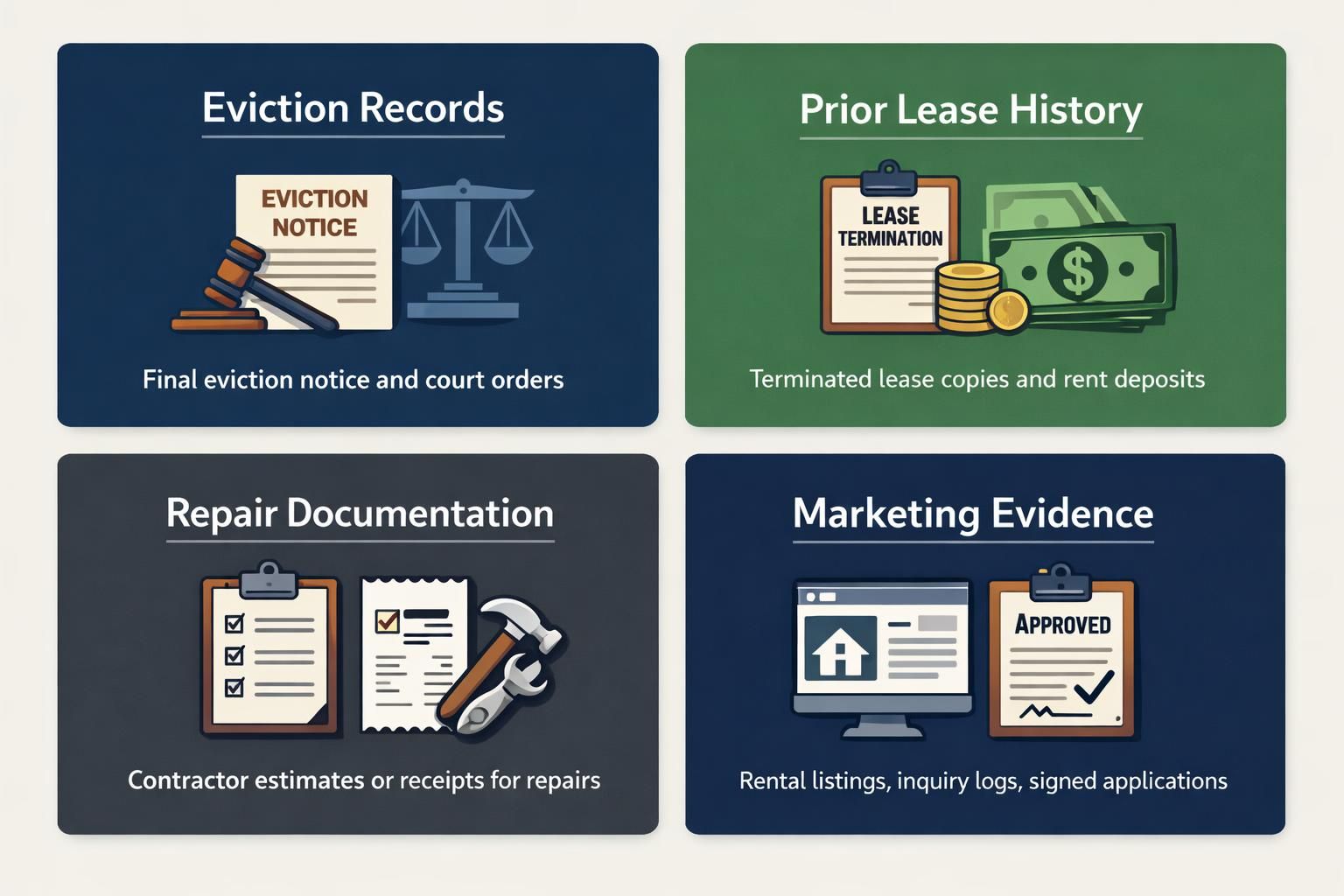
Eviction records and court documents: Provide the final eviction notice and any court orders showing the legal process is complete. Lenders need confirmation that the previous tenant has no remaining claims on the property.
Prior lease agreements and payment history: Submit copies of the terminated lease and bank statements showing rent deposits from before the eviction. This establishes the property's historical income and supports the market rent estimate.
Property repair estimates or completion certificates: If the unit required repairs after the tenant vacated, include contractor estimates or receipts showing the work is finished and the property is rent-ready.
Marketing evidence and prospective tenant interest: Screenshots of rental listings, inquiry logs, or signed applications from prospective tenants demonstrate active efforts to fill the vacancy and can reassure underwriters that income will resume quickly.
Some lenders may also request a rent-ready certification from a property inspector or manager, confirming the unit meets local habitability standards and is available for immediate occupancy. This documentation removes any doubt about whether the property can generate the income used in DSCR calculations.
Have a property in mind?
Tell us about the property and we will find the financing that fits you best.
What Underwriters Look for During DSCR Loan Review
DSCR loan underwriting after tenant eviction focuses on risk assessment and income stability. Underwriters are evaluating whether the property can consistently generate enough rental income to cover the debt service, even with the recent disruption. Their review goes beyond the numbers on your application and digs into the story behind the vacancy.
The debt service coverage ratio itself is a simple calculation: monthly rental income divided by monthly debt obligations (principal, interest, taxes, insurance, and HOA fees if applicable). A ratio of 1.0 means the property's income exactly covers the debt. Most DSCR loan programs, including those from Trulo Mortgage, typically require a minimum DSCR of 1.0, though some lenders may set higher thresholds depending on property type and market conditions.
Market rent credibility: Underwriters compare the appraised market rent to actual rents in the area. If your market rent estimate seems inflated relative to comparables, expect pushback or a lower approved loan amount.
Vacancy duration and re-leasing plan: A unit vacant for two weeks during turnover is normal. A unit sitting empty for three months raises red flags. Be prepared to explain what's taking time and what you're doing to fill it.
Property condition and marketability: Lenders want to know the unit is in rentable condition. Photos, inspection reports, or a property management letter confirming rent-ready status can address concerns before they become deal-breakers.
Your track record as an investor: If you own multiple properties with strong occupancy and payment history, one eviction is easier to overlook. First-time investors or those with multiple vacancies face tougher scrutiny.
Underwriters also evaluate the overall loan request in context. DSCR loans typically require a down payment of 20% to 25%, up to 75% to 80% LTV, and a minimum credit score of 620. These figures can vary by lender and should be confirmed directly with Trulo Mortgage. Meeting these baseline criteria strengthens your application, but the vacancy documentation remains the critical variable after an eviction.
Proof of Rent Requirements Following Eviction
Proof of rent requirements following eviction differ from standard occupied property documentation. Since there's no current tenant paying rent, lenders rely on a combination of historical evidence and forward-looking projections. The goal is to satisfy underwriting that the rental income figure used in your DSCR calculation is realistic and achievable.
Here's a step-by-step approach to meeting proof of rent requirements when your property is vacant:
Gather historical rent receipts and deposit records: Pull at least six to twelve months of rent payment history from before the eviction. Bank statements showing consistent deposits at the lease rate provide strong evidence of the property's earning capacity.
Obtain a detailed appraisal with market rent analysis: Work with an appraiser experienced in investment properties who will include a rental income opinion based on current comparables. This becomes your primary proof of rent when the unit is empty.
Document any lease agreements in progress: If you've received applications or signed a new lease that starts after closing, provide those documents to the lender. A signed lease for a future start date can sometimes be used in place of market rent estimates.
Show active marketing and pricing strategy: Evidence that you're marketing the property at the appraised rent level (or slightly below) demonstrates realistic expectations and increases confidence the unit will lease quickly.
Some lenders may apply a vacancy factor or reduce the appraised market rent by a small percentage to account for turnover risk. This is standard practice in DSCR underwriting and doesn't necessarily mean your application is weak. It's simply a conservative adjustment that protects the lender's investment and ensures the DSCR ratio remains sound even with normal vacancy periods.
Comparing Lenders and Underwriting Flexibility
Not all DSCR lenders handle post-eviction scenarios the same way. Underwriting rules can vary significantly between lenders, especially when it comes to accepting market rent estimates, allowing lower DSCR ratios, or requiring seasoning periods after a vacancy. Comparing DSCR loan rates and lenders is critical to finding flexible underwriting criteria that can accommodate issues like tenant eviction.
Increased competition in the DSCR lending market may create advantageous conditions and more lender options for investors dealing with tenant turnover. As more conventional lenders and specialty finance companies enter this space, the range of available terms and underwriting approaches continues to expand.
Flexibility on market rent documentation: Some lenders accept appraiser rent opinions without additional verification, while others require lease comparables or signed applications from prospective tenants.
Minimum DSCR thresholds: While many programs allow ratios as low as 1.0, certain lenders may require 1.10 or higher if the property has been vacant for an extended period.
Loan-to-value limits and down payment: Lenders with more conservative underwriting may reduce maximum LTV on vacant properties, requiring larger down payments than the typical 20% to 25%.
Seasoning requirements: A few lenders impose waiting periods after an eviction before they'll approve a new loan, though this is less common in the DSCR space where investor turnover is expected.
Selecting lenders with expertise in DSCR-focused products helps mitigate tenant eviction impacts on loan approval. Look for lenders who specifically market to real estate investors and have underwriting teams familiar with rental property challenges. These lenders understand that vacancies and evictions are part of the business, and their criteria reflect that reality.
Strategies to Strengthen Your Application
Even with a recent eviction, you can take steps to strengthen your DSCR loan application and improve your approval odds. The key is addressing the underwriter's concerns proactively and presenting your property as a low-risk, income-generating asset despite the temporary setback.
These strategies can make a measurable difference in how lenders evaluate your application:
Complete all repairs before applying: Submit contractor invoices and photos showing the property is fully renovated and rent-ready. Lenders are more comfortable approving loans when they can see the unit is move-in condition.
Secure a signed lease or at least serious applications: If you can delay your loan application by a few weeks to get a new tenant in place, the approval process becomes significantly smoother. Even a signed lease with a future start date can replace market rent estimates in underwriting.
Increase your down payment: Offering a larger down payment reduces lender risk and can offset concerns about the vacancy. Moving from 20% to 25% or 30% down may unlock better rates or easier approval.
Highlight your overall portfolio performance: If you own other rental properties with strong occupancy and payment history, provide that documentation. A track record as an investor reassures lenders that one eviction is an isolated incident, not a pattern.
Work with an experienced mortgage broker: Brokers who specialize in investor lending know which lenders are most flexible on post-eviction documentation and can match you with the right program before you waste time on applications that won't approve.
Remember that DSCR loan programs are built for investors who deal with real-world rental challenges. Lenders in this market expect occasional vacancies and tenant issues. The difference between approval and denial often comes down to how well you document the situation and demonstrate that you're managing it competently.
Navigating DSCR loan documentation after a tenant eviction takes preparation, but it's far from impossible. Lenders who specialize in investment property financing understand that evictions happen, and they've built underwriting processes to evaluate your property's income potential rather than fixating on short-term vacancies. The key is providing clear, thorough documentation that demonstrates the property's market rent, confirms it's rent-ready, and shows you're actively working to fill the unit.
Focus on gathering historical rent records, obtaining a strong appraisal with market rent analysis, and presenting evidence of your re-leasing efforts. Address the vacancy head-on in your application narrative rather than hoping underwriters won't notice. Transparency and professionalism go a long way in building lender confidence, especially when paired with solid financials and a clear plan for getting the property back to full occupancy.
Market conditions continue to evolve, and the growing competition among DSCR lenders may offer investors more options and flexible terms. Rates, down payment requirements, and underwriting criteria can shift, so always confirm current program details before committing to a strategy. If you're ready to explore your options, get a personalized DSCR loan quote and see how Trulo Mortgage can help you move forward even after a tenant eviction.