DSCR Loan on Leasehold Land vs Fee Simple Ownership
Real estate investors often encounter two distinct forms of property ownership: fee simple and leasehold. Fee simple ownership grants you full control of both the land and improvements, while leasehold means you own the building but lease the underlying land through a ground lease agreement. This distinction matters greatly when you're seeking DSCR loan financing for rental properties.
A DSCR loan on leasehold land vs fee simple ownership creates very different underwriting scenarios. Lenders evaluate the debt service coverage ratio, which measures a property's rental income against its debt obligations, as the primary qualification metric. However, when the land itself is leased rather than owned outright, additional layers of risk and complexity enter the equation. Ground lease terms, remaining lease duration, renewal options, and escalation clauses all influence how lenders assess your application.
Understanding these differences helps investors anticipate which properties will qualify more easily and what documentation lenders will require. Whether you're expanding your portfolio or evaluating a single opportunity, knowing how DSCR underwriting treats leasehold versus fee simple properties can save time and position you for better financing outcomes.
Understanding the Ownership Structures
Fee simple represents the most complete form of property ownership available. When you purchase a rental property under fee simple title, you acquire both the land and any structures permanently. This ownership extends indefinitely, passes to heirs, and includes the right to sell, lease, or develop the property within zoning constraints. Most residential and commercial real estate transactions in the United States involve fee simple ownership.
Leasehold ownership works differently. You purchase the improvements on a property but lease the land beneath from a separate landowner through a ground lease. These arrangements typically span decades, often ranging from thirty to ninety-nine years. While you control the building and collect rental income, you must pay periodic ground rent to the landowner and comply with lease covenants. When the ground lease expires, ownership of the improvements may revert to the landowner unless you negotiate an extension.
This structural difference creates distinct financing challenges. Lenders view fee simple properties as more secure collateral because foreclosure grants them full ownership of both land and improvements. With leasehold properties, a lender's security interest is limited by the lease term and subject to the ground lease conditions. If ground rent goes unpaid or lease terms are violated, the landowner might terminate the lease, potentially extinguishing the lender's collateral.
Competition among DSCR lenders has grown in recent years, potentially broadening access to financing for various property types. However, leasehold properties still face heightened scrutiny during underwriting because of these inherent structural risks.
How DSCR Underwriting Evaluates Leasehold Properties
Remaining Lease Term Analysis: Lenders typically require a minimum remaining lease term that extends well beyond the loan maturity date. Many prefer at least thirty to forty years remaining, though some may accept shorter terms with compensating factors. If your ground lease has only fifteen years left and you're seeking a thirty-year DSCR loan, approval becomes unlikely. The lender needs assurance that the leasehold interest will survive the entire loan period with adequate time remaining to protect resale value.
Ground Rent Structure Review: Underwriters examine how ground rent is calculated and whether it includes escalation clauses. Fixed ground rent provides predictable expenses, while rent tied to inflation indexes or periodic adjustments creates uncertainty. Since DSCR loans qualify borrowers based on property income minus expenses, escalating ground rent can erode your debt service coverage ratio over time. Lenders may stress-test your DSCR assuming higher future ground rent to ensure the property can sustain profitability.
Renewal and Purchase Options: Ground leases with clearly defined renewal options or rights to purchase the land at predetermined prices reduce lender risk. If your lease allows you to extend for additional decades or buy the fee simple interest, underwriters view this favorably. Conversely, leases that grant landlords unilateral control over renewals or include vague terms create uncertainty that may lead to loan denial or reduced loan-to-value ratios.
Subordination and Lender Protections: Some ground leases include subordination clauses allowing the leasehold mortgage to take priority over the landowner's interest, or they provide notice and cure rights that let lenders remedy defaults before lease termination. These protections make leasehold financing more viable. Without them, lenders face the risk that a simple ground rent default could wipe out their collateral, making approval difficult regardless of strong rental income.
Have a property in mind?
Tell us about the property and we will find the financing that fits you best.
Key Do's When Financing a Rental Property on Leased Land
Do verify renewal rights before making an offer: Confirm that your ground lease includes automatic renewal options or a clear path to extend the term. This protects both your investment and your ability to secure DSCR financing with favorable terms.
Do obtain a full copy of the ground lease for underwriting: Lenders will require the complete lease agreement, including all amendments and exhibits. Gather this documentation early to avoid delays and allow your lender to assess subordination clauses, rent escalation formulas, and termination provisions.
Do calculate total occupancy costs including ground rent: When projecting your DSCR, include ground rent as an operating expense alongside property taxes, insurance, and maintenance. This gives you an accurate picture of whether the property generates sufficient income to meet the typical minimum DSCR ratio of 1.0.
Do work with lenders experienced in leasehold DSCR financing: Not all lenders underwrite ground lease properties. Increased competition in the DSCR lending market means more options may be available, but you'll save time by targeting lenders who have appetite and expertise for leasehold deals from the outset.
Critical Don'ts for Ground Lease DSCR Loan Eligibility
Don't ignore remaining lease term when evaluating deals: A property with strong cash flow but only ten years left on the ground lease may prove unfinanceable. Always check the lease expiration date and compare it against typical loan terms before committing capital to due diligence or earnest money.
Don't assume fee simple underwriting standards apply: Leasehold properties often face lower maximum loan-to-value ratios, higher interest rates, or additional reserve requirements. Expecting the same terms you received on a fee simple rental property can lead to surprises at closing or force you to bring more cash to the table.
Don't overlook escalation clauses in ground rent: Even modest annual increases compound over a thirty-year loan term. If your DSCR is tight today and ground rent rises three percent per year, you may find yourself with negative cash flow within a decade, increasing default risk and limiting refinancing options.
Don't skip legal review of lease covenants: Ground leases may restrict property use, renovations, or subleasing in ways that impact rental income. Violating these covenants can trigger lease termination. Have an attorney review the lease to identify any restrictions that could hinder your investment strategy or financing eligibility.
DSCR Loan Requirements and Property Income Qualification
Income-Based Qualification: DSCR loans allow investors to qualify based on the rental property's income rather than personal income or tax returns. The debt service coverage ratio divides the property's net operating income by its total debt service. A DSCR of 1.0 means the property generates exactly enough income to cover the mortgage payment, while a ratio above 1.0 indicates positive cash flow. Trulo Mortgage's DSCR loan program typically requires a minimum DSCR ratio of 1.0, though higher ratios may unlock better pricing.
Down Payment and Loan-to-Value: DSCR loans generally require larger down payments than conventional owner-occupied mortgages. Trulo Mortgage's program typically offers up to 75% to 80% LTV, meaning investors usually need a down payment of 20% to 25%. For leasehold properties, lenders may reduce the maximum LTV further to offset the additional risk associated with ground lease terms, potentially requiring 30% or more down.
Credit Score Minimums: While DSCR loans prioritize property performance over borrower income, credit history still matters. Trulo Mortgage's program typically requires a minimum credit score of 620. Investors with scores in this range can qualify, though those with higher scores often receive better interest rates and terms. Keep in mind that these figures can change, so it's important to confirm current DSCR loan requirements directly with Trulo Mortgage before finalizing your investment strategy.
Leasehold Property DSCR Underwriting Rules and Documentation
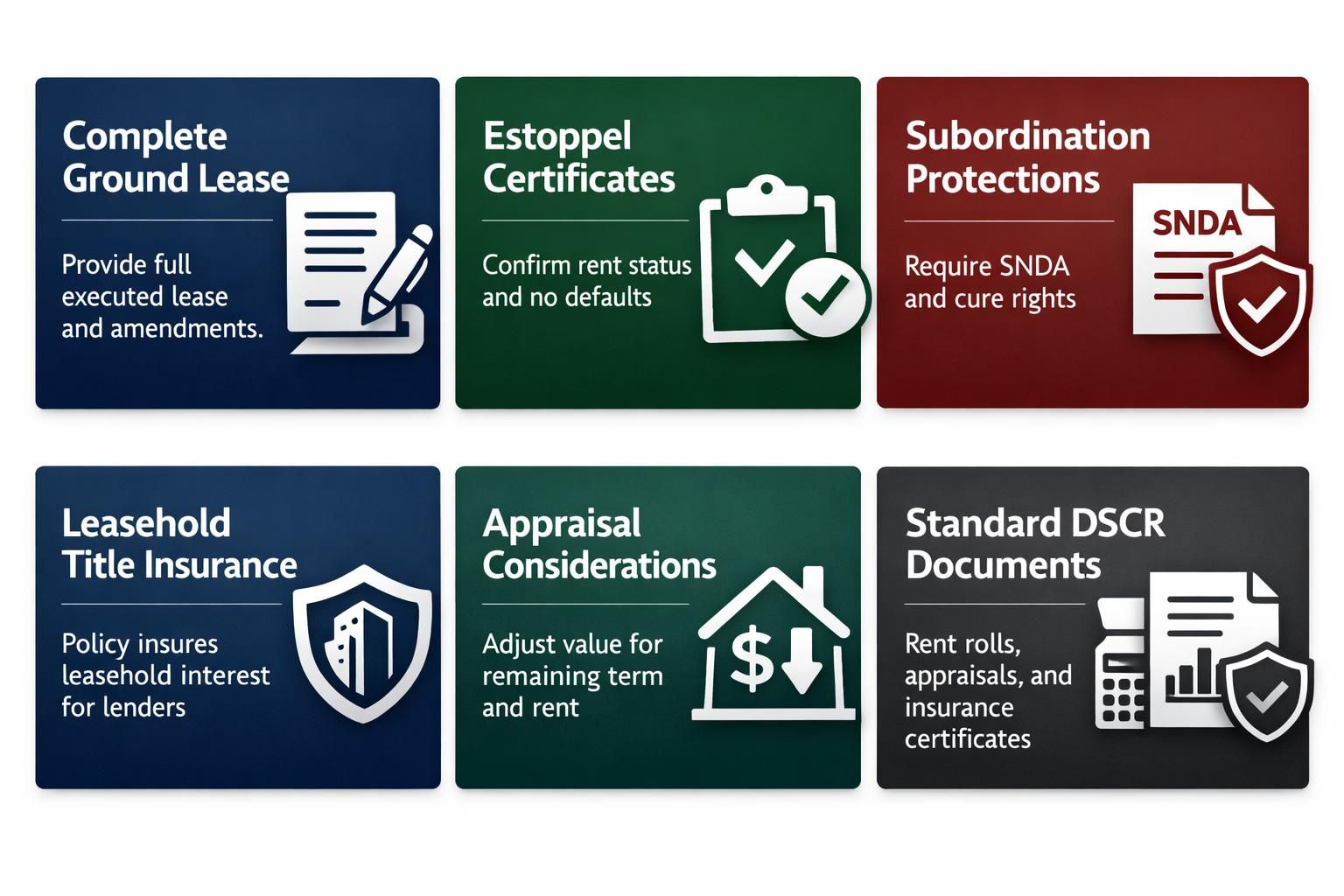
Lenders apply specialized underwriting rules when evaluating financing a rental property on leased land. Beyond standard DSCR loan documentation like rent rolls, property appraisals, and insurance certificates, leasehold transactions require additional paperwork.
You'll need to provide the complete executed ground lease, including all amendments, assignments, and rider agreements. Underwriters will review the lease term, renewal provisions, ground rent payment schedule, and any clauses affecting the lender's security interest. If the lease was recently assigned to you, proof of landowner consent and estoppel certificates confirming no defaults may be required.
An estoppel certificate from the landowner verifies that ground rent is current, no breaches exist, and the lease remains in full effect. This document protects the lender by confirming the lease status at closing. Some lenders also request subordination, non-disturbance, and attornment agreements, which provide the lender notice and opportunity to cure defaults before the landowner can terminate the lease.
Title insurance on leasehold properties differs from fee simple policies. The policy insures your leasehold interest rather than fee ownership, and premiums may be higher due to the added complexity. Lenders require leasehold title insurance naming them as loss payee to protect against title defects or lease disputes.
Property appraisals for leasehold properties must account for the ground lease impact on value. Appraisers consider remaining lease term, ground rent as a percentage of income, renewal options, and comparable leasehold sales. Shorter remaining terms or burdensome ground rent typically reduce appraised value, which in turn affects your maximum loan amount even if rental income supports a strong DSCR.
Navigating DSCR Loan Risks with Ground Lease Terms
Lease Expiration Risk: As the ground lease approaches expiration, property value and financing options typically decline. Even if you're years away from the end date, lenders grow cautious when remaining term drops below twenty-five or thirty years. This can limit your ability to refinance or sell at favorable prices. Mitigate this risk by targeting properties with long remaining terms or negotiating lease extensions before they become urgent.
Ground Rent Escalation Impact: Unpredictable or steep ground rent increases can turn a profitable rental into a break-even or losing proposition. Some ground leases tie rent to market reappraisals every decade, which can result in dramatic jumps. Model various escalation scenarios when projecting cash flow and ensure your DSCR remains above 1.0 even under conservative assumptions about future rent increases. Lenders may also stress-test your income, so properties with narrow margins face higher rejection rates.
Landowner Default and Subordination Issues: If the landowner defaults on their obligations, such as failing to pay property taxes or maintain easements, it can jeopardize your leasehold interest. Subordination agreements where the ground lease is subordinate to a landowner's mortgage add another layer of risk. Should the landowner face foreclosure, your leasehold could be extinguished. Always investigate the landowner's financial position and any encumbrances on the fee interest before closing.
Resale and Exit Strategy Challenges: Leasehold properties typically have smaller buyer pools than fee simple assets, which can extend marketing time and reduce sale prices. Investors planning to hold long-term may find this acceptable, but those pursuing fix-and-flip strategies or shorter hold periods should account for liquidity constraints. DSCR loan eligibility on leasehold properties may also narrow your refinancing options down the road, making it harder to pull equity out or adjust loan terms as your portfolio grows.
Staying informed on current market conditions helps you navigate these risks. Monitoring rate trends and understanding how lenders price leasehold risk allows you to time acquisitions and financing strategically, maximizing returns while minimizing unexpected obstacles.
Choosing between a DSCR loan on leasehold land vs fee simple ownership comes down to understanding how ground lease terms influence underwriting, risk, and long-term profitability. Fee simple properties offer simpler financing paths, stronger collateral, and fewer restrictions, making them the preferred choice for most investors. However, leasehold properties can deliver attractive returns when ground leases include long remaining terms, reasonable rent structures, and solid renewal protections.
Successful leasehold investing requires thorough due diligence on lease covenants, ground rent escalation, and lender requirements. By confirming sufficient remaining term, negotiating favorable lease amendments, and working with lenders experienced in ground lease transactions, you can secure DSCR financing even on more complex property structures. Always calculate your DSCR inclusive of ground rent, model future rent increases, and ensure legal review of all lease documents before committing.
Market dynamics continue to evolve, with growing competition among lenders potentially opening new financing opportunities for leasehold rental properties. Whether you're evaluating your first ground lease deal or adding another leasehold asset to an established portfolio, aligning your strategy with lender expectations and lease realities positions you for sustainable cash flow and long-term appreciation.
Ready to explore your options? Get a personalized DSCR loan quote and discover how Trulo Mortgage can support your next investment, whether fee simple or leasehold.