Cross-Default Risk Across Multiple DSCR Loans Explained
October 6, 2026
•
9 min read
Table of Contents
Cross-Default Risk Across Multiple DSCR Loans: What Investors Need to Know
Building a rental property portfolio with multiple DSCR loans can accelerate your growth, but it also introduces a hidden threat that many investors overlook. Cross-default risk across multiple DSCR loans represents one of the most serious structural vulnerabilities in leveraged real estate portfolios. When you finance several properties through the same lender or related loan agreements, a single missed payment on one property can trigger default provisions across your entire portfolio, potentially putting all your assets at risk simultaneously.
This interconnected risk becomes especially relevant as the DSCR lending market continues to expand. With more lenders entering the space and competition driving better terms, investors are securing multiple loans to scale quickly. However, the fine print in these agreements often contains cross-default clauses that most borrowers never fully understand until it's too late. Understanding how these provisions work, and more importantly, how to structure your financing to minimize exposure, can mean the difference between a temporary setback and a catastrophic portfolio collapse.
For real estate investors managing rental properties across different markets or asset classes, recognizing cross-default exposure isn't just about reading loan documents carefully. It's about strategic portfolio construction, lender diversification, and building protective buffers into your financing strategy from day one.
What Cross-Default Clauses Mean for Your Portfolio
A cross-default clause creates a legal linkage between separate loan agreements, allowing a lender to declare all loans in default if you default on any single loan within the group. These provisions appear most commonly when you finance multiple properties with the same lender or through a master loan agreement that governs several individual property loans.
Trigger mechanisms: The clause activates when you breach any material term of one loan, such as missing a payment, failing to maintain required insurance, or allowing the property to fall below minimum occupancy thresholds. Once triggered, the lender gains the right to accelerate all related loans, demanding immediate full repayment across your entire portfolio with that institution.
Portfolio-wide exposure: Even if nine out of ten properties perform flawlessly, a single underperforming asset can jeopardize your entire holdings. This creates concentration risk that extends beyond market or property-level factors, adding a layer of structural vulnerability tied directly to your financing architecture.
Lender enforcement discretion: Most cross-default provisions give lenders discretion rather than obligation to enforce. While some lenders may work with borrowers to cure isolated defaults, others might use the clause as leverage to renegotiate terms, increase rates, or force asset sales under unfavorable conditions.
The practical impact becomes severe when cash flow disruptions occur. Rental properties naturally experience vacancy periods, unexpected repairs, or seasonal fluctuations. Under normal loan structures, you can weather these challenges on a property-by-property basis, using reserves or cross-subsidizing from stronger performers. Cross-default clauses eliminate this flexibility, transforming temporary problems into existential threats.
DSCR Loan Cross-Default vs Cross-Collateralization
Investors often confuse cross-default provisions with cross-collateralization, but these represent distinct risk structures that operate differently and require separate mitigation strategies.
Cross-collateralization mechanics: This arrangement pledges multiple properties as security for a single loan or group of loans. If you default, the lender can foreclose on any or all properties in the collateral pool, regardless of which specific property caused the default. The assets themselves become interlinked security, giving lenders claims against your entire pledged portfolio.
Cross-default as contractual linkage: Cross-default clauses don't necessarily involve shared collateral. Instead, they create contractual triggers between legally separate loans. You might have completely independent loans on different properties, each secured only by its respective asset, but the cross-default provision allows default on one to constitute default on all.
Combined exposure scenarios: Some portfolio financing structures include both provisions simultaneously. You might have cross-collateralization where multiple properties secure a blanket loan, plus cross-default clauses that extend to other individual loans with the same lender. This layered structure creates maximum lender protection but maximum borrower vulnerability.
Understanding this distinction matters because your mitigation strategies differ. Cross-collateralization primarily requires lender diversification and avoiding blanket loans when possible. Cross-default risk demands careful contract negotiation, carve-out provisions for certain default types, and potentially splitting your portfolio across completely separate lenders. Both provisions serve legitimate lender interests in protecting their loan portfolios, but investors must recognize how they compound risk when combined or when multiple properties share common financing sources.
Have a property in mind?
Tell us about the property and we will find the financing that fits you best.
What Happens If One Rental Defaults on a Cross-Defaulted DSCR Loan
When default occurs within a cross-defaulted portfolio, the consequences cascade through a predictable sequence that can escalate quickly without intervention.
Initial default notice: The lender issues a formal notice identifying the specific breach, whether missed payment, insurance lapse, or other covenant violation. This notice typically includes a cure period, often 10 to 30 days, during which you can remedy the problem and avoid further action. For payment defaults, curing usually requires making the missed payment plus any late fees specified in the loan agreement.
Cross-default declaration: If you fail to cure within the specified timeframe, the lender may invoke the cross-default provision, formally declaring all linked loans in default. This declaration doesn't require additional breaches on the other properties. Your perfect payment history on nine properties becomes irrelevant once the tenth triggers the clause.
Acceleration and demand: Upon declaring cross-default, lenders typically accelerate the loans, making the entire remaining principal balance immediately due across all affected properties. Instead of owing monthly payments, you suddenly face demands for complete payoff, often totaling millions of dollars depending on portfolio size.
Foreclosure proceedings: Without immediate full payment, lenders can initiate foreclosure on any or all properties, depending on the specific agreement terms and state foreclosure laws. Some lenders pursue the original defaulted property first, while others target the most valuable or easily marketable assets to maximize recovery.
The timeline from initial default to foreclosure sale varies by state and loan terms but can move surprisingly fast, especially with commercial and investment property loans that may lack the consumer protection delays built into owner-occupied residential foreclosures. DSCR loans, being investment-focused products, typically follow commercial foreclosure procedures in many jurisdictions, which can complete in as little as 90 to 120 days in some states. This compressed timeline leaves little room for refinancing or property sales under favorable conditions, often forcing distressed liquidation that destroys equity you've built over years of ownership.
Avoiding Cross-Default Clauses in a DSCR Loan Portfolio
Protecting your portfolio from cross-default exposure requires proactive strategies implemented before you sign loan documents, not after problems emerge.
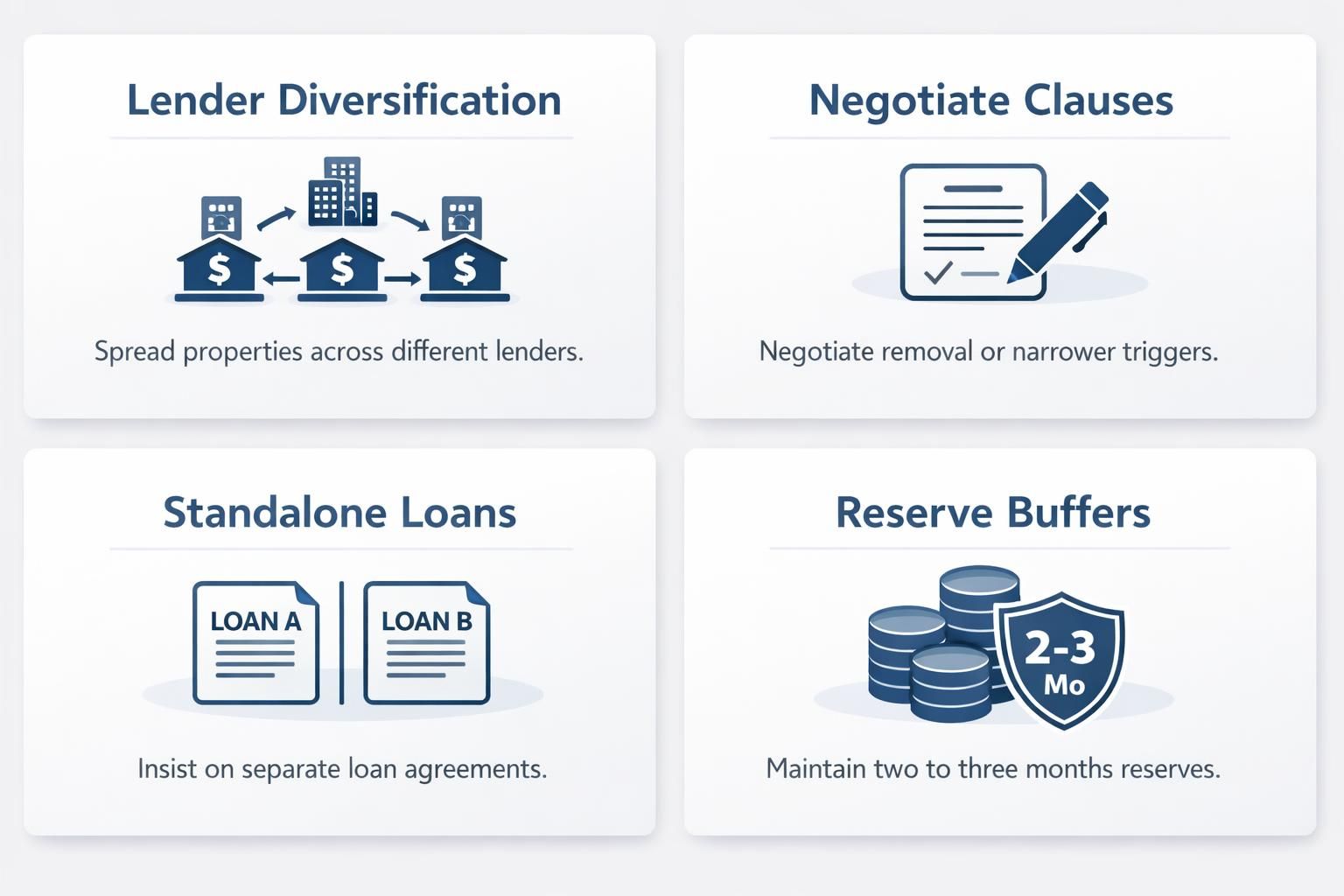
Diversify your lender relationships: Spread your portfolio across multiple lenders rather than concentrating all properties with a single institution. While this approach may require more administrative effort managing different servicers and payment schedules, it eliminates cross-default risk between lenders. A default with Lender A affects only those specific properties, leaving your loans with Lender B, C, and D completely insulated. This strategy works particularly well as the DSCR lending market expands with new competition, giving investors access to diverse financing sources.
Negotiate clause removal or limitation: Before closing, request elimination of cross-default provisions or negotiate narrower trigger definitions. Some lenders will remove these clauses entirely for borrowers with strong credit profiles, substantial reserves, or long-standing relationships. Others might agree to limit cross-default triggers to only payment defaults, excluding technical covenant breaches like minor insurance lapses or late financial reporting. Every provision you can narrow or eliminate reduces your exposure.
Secure standalone loan structures: Insist on truly independent loan agreements rather than master loan structures with individual property schedules. Standalone loans, each with separate documentation and no contractual linkage to other properties, provide maximum insulation. While lenders may prefer master loan efficiency, borrowers benefit from the firewall standalone structures create between properties.
Build cure-period buffers into your reserves: Maintain cash reserves sufficient to cure any potential default across your entire portfolio within standard cure periods. If your typical monthly debt service across all properties totals a certain amount, keep at least two to three months of that amount in liquid reserves dedicated specifically to default prevention. This buffer gives you time to address underlying property issues without triggering cross-default cascades.
DSCR loans typically require down payments of 20% to 25%, with loan-to-value ratios up to 75% to 80%, and minimum credit scores around 620, with minimum DSCR ratios of 1.0. These baseline requirements can vary, and specific terms may change, so investors should confirm current program details directly with their lender before making financing decisions. Understanding these parameters helps you evaluate whether you have sufficient equity and cash flow cushion to weather potential defaults without triggering cross-default provisions across your portfolio.
Protecting Your Portfolio from Cross-Default Exposure
Once your portfolio is established, ongoing management strategies can reduce your vulnerability to cross-default scenarios even within existing loan structures.
Implement property-level cash flow monitoring: Track each property's debt service coverage ratio monthly rather than reviewing only portfolio-level performance. Early detection of declining coverage on specific properties allows you to address problems before they escalate to payment defaults. When you notice a property's DSCR dropping toward 1.0 or below, you can increase rents, reduce expenses, or tap reserves to stabilize performance before default occurs.
Maintain property-specific operating reserves: Beyond portfolio-level reserves, keep dedicated operating accounts for each property with at least three to six months of debt service coverage. This property-level segregation ensures that temporary cash flow disruptions at one asset don't force you to choose which properties receive payment, reducing the likelihood that any single property triggers a default event.
Refinance out of problematic structures: As the DSCR lending market becomes more competitive and lenders offer improved terms, consider refinancing properties out of cross-default structures into standalone loans with different lenders. This strategy works particularly well when property values have appreciated or when you've paid down principal, allowing you to refinance with better loan-to-value ratios that attract competitive lender interest.
Document lender communication protocols: If you anticipate temporary payment difficulties, communicate with lenders proactively before defaults occur. Many lenders will grant forbearance, modify payment schedules, or waive cross-default enforcement if you demonstrate transparency and present credible workout plans. These informal accommodations rarely appear in loan documents but can provide crucial flexibility when problems emerge.
The growing competition in the DSCR lending market, with new lenders entering the space and established institutions expanding their investor loan programs, creates opportunities to restructure existing portfolios away from cross-default exposure. Investors who secured financing several years ago under less favorable terms may find that current market conditions support refinancing into better structures with reduced cross-default risk. Evaluating top lenders and their specific DSCR loan products allows you to identify institutions offering portfolio-friendly terms that align with your risk management objectives.
Cross-default risk across multiple DSCR loans represents one of the most underestimated threats in rental property portfolio management. While these clauses serve legitimate lender interests in protecting their loan portfolios, they create structural vulnerabilities that can transform isolated property problems into portfolio-wide catastrophes. The interconnected nature of cross-default provisions means that your financing architecture matters just as much as your property selection, market analysis, or operational management.
Smart investors recognize that portfolio protection begins at the financing stage, not after problems emerge. By diversifying lender relationships, negotiating favorable loan terms, maintaining robust reserves, and monitoring property-level performance closely, you can build portfolios that withstand individual property challenges without risking your entire investment base. As the DSCR lending market continues to evolve with increased competition and expanding options, investors have more opportunities than ever to structure financing that supports growth while minimizing systemic risk.
Understanding the distinction between cross-default and cross-collateralization, knowing what happens when defaults occur, and implementing proactive strategies to avoid or mitigate these provisions puts you in control of your portfolio's risk profile. Your financing structure should support your investment strategy, not undermine it. Every loan agreement you sign either strengthens or weakens your portfolio's resilience, and the decisions you make today about cross-default exposure will determine whether temporary setbacks remain manageable or become existential threats.
If you're building or refinancing a rental property portfolio and want to explore DSCR loan structures that minimize cross-default exposure while maximizing your financing flexibility, see your DSCR loan options with terms tailored to investor needs.