Real estate investors face a critical decision when financing rental properties: choosing between DSCR loans and conventional mortgages. This investor mortgage comparison reveals fundamental differences in qualification rules, income requirements, and portfolio growth potential. DSCR loans focus on the property's cash flow rather than your personal income, while conventional loans rely heavily on traditional underwriting criteria. The choice between these rental loan differences can significantly impact your investment strategy and expansion plans. Understanding these distinctions helps you select the financing option that aligns with your investment goals and financial profile.
What You Should Do When Choosing Investment Property Financing
Making smart decisions about investment property financing requires following proven strategies that maximize your success potential. These best practices help you navigate the complex world of DSCR vs conventional loans effectively.
Evaluate your rental income potential first - Calculate the property's debt service coverage ratio to determine if it can support DSCR loan requirements
Document all income streams thoroughly - Gather rental agreements, bank statements, and property management records to strengthen your loan application
Compare interest rates across multiple lenders - Shop around with different financial institutions to find the most competitive terms for your investment scenario
Consider your long-term portfolio goals - Choose financing that supports future acquisitions and doesn't limit your expansion capacity
Common Mistakes to Avoid in Investor Mortgage Selection
Avoiding these critical errors can save you thousands of dollars and prevent financing delays that could derail your investment plans. These don'ts represent the most frequent missteps investors make when comparing loan options.
Don't ignore the property's cash flow performance - Failing to accurately calculate rental income versus expenses can lead to loan rejection or cash flow problems
Don't overlook qualification differences - DSCR and conventional loans have distinct requirements that affect your eligibility and approval timeline
Don't assume lower rates always mean better deals - Higher interest rates on DSCR loans might be offset by easier qualification and faster portfolio growth opportunities
Don't neglect reserve requirements - Both loan types typically require cash reserves, but the amounts and verification processes differ significantly
Key Qualification Requirements for DSCR Loans
DSCR loan qualification focuses primarily on the property's income-generating potential rather than your personal financial profile. This approach offers unique advantages for investors with non-traditional income sources.
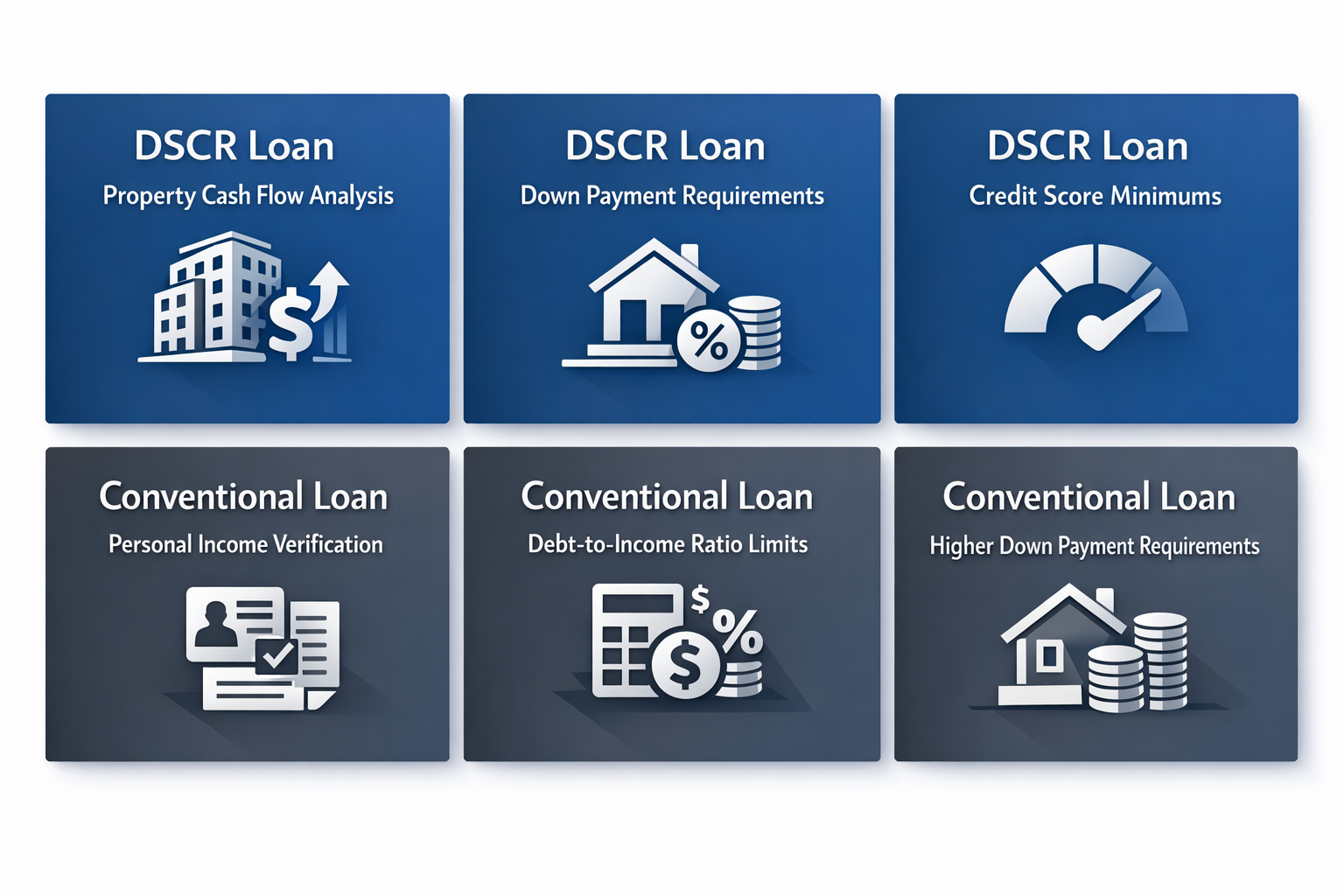
Property cash flow analysis - Lenders typically require a debt service coverage ratio of 1.0 or higher, meaning rental income covers or exceeds mortgage payments
Down payment requirements - Most DSCR loans require 20-25% down payment, though some programs may accept lower amounts for qualified properties
Credit score minimums - While personal income verification isn't required, credit scores usually need to meet minimum thresholds set by individual lenders
Property type restrictions - Single-family homes, duplexes, and small multifamily properties often qualify, but each lender has specific property criteria
Reserve fund documentation - Investors typically need to demonstrate liquid reserves covering several months of mortgage payments
Conventional Loan Standards for Investment Properties
Conventional loans for investment properties follow traditional underwriting guidelines that emphasize your personal financial strength over property performance. These qualification rules create different opportunities and challenges for investors.
Personal income verification - Tax returns, W-2 forms, and employment verification are required to prove your ability to service the debt
Debt-to-income ratio limits - Your total monthly debt payments, including the new mortgage, typically cannot exceed 43-45% of gross monthly income
Higher down payment requirements - Investment properties usually require 20-25% down payment minimums, with some programs requiring even more
Stricter credit requirements - Credit scores often need to be 620 or higher, with better rates reserved for scores above 740
Cash reserve mandates - Lenders typically require 2-6 months of mortgage payments in liquid reserves, depending on the property and loan amount
Interest Rate and Cost Comparison Analysis
The cost structure differences between DSCR and conventional loans can significantly impact your investment returns over time. Understanding these financial implications helps you make informed decisions about which loan type offers better long-term value.
Base interest rate differences - DSCR loans typically carry interest rates 0.5-1.5% higher than conventional loans due to increased lender risk
Closing cost variations - Both loan types have similar closing costs, but DSCR loans might include additional appraisal fees for rental income requirements
Prepayment penalty considerations - Some DSCR loans include prepayment penalties, while conventional loans for investment properties may not have these restrictions
Long-term cost calculations - Higher DSCR rates might be offset by faster portfolio expansion and increased rental income over time
Refinancing flexibility - Conventional loans often provide more refinancing options, while DSCR loans may have limited refinance programs available
The choice between DSCR vs conventional loans ultimately depends on your investment strategy, financial profile, and portfolio goals. DSCR loans offer flexibility for investors who want to leverage rental income without personal income verification, making them ideal for portfolio expansion. Conventional loans provide potentially lower interest rates for investors with strong personal financial profiles. Consider your current situation, future investment plans, and the specific properties you're targeting when making this important financing decision. The right loan choice can accelerate your real estate investment success and provide the foundation for long-term wealth building through rental properties.