DSCR Loans for Rental Properties: The Complete Investor Guide
Real estate investors seeking to expand their rental portfolios often face challenges with traditional financing that relies heavily on personal income documentation. DSCR loans for rental properties offer a strategic alternative by qualifying properties based on their rental income potential rather than the borrower's W-2 earnings. This income-based approach might revolutionize how investors approach property acquisition, particularly in today's market where personal income may not reflect an investor's true financial capacity.
Understanding the DSCR calculation method and rental cash flow analysis becomes crucial for maximizing your investment potential. These loans typically focus on the property's ability to generate sufficient rental income to cover debt obligations, making them particularly attractive for seasoned investors with multiple properties or those transitioning from traditional employment to full-time real estate investing.
Essential DSCR Loan Requirements Checklist
Essential DSCR loan requirements checklist helps investors prepare for the application process efficiently. Unlike traditional mortgages, these loans focus primarily on property performance rather than personal financial history.
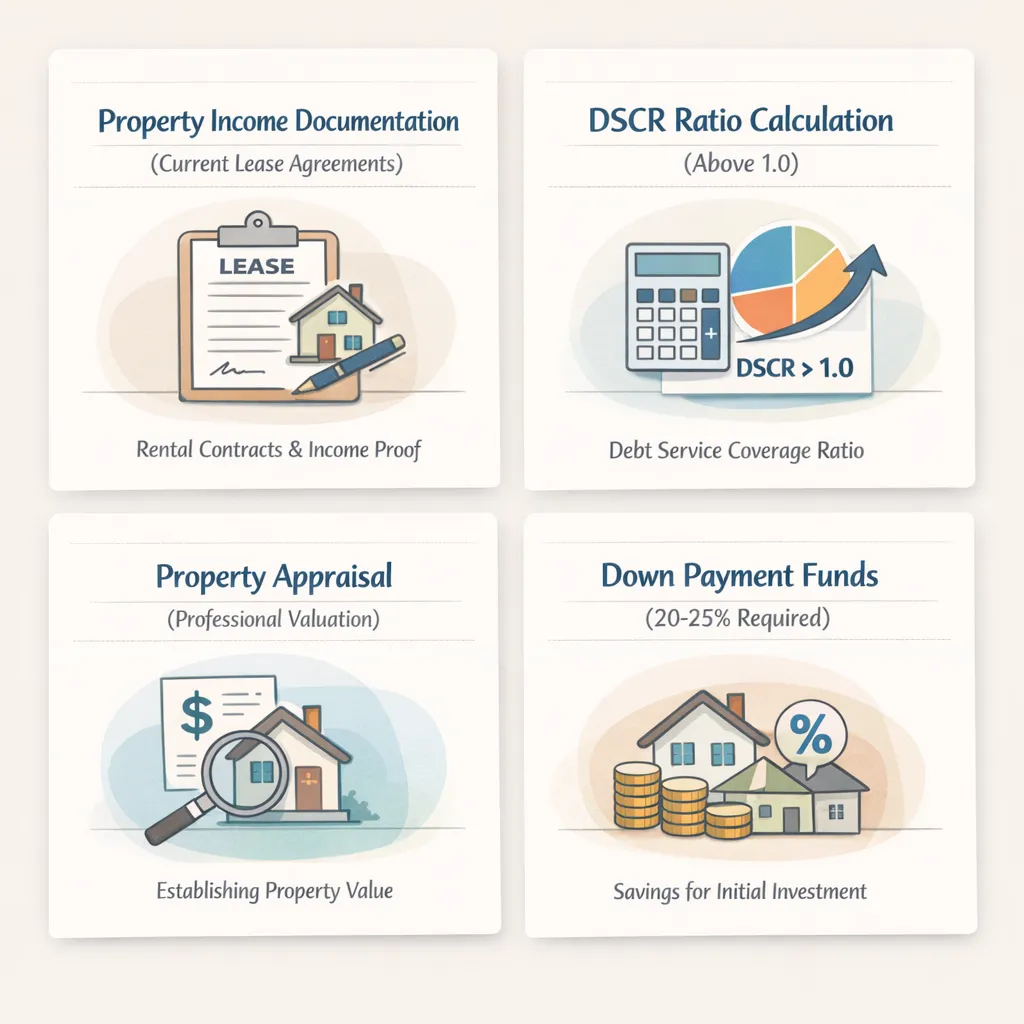
Property income documentation: Current lease agreements, rent rolls, or market rent analysis demonstrating the property's income potential
DSCR ratio calculation: Property must typically achieve a debt service coverage ratio above 1.0, indicating rental income exceeds debt payments
Property appraisal: Professional valuation confirming the property's market value and rental income estimates align with loan requirements
Down payment funds: Generally requires 20-25% down payment, though some lenders may offer different terms based on property type
Reserve requirements: Cash reserves typically covering 2-6 months of principal, interest, taxes, and insurance (PITIA) for standard long-term rentals, with short-term rental properties often requiring 6-12 months of reserves due to greater income variability
DSCR Calculation Method Fundamentals
DSCR calculation method fundamentals determine whether your rental property qualifies for income-based financing. The calculation process involves analyzing the relationship between rental income and total debt obligations.
Net operating income calculation: Subtract property expenses like taxes, insurance, and maintenance from gross rental income
Debt service calculation: Include principal, interest, taxes, and insurance payments in your total monthly debt obligation
DSCR ratio formula: Divide net operating income by total debt service to determine your coverage ratio
Market rent analysis: Lenders may use market rent estimates rather than existing lease terms for more accurate income projections
Rental Cash Flow Analysis Best Practices
Rental cash flow analysis best practices ensure accurate income projections for DSCR loan approval. Proper analysis helps investors identify properties that meet lender requirements while maximizing investment returns.
Conservative vacancy rates: Factor in realistic vacancy periods based on local market conditions and property type
Maintenance reserve allocation: Set aside funds for ongoing repairs and capital improvements that could impact cash flow
Seasonal income variations: Account for potential rent fluctuations, especially in markets with seasonal demand patterns
Future rent growth potential: Consider long-term rental income trends when evaluating properties for DSCR financing
Step-by-Step DSCR Loan Application Process
Step-by-step DSCR loan application process streamlines your path to rental property financing. Following these steps systematically can improve approval chances and reduce processing time.
Pre-qualification assessment: Contact lenders to discuss your investment goals and determine preliminary eligibility based on property type and location
Property identification and analysis: Select target properties and conduct initial DSCR calculations to ensure they meet minimum ratio requirements
Formal application submission: Submit complete application with property details, rental income documentation, and financial reserves information
Property appraisal coordination: Work with lender-approved appraisers to establish property value and rental income potential
Final underwriting and closing: Complete remaining documentation requirements and coordinate closing timeline with all parties involved
Investor Qualification Criteria Strategies
Investor qualification criteria strategies help position your application favorably with DSCR lenders. Understanding these criteria allows investors to strengthen weak areas before applying.
Credit score optimization: Maintain credit scores typically above 620, though some lenders may require higher scores for better rates
Asset diversification demonstration: Show multiple income streams or property holdings to reduce perceived lending risk
Experience documentation: Highlight previous real estate investment experience, property management skills, or relevant industry knowledge
Liquid asset positioning: Maintain readily accessible funds for down payments, closing costs, and required reserves
Short-Term vs Long-Term Rental Financing Options
Short-term vs long-term rental financing options offer different advantages depending on your investment strategy. DSCR lenders may have varying requirements for different rental models.
Traditional rental properties: Typically offer more predictable income streams and may qualify for standard DSCR loan terms and rates
Short-term vacation rentals: May require specialized DSCR products due to income volatility but could support higher debt service ratios
Mixed-use properties: Properties combining residential and commercial uses might need customized underwriting approaches for accurate income assessment
Multi-family properties: Larger rental properties may qualify for more favorable terms due to diversified income from multiple units
Key Advantages for Rental Property Investors
Key advantages for rental property investors make DSCR loans particularly attractive in today's financing environment. These benefits often outweigh traditional mortgage limitations for active real estate investors. DSCR loans eliminate the need for extensive personal income documentation, allowing investors to qualify based on property performance rather than W-2 earnings. This approach typically enables faster portfolio expansion since each property's rental income can support its own financing. Additionally, the focus on property cash flow aligns perfectly with investor goals of building income-generating assets. Many lenders also offer more flexible debt-to-income calculations, recognizing that rental income often provides more stability than traditional employment in volatile economic conditions.
DSCR loans for rental properties represent a significant opportunity for real estate investors looking to scale their portfolios efficiently. By focusing on property income rather than personal financial documentation, these loans can open doors that traditional financing might keep closed. Success with DSCR financing typically depends on thorough property analysis, accurate rental cash flow projections, and understanding lender-specific requirements.
As the rental market continues evolving, staying informed about DSCR product innovations and changing qualification criteria becomes increasingly important. Investors who master the DSCR calculation method and rental income underwriting process position themselves to capitalize on emerging opportunities while building sustainable cash flow through strategic property acquisitions.