Understanding DSCR loan requirements has become crucial for real estate investors navigating today's lending landscape. These investor-focused mortgage products evaluate properties based on their income-generating potential rather than personal income, making them attractive for portfolio expansion. However, lenders have specific criteria that determine qualification and loan terms. From minimum DSCR ratios to credit score thresholds, knowing these requirements upfront can save time and position your deals for approval. This comprehensive guide breaks down the key qualification criteria you'll encounter when pursuing DSCR financing for your investment properties.
Credit Score and Down Payment Standards
Credit score and down payment standards form the foundation of DSCR loan requirements that every investor must meet. These baseline qualifications typically determine your initial eligibility before lenders evaluate property-specific factors.
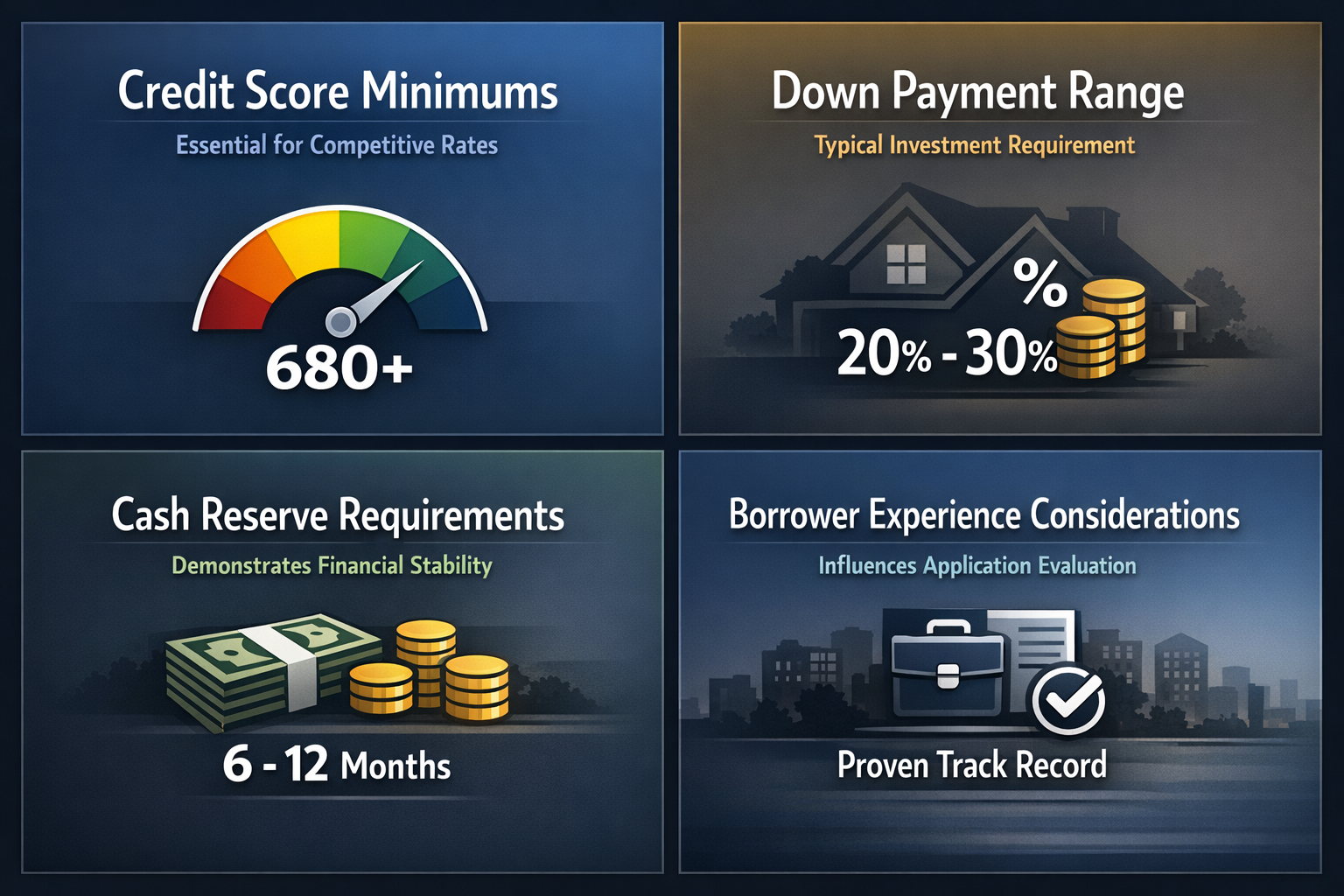
Down Payment Range: Most lenders require down payments between 20-25% for DSCR loans, which represents a significant cash investment but often provides more favorable terms than alternative financing options.
Credit Score Minimums: While specific credit requirements may vary by lender, maintaining strong credit history remains essential for accessing competitive rates and terms in the DSCR lending market.
Cash Reserve Requirements: Lenders often expect borrowers to maintain adequate cash reserves beyond the down payment, demonstrating financial stability and ability to handle unexpected expenses or vacancy periods.
Borrower Experience Considerations: Some lenders may weigh your real estate investment experience when evaluating applications, particularly for complex property types or larger loan amounts.
Minimum DSCR Ratio Calculations
Minimum DSCR ratio calculations represent the core evaluation metric that determines whether your investment property generates sufficient income to support the proposed debt service.
Standard Ratio Requirements: Most lenders require a DSCR of at least 1.0, meaning the property's net operating income equals or exceeds the monthly debt service obligations.
Preferred Ratio Thresholds: Many investors find that maintaining a DSCR of 1.25 or higher can improve loan terms and provide better access to competitive financing options.
Property Type Variations: Different property types might have varying DSCR requirements, with some lenders applying stricter ratios for certain investment strategies or market conditions.
Rate Impact Considerations: Your DSCR ratio may influence the interest rates offered, with stronger ratios potentially qualifying for more favorable pricing structures.
Rental Income Calculation Methods
Rental income calculation methods vary among lenders, but understanding these approaches helps investors prepare accurate documentation and set realistic expectations for loan qualification.
Market Rent Analysis: Lenders often use professional appraisals or market rent studies to determine the property's income potential, which may differ from current lease rates.
Lease Agreement Documentation: Existing lease agreements provide concrete income evidence, though lenders may apply vacancy factors or adjust for below-market rents.
Short-Term Rental Considerations: Properties used for short-term rentals like Airbnb may require specialized income calculations, often based on historical performance data or market analysis.
Vacancy Factor Applications: Most lenders apply vacancy factors ranging from 5-10% to account for potential rental interruptions, reducing the effective income used in DSCR calculations.
Operating Expense Documentation Requirements
Operating expense documentation requirements ensure lenders have accurate information about the property's ongoing costs when calculating net operating income for DSCR evaluation.
Property Tax Records: Current property tax assessments and payment history demonstrate ongoing municipal obligations that directly impact property cash flow.
Insurance Coverage Details: Property insurance policies and premium costs show required coverage levels and associated expenses for maintaining the investment.
Maintenance and Management Costs: Documentation of routine maintenance expenses, property management fees, and capital improvement reserves helps establish realistic operating expense projections.
Utility and Service Expenses: Records of utilities, landscaping, cleaning services, and other property-related costs contribute to comprehensive operating expense calculations.
Key Steps for DSCR Loan Success
Key steps for DSCR loan success involve strategic preparation and timing to maximize your chances of approval while securing favorable terms for your investment property financing.
Prepare Financial Documentation Early: Gather tax returns, bank statements, property financial records, and lease agreements well in advance to streamline the application process and avoid delays.
Calculate DSCR Ratios Before Shopping: Run preliminary DSCR calculations using conservative income and expense estimates to identify properties that meet lender requirements and support your investment goals.
Account for Seasoning Requirements: Plan for potential seasoning periods of 6-12 months before refinancing, particularly for short-term rental properties or recent acquisitions that may need time to establish income history.
Maintain Adequate Cash Reserves: Build cash reserves beyond the minimum down payment requirements to demonstrate financial strength and prepare for unexpected expenses during the holding period.
Stay Informed on Market Changes: Monitor evolving DSCR lending standards and interest rate environments, as these factors can significantly impact deal feasibility and investment returns.
Success with DSCR loan requirements hinges on thorough preparation and realistic property evaluation. From meeting credit and down payment standards to achieving minimum DSCR ratios, each requirement serves as a building block for sustainable investment financing. The evolving lending landscape may bring stricter qualification criteria, but investors who understand these fundamentals can adapt their strategies accordingly. Focus on properties that generate strong cash flow relative to their debt service, maintain solid financial documentation, and build relationships with lenders who understand investment property financing. With proper preparation and attention to these key requirements, DSCR loans can provide the leverage needed to grow your real estate investment portfolio effectively.