
LOAN PROGRAMS
APPLY NOW

When evaluating financing options for investment properties, understanding the rate differences between DSCR loans and conventional mortgages can significantly impact your bottom line. While conventional loans might offer lower interest rates, DSCR loans provide unique advantages that could justify their typically higher costs. The choice between these financing options often comes down to more than just the interest rate, involving factors like approval speed, income verification requirements, and overall investment strategy alignment.
Current market data shows DSCR rates vs conventional rates typically differ by 1-2%, but this spread tells only part of the story. Smart investors need to evaluate the complete picture, including closing costs, approval criteria, and how each loan type fits their specific investment goals and timeline requirements.
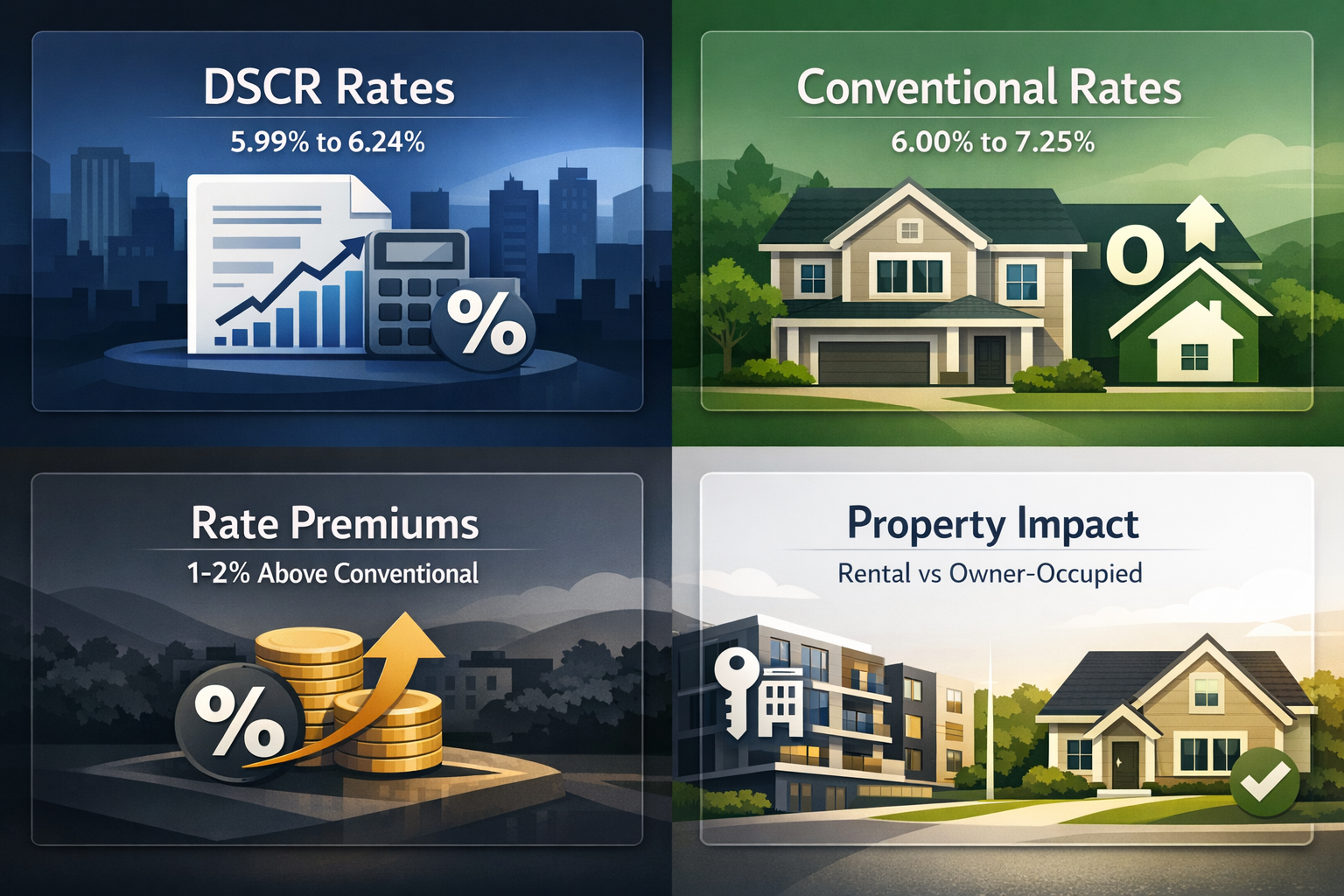
Understanding the key rate differences between DSCR and conventional loans helps investors make informed financing decisions. The rate gap reflects different risk profiles and underwriting approaches that each loan type represents.
Several factors influence DSCR loan pricing beyond the base interest rate, creating a complex pricing structure that investors must understand when comparing options.
When comparing DSCR rates vs conventional rates, investors must consider the additional costs beyond interest rates that can significantly impact the total financing expense.
The speed and approval advantages of DSCR loans often justify their higher rates for time-sensitive investment properties opportunities, making them valuable tools in competitive markets.
Despite the advantages of DSCR loans, certain scenarios make conventional rates the more attractive option for real estate investors seeking optimal financing terms.
Creating a strategic financing decision framework helps investors systematically evaluate when DSCR rates vs conventional rates make sense for their specific situation. The decision extends beyond simple rate comparisons to encompass timing, flexibility, and long-term investment objectives. Successful investors typically weigh the immediate cost differences against the operational advantages each loan type provides. This approach ensures financing decisions support broader investment strategies rather than focusing solely on minimizing interest expenses. Market conditions, personal financial situations, and property-specific factors all contribute to the optimal choice between these financing alternatives.
The comparison between DSCR rates vs conventional rates reveals that the higher cost of DSCR loans often reflects their specialized benefits rather than simply representing expensive financing. While conventional loans typically offer lower interest rates, DSCR loans provide speed, flexibility, and approval advantages that can be worth the premium in many investment scenarios.
Smart investors evaluate both options within the context of their overall investment strategy, considering factors like timeline requirements, documentation capabilities, and long-term holding plans. The right choice depends on balancing immediate cost considerations against operational advantages and strategic fit.
Whether you choose DSCR or conventional financing, understanding the complete cost structure and approval requirements helps ensure your financing decision supports your investment success rather than hindering it.
