Understanding DSCR Loan with 12 Month Leases for Investment Properties
Real estate investors seeking financing for rental properties often face unique challenges when it comes to qualifying for traditional mortgages. A DSCR loan with 12 month leases offers a compelling solution that focuses on property cash flow rather than personal income verification. These specialized investment loans allow you to qualify based solely on the property's rental income potential, making them particularly attractive for portfolio expansion.
The combination of DSCR financing and stable 12-month lease agreements creates a powerful strategy for investors looking to minimize renewal risk while demonstrating consistent income streams to lenders. Understanding how lease length preferences impact loan approval can make the difference between securing favorable terms and facing unnecessary obstacles in your investment journey.
Essential Tips for Maximizing DSCR Loan Success
Essential tips for maximizing DSCR loan success focus on leveraging the unique advantages these investment loans offer over traditional financing options.
Focus on property cash flow calculations: DSCR loans qualify borrowers based entirely on rental income without requiring personal income verification or extensive credit documentation. This streamlined approach allows investors to expand their portfolios more efficiently than conventional loan structures.
Prepare for higher minimum loan amounts: Most lenders require minimum loan amounts of $100,000 or more for DSCR financing, making these products ideal for larger investment ventures. This threshold ensures the loan structure aligns with serious investment strategies rather than small-scale purchases.
Understand rate premiums in current market conditions: DSCR loans typically carry interest rate premiums compared to conventional investment loans due to their flexible underwriting criteria. However, the ability to qualify without income verification often outweighs the additional cost for active investors.
Strategic Advantages of 12 Month Lease Agreements
Strategic advantages of 12 month lease agreements create stability that lenders find attractive when evaluating DSCR loan applications.
Demonstrate stable cash flow patterns: Twelve-month leases provide predictable rental income that lenders can confidently use in debt service coverage ratio calculations. This consistency reduces perceived risk and may lead to more favorable loan terms for investment properties.
Minimize vacancy and renewal risks: Longer lease terms reduce the frequency of tenant turnover, which can create income gaps that concern lenders during the underwriting process. Annual leases strike an optimal balance between tenant flexibility and investor stability.
Simplify income documentation requirements: Having established lease agreements in place makes it easier to provide the rental income documentation that DSCR lenders require during the application process. Clear lease terms eliminate ambiguity about projected cash flow.
Current Market Trends Affecting DSCR Lending
Current market trends affecting DSCR lending show significant evolution in product offerings and underwriting standards throughout 2025 and 2026.
Product innovation creates new opportunities: The DSCR lending landscape continues evolving with hybrid products and institutional capital influence reshaping available options. These innovations may provide investors with more flexible terms while maintaining the core benefit of income-based qualification.
Projected income calculations expand property types: Lenders increasingly accept projected rental income for properties like Airbnb and short-term rentals within DSCR loan calculations. This expansion allows investors to finance vacation rental properties using anticipated cash flow rather than historical data.
Credit standards show signs of tightening: While DSCR loans remain accessible, some lenders have implemented stricter credit requirements as market conditions change. Investors should prepare for potentially more rigorous evaluation processes compared to previous years.
Step-by-Step DSCR Loan Application Process
The step-by-step DSCR loan application process differs significantly from traditional mortgage applications, focusing primarily on property performance rather than borrower income.
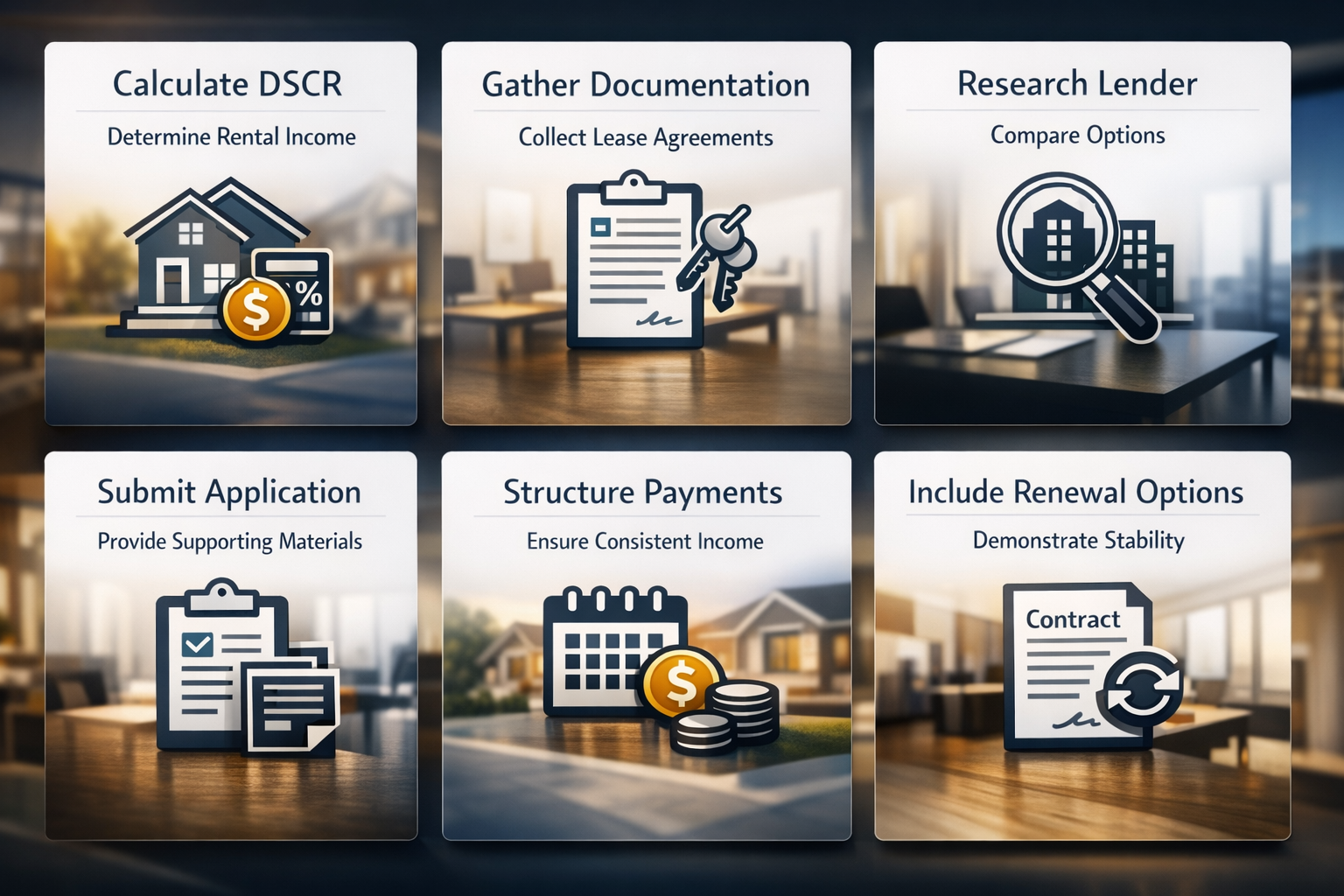
Calculate debt service coverage ratio: Determine your property's monthly rental income and divide by the proposed monthly debt service (principal, interest, taxes, insurance). Most lenders require a DSCR of 1.0 or higher, though some accept ratios as low as 0.75 with compensating factors.
Gather property documentation: Collect existing lease agreements, rent rolls, and property management statements that demonstrate current or projected rental income. For properties with 12-month leases, provide copies of signed lease agreements to verify stable cash flow.
Research lender requirements: Different lenders offer varying terms, rates, and qualification criteria for DSCR loans. Compare options from multiple lenders to find the most competitive package that aligns with your investment strategy and property type.
Submit application with supporting materials: Provide the completed application along with property appraisal, title work, insurance information, and rental income documentation. The streamlined process typically requires less personal financial information than conventional loans.
Optimizing Lease Terms for Lender Approval
Optimizing lease terms for lender approval involves structuring rental agreements that demonstrate stable income while meeting DSCR loan requirements.
Structure rent payments for consistent monthly income: Ensure lease agreements specify monthly payment amounts that provide adequate debt service coverage ratios. Avoid seasonal adjustments or variable rent structures that might complicate income calculations during underwriting.
Include renewal options with predetermined terms: Adding renewal clauses with specified rent increases can help demonstrate long-term income stability beyond the initial 12-month period. This forward-looking approach may strengthen your loan application by showing projected cash flow growth.
Document tenant screening and qualification standards: Maintain records of tenant credit checks, income verification, and screening processes to demonstrate responsible property management. Quality tenants reduce default risk and support stable rental income projections.
Common Mistakes to Avoid with DSCR Financing
Common mistakes to avoid with DSCR financing can prevent delays and improve your chances of securing favorable loan terms for investment properties.
Underestimating total carrying costs: Many investors focus solely on rental income without accounting for property taxes, insurance, maintenance, and vacancy allowances. Lenders typically reduce gross rental income by 25-30% to account for these expenses when calculating debt service coverage.
Choosing inappropriate property types: Not all rental properties qualify for DSCR financing, and some lenders have restrictions on property age, condition, or location. Research lender guidelines before making offers to ensure your target properties meet qualification criteria.
Ignoring market-specific lease length preferences: While 12-month leases work well in most markets, some areas favor different lease terms due to seasonal demand or local regulations. Understanding regional rental patterns can help optimize your lease structure for both tenant attraction and lender approval.
Failing to maintain adequate reserves: Most DSCR lenders require borrowers to maintain cash reserves equivalent to 2-6 months of mortgage payments. Insufficient reserves can result in loan denial even when debt service coverage ratios meet requirements.
A DSCR loan with 12 month leases represents a strategic financing approach that aligns property stability with lender requirements for investment success. The combination of income-based qualification and predictable lease terms creates opportunities for portfolio expansion without the constraints of traditional mortgage underwriting.
As the DSCR lending market continues evolving with new products and standards, investors who understand lease length preferences and stable cash flow principles will be better positioned to capitalize on emerging opportunities. The key lies in matching your property management strategy with lender expectations while maintaining the flexibility to adapt to changing market conditions.
Success with DSCR financing ultimately depends on demonstrating consistent rental income through well-structured lease agreements and maintaining adequate reserves for long-term investment stability. By focusing on these fundamentals, you can leverage the unique advantages of DSCR loans to build a more robust real estate investment portfolio.