When the lending landscape shifts, real estate investors start looking for creative ways to preserve returns and maintain momentum. One question that's been gaining traction lately: can a DSCR loan be assumed by a buyer when you sell a rental property? The short answer is that assumable DSCR loan options for investors do exist, but they're not universal. Not every lender structures DSCR loans with assumption clauses, and even when they do, the terms can vary widely. Understanding how DSCR loan assumability clauses work, what conditions typically apply, and how this feature might affect your exit strategy is crucial for investors building long-term portfolios.
DSCR loans have been gaining popularity in the non-qualified mortgage space, with more lenders entering the market and offering flexible qualification criteria based on rental income rather than traditional W-2s or tax returns. As competition among lenders increases, some are differentiating their products with features like assumability. For investors who time their acquisitions well or lock in favorable rates, the ability to transfer that financing to a future buyer can become a powerful selling point. But like any financing tool, assumption comes with trade-offs that need careful consideration.
This guide breaks down the mechanics of DSCR loan assumability, explores the scenarios where it might benefit both sellers and buyers, and walks through the practical steps and potential pitfalls involved in selling a rental property with an assumable DSCR loan. Whether you're evaluating a new acquisition or planning an eventual exit, knowing how assumption fits into your strategy can give you an edge in competitive markets.
What Makes a DSCR Loan Assumable
Loan assumability is not a standard feature across all DSCR products. It depends entirely on how the lender structures the note and whether they include specific language permitting the transfer of the loan obligation from one borrower to another. When a DSCR loan includes an assumption clause, it means a qualified buyer can take over the existing loan terms, including the interest rate, remaining balance, and repayment schedule, without requiring the seller to pay off the debt at closing.
Lender discretion drives availability: Only certain lenders offer assumable DSCR loans, and those that do often reserve the right to approve the assuming buyer. This approval process typically mirrors the original underwriting, focusing on the property's debt service coverage ratio rather than the buyer's personal income. The buyer must demonstrate that the rental income can support the debt, usually with a minimum DSCR ratio of 1.0 or higher.
Assumption clauses are written into the loan documents: The promissory note and deed of trust or mortgage must explicitly state that the loan is assumable. Without this language, the loan contains a due-on-sale clause, which requires full repayment when the property changes hands. Investors should review their loan documents carefully or work with their lender to confirm whether assumption is permitted before marketing a property as having assumable financing.
Fees and qualifications apply: Even when assumption is allowed, lenders typically charge an assumption fee, often a percentage of the loan balance or a flat amount. The new borrower must also meet credit and financial criteria, which might include a minimum credit score around 620 and sufficient liquid reserves. The property must continue to meet DSCR requirements under the new ownership, meaning the rental income needs to cover the debt service with the required cushion.
Interest rate and loan terms remain intact: One of the biggest draws of an assumable loan is that the buyer inherits the original interest rate and loan structure. In a rising rate environment, this can be a significant advantage. If the original loan was secured at a lower rate than current market offerings, the assumability feature becomes a valuable asset that can justify a higher sale price or attract more buyers.
Why DSCR Loan Assumability Clauses Matter Now
Market conditions and lender trends have made assumability more relevant for real estate investors in recent months. Rising Treasury yields and increased borrowing costs have prompted investors to reassess their financing strategies, and lenders are responding by offering more diverse DSCR products to capture market share.
Rate environment creates opportunity: When interest rates climb, the value of an existing low-rate loan increases. Investors who secured DSCR financing before recent rate hikes now hold an asset that can be transferred to a buyer, potentially offsetting some of the challenges of selling in a higher-rate market. This dynamic can shorten time on market and expand the pool of interested buyers who might otherwise struggle to qualify for new financing at current rates.
Lender competition is expanding options: DSCR lending has experienced growth in the non-qualified mortgage sector, with more lenders entering the space and seeking to differentiate their offerings. As competition intensifies, some lenders are introducing assumability as a selling point, recognizing that investors value flexibility and exit strategies. This trend may continue to expand the availability of assumable DSCR loans, giving investors more choices when structuring new acquisitions.
Portfolio strategies benefit from flexibility: For investors who build portfolios with the intent to sell individual properties over time, assumable financing provides another tool for optimizing exits. It allows for creative deal structures, such as seller financing combined with loan assumption, or staged sales that preserve favorable loan terms across multiple transactions. This flexibility can be particularly useful in markets where buyer demand is sensitive to financing costs.
Buyer qualification becomes more predictable: Because DSCR loans focus on property cash flow rather than personal income, the assumption process can sometimes move faster and with fewer documentation hurdles than traditional mortgage transfers. Buyers who might not qualify for conventional financing due to income structure or tax returns may still be able to assume a DSCR loan if the property's rental income supports the debt. This expands the potential buyer pool and can lead to smoother transactions.
Have a property in mind?
Tell us about the property and we will find the financing that fits you best.
Selling a Rental Property With an Assumable DSCR Loan
Marketing and closing a sale when you have assumable financing in place requires a slightly different approach than a standard transaction. The loan becomes part of the value proposition, but it also introduces additional steps and coordination with your lender.
Highlight the financing advantage in your listing: When rates are higher than your locked-in loan rate, the assumability feature becomes a major selling point. Make it clear in your marketing materials that qualified buyers can assume the existing DSCR loan, including the rate and remaining term. This can attract investors who are actively seeking ways to reduce their borrowing costs and improve cash flow from day one.
Pre-qualify the assumption process with your lender: Before accepting offers, reach out to your lender to understand their specific assumption requirements, timeline, and fees. Some lenders can process assumptions relatively quickly, while others may take several weeks. Knowing this upfront allows you to set realistic expectations with buyers and avoid delays during escrow. Request a copy of the assumption application and checklist so you can provide it to serious buyers early in the process.
Structure offers to account for equity and assumption logistics: The buyer will need to cover the difference between the sale price and the remaining loan balance, either through cash or additional financing. If your equity position is substantial, this can limit the pool of buyers who can afford the down payment. Some sellers work with buyers to structure creative financing, such as a second lien or seller carryback, to bridge the gap while still preserving the assumable first lien.
Coordinate closing with lender approval: The assumption must be formally approved by the lender, and this approval is typically a condition of closing. Work closely with your escrow or title company to ensure all assumption paperwork is submitted on time and that the lender's approval is secured before the scheduled closing date. Any delays in lender response can push back the transaction, so building in buffer time is wise.
Pros and Cons of Assuming a DSCR Loan
For buyers considering taking over an existing DSCR loan, the decision involves weighing the financial benefits against the practical trade-offs. Assumption isn't always the best choice, even when it's available, and understanding both sides helps investors make informed decisions.
Pro: Lock in a below-market interest rate: If the assumable loan carries a lower rate than current offerings, the buyer gains immediate cost savings and improved cash flow. Over the life of the loan, this can translate into significant interest savings and stronger returns on investment. In a rising-rate environment, this advantage can be substantial and may justify paying a premium on the purchase price.
Pro: Streamlined qualification based on property performance: DSCR loans underwrite to the property's rental income, not the borrower's personal financial situation. This can make assumption easier for buyers who have complex income structures, are self-employed, or prefer not to disclose extensive tax returns. As long as the property's cash flow meets the lender's DSCR requirements, typically around 1.0 or higher, the buyer can often move forward with less documentation than a conventional loan would require.
Con: Limited negotiation on loan terms: When you assume a loan, you inherit the existing terms, including the interest rate, amortization schedule, prepayment penalties, and any other provisions. If the original loan has unfavorable clauses, such as a high prepayment penalty or a balloon payment, the buyer is stuck with those conditions. Unlike originating a new loan, there's no opportunity to negotiate terms that better fit the buyer's investment strategy.
Con: Assumption fees and approval process add costs and time: Lenders typically charge an assumption fee, and the approval process requires underwriting the buyer and the property all over again. This adds time to the transaction and upfront costs that might offset some of the rate savings. Buyers need to factor in these expenses and delays when comparing assumption to simply securing new financing, especially if current market rates are competitive or falling.
Con: Equity gap may require significant cash or creative financing: If the seller has built substantial equity, the difference between the loan balance and the purchase price can be large. The buyer must come up with that cash or arrange secondary financing, which can complicate the deal. In some cases, the equity requirement makes assumption impractical, even if the interest rate is attractive, particularly for buyers with limited liquid capital.
Steps to Confirm and Leverage Assumability in Your DSCR Financing
Whether you're acquiring a new rental property or preparing to sell one, taking proactive steps to understand and utilize assumability can enhance your overall investment strategy. A few deliberate actions can position you to take full advantage of this feature when the time comes.
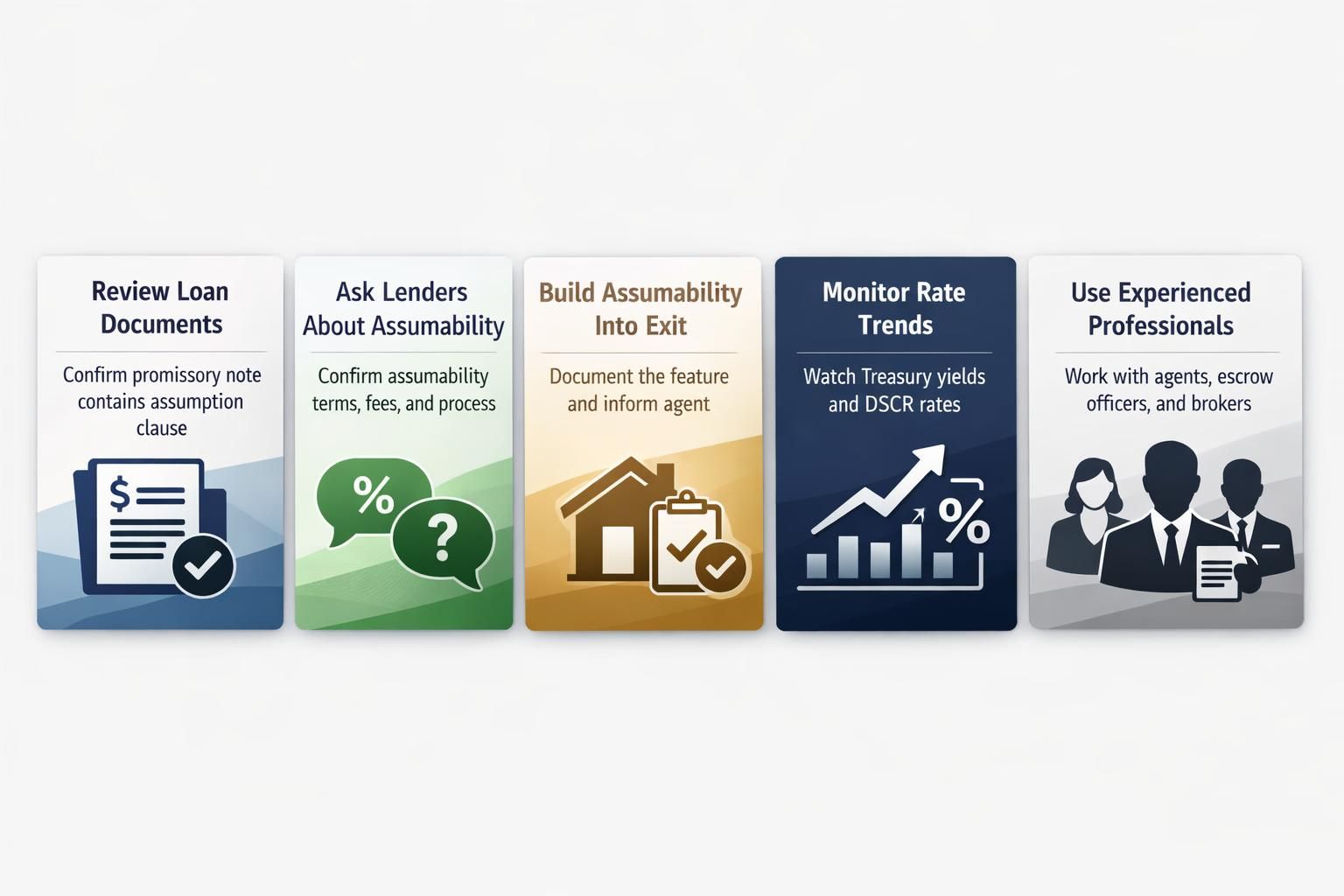
Review your loan documents before listing or refinancing: Pull out your promissory note, deed of trust, and loan agreement to verify whether an assumption clause exists. Look for language that explicitly permits transfer of the loan to a new borrower, and note any conditions or restrictions. If you're unsure how to interpret the language, consult with a real estate attorney or your mortgage broker to get clarity before moving forward with any sale plans.
Ask lenders about assumability when shopping for new DSCR loans: If you're in the market for DSCR financing on a new acquisition, include assumability in your list of criteria when comparing lenders. Not all lenders offer this feature, but those that do may be willing to highlight it as part of their competitive advantage. Clarify upfront what the assumption process entails, what fees apply, and whether there are any restrictions on transferring the loan in the future. DSCR loans typically require down payments around 20% to 25%, up to 75% to 80% LTV, with minimum credit scores around 620 and a minimum DSCR ratio of 1.0, though these figures can change and should be confirmed directly with the lender.
Build assumability into your exit strategy from day one: If you secure an assumable DSCR loan, document that feature in your investment file and factor it into your eventual sale planning. In a rising-rate environment, this could become a key differentiator when you're ready to exit. Communicate the benefit to your real estate agent, who can incorporate it into listing materials and buyer conversations to maximize interest and potentially command a higher sale price.
Stay informed about rate trends and market conditions: The value of an assumable loan fluctuates with interest rate movements. Monitor Treasury yields and DSCR loan rate trends so you can time your sale to maximize the benefit of your locked-in rate. If rates are climbing, your assumable loan becomes more attractive. If rates fall, the feature may lose some appeal, and you might focus on other selling points instead.
Work with experienced professionals who understand investor financing: Real estate agents, escrow officers, and mortgage brokers who specialize in investor transactions will be more familiar with loan assumptions and can help navigate the process smoothly. Their expertise can prevent costly mistakes, streamline approvals, and ensure that both buyer and seller meet all lender requirements without unnecessary delays.
Assumable DSCR loan options for investors represent a financing feature that can add real value in the right market conditions. When interest rates rise and borrowing costs climb, the ability to transfer a low-rate loan to a qualified buyer becomes a competitive advantage that can shorten your time on market and potentially increase your sale price. However, assumability is not a universal feature, and even when it's available, it comes with approval processes, fees, and conditions that both sellers and buyers need to understand.
For investors building rental portfolios, knowing whether your DSCR loan includes an assumption clause and how to leverage it can enhance your overall strategy. It's one more tool in the toolkit, alongside cash flow analysis, market timing, and property selection, that helps you optimize returns and navigate changing market conditions. As DSCR lending continues to grow and lenders compete for investor business, features like assumability may become more common, giving investors additional flexibility and options.
If you're exploring DSCR financing for a new acquisition or considering how assumability might fit into your exit plan, the key is to start the conversation early. Review your existing loan documents, ask potential lenders about assumption terms upfront, and work with professionals who understand the nuances of investor financing. In a dynamic lending environment, staying informed and proactive can make the difference between a good deal and a great one.
Ready to explore your financing options? Get a personalized DSCR loan quote and discover how the right loan structure can support your investment goals.