Growing a real estate portfolio often means juggling multiple properties, each with its own set of mortgage terms, payment schedules, and lender relationships. For investors scaling beyond a handful of units, that complexity can become a barrier to growth. A blanket loan offers a different approach: one mortgage covering multiple properties, consolidating your financing into a single manageable structure.
Understanding what is a blanket loan for real estate investors helps you recognize when this tool makes strategic sense. Instead of applying for separate loans every time you acquire a new rental property, a blanket loan wraps your holdings into one package, often with a single interest rate and one monthly payment. This financing structure is particularly valuable for investors building multifamily portfolios, managing rental property collections, or executing fix and flip strategies at scale.
This guide breaks down how blanket loans work, who benefits most from them, and how they compare to other investor financing options available in 2026. Whether you're managing a handful of single-family rentals or preparing to scale into commercial multifamily assets, knowing the mechanics and trade-offs of blanket loans can shape your next move.
How Blanket Loans Consolidate Multiple Properties
A blanket loan is a single mortgage secured by more than one property. Instead of applying for individual loans on each asset, you use one loan to finance a collection of properties simultaneously. The lender places a lien on all the properties included in the blanket loan, which means each asset serves as collateral for the entire debt.
Single application process: You submit one loan application covering all properties, reducing paperwork and underwriting time compared to multiple separate mortgages.
Unified payment structure: Rather than tracking multiple due dates and payment amounts, you make one monthly payment that covers the entire blanket loan balance.
Cross-collateralization: All properties in the blanket loan secure the debt together, so the lender can pursue any or all of them in case of default, not just one individual asset.
Release clauses: Most blanket loans include a release clause that lets you sell or refinance individual properties without paying off the entire loan, usually after meeting a partial paydown requirement.
This structure streamlines portfolio management and can lower administrative costs. For investors with five, ten, or more rental properties, consolidating financing into one blanket loan reduces the complexity of tracking multiple lenders, interest rates, and terms. It also frees up time and mental bandwidth to focus on acquisitions, property management, and optimizing cash flow rather than juggling separate loan servicing.
Blanket loans are commonly used by investors purchasing multiple properties at once, such as a portfolio sale from another investor, or by those refinancing an existing collection of rentals into a single loan. They're also popular among developers and fix and flip investors who need short-term financing for several projects simultaneously, allowing them to move quickly on deals without waiting for individual loan approvals.
Key Benefits of Financing Multiple Properties Under One Mortgage
Consolidating your portfolio under one loan can deliver operational and financial advantages that become more valuable as your holdings grow. Financing multiple properties under one mortgage explained starts with understanding these core benefits.
Simplified cash flow management: One payment each month makes it easier to budget and forecast cash flow, eliminating the risk of missing payments across multiple lenders or due dates.
Faster closings on bulk acquisitions: When you're buying several properties at once, a blanket loan can close more quickly than stacking multiple individual mortgages, giving you a competitive edge in portfolio purchases.
Potential cost savings: Originating one loan instead of several can reduce closing costs, appraisal fees, and title expenses, since many of these are per-loan charges.
Flexible portfolio adjustments: With a release clause, you can sell individual properties as your strategy evolves without triggering a full loan payoff, preserving capital for reinvestment.
Another advantage is the relationship you build with a single lender. Managing one blanket loan means working with one underwriting team, one servicing department, and one set of loan terms. That continuity can lead to better communication, smoother renewals, and potentially more favorable terms on future financing as you demonstrate consistent performance.
For investors focused on scaling, blanket loans also reduce the loan count on your credit report, which can help maintain borrowing capacity. Conventional mortgages often cap the number of financed properties per borrower, typically around four to ten depending on the lender. By consolidating properties under a blanket loan, you free up capacity to pursue additional deals using other financing tools like DSCR loans or fix and flip financing.
Who Should Consider a Blanket Loan Strategy
Blanket loans aren't the right fit for every investor or every stage of portfolio growth. They tend to work best for specific scenarios and investor profiles where consolidation delivers clear strategic value.
Investors with multiple rental properties: If you own four or more rental properties and want to simplify management, refinancing into a blanket loan can reduce administrative overhead and potentially lower your overall interest rate.
Portfolio buyers: When acquiring a package of properties from another investor or institution, a blanket loan lets you close the entire transaction at once rather than arranging individual financing for each unit.
Fix and flip operators scaling up: Investors running multiple rehab projects simultaneously can use a blanket loan to finance several flips under one umbrella, streamlining draws and reducing closing timelines on each new property.
Commercial multifamily investors: Owners of apartment buildings or mixed-use properties often use blanket loans to finance multiple buildings or complexes, leveraging economies of scale in underwriting and servicing.
Blanket loans typically require more equity and stronger financial performance than single-property mortgages. Lenders may look for a lower combined loan-to-value ratio across the portfolio, often around 65% to 75%, and they'll evaluate the aggregate cash flow from all properties rather than each one in isolation. This means you'll need demonstrated experience managing multiple properties and solid rental income documentation.
First-time investors or those with just one or two properties might find traditional financing or DSCR loans more accessible and cost-effective. Blanket loans generally make the most sense once you've built a track record and have enough assets to benefit from consolidation. They're a scaling tool, not a starting point.
Blanket Loans Versus DSCR Loans for Investors
DSCR loans and blanket loans serve different purposes in an investor's financing toolkit, and understanding when to use each can optimize your portfolio strategy. Both focus on rental income rather than personal income documentation, but their structures and best-use cases differ.
DSCR loans finance one property at a time: Each DSCR loan is secured by a single rental property, and the lender underwrites based on that property's debt service coverage ratio, which measures whether the rental income covers the mortgage payment.
Blanket loans finance multiple properties together: One loan secured by a collection of properties, with the lender evaluating the combined cash flow and equity across the entire portfolio rather than property by property.
DSCR loans offer more flexibility for selective acquisitions: If you're buying one rental property at a time and want to maintain independent financing for each asset, DSCR loans give you control over individual leverage and terms.
Blanket loans streamline large portfolios: If you already own multiple properties and want to consolidate financing, a blanket loan reduces complexity and can lower costs, but it ties all assets together under one lien.
DSCR loan rates in 2026 have remained competitive, with Trulo Mortgage offering rates ranging from 6.25% to 8.00% depending on credit profile, loan-to-value ratio, and DSCR. These loans focus on the rental income potential of the specific property being financed, making them ideal for investors building portfolios one property at a time or those who want to keep each asset's financing separate for flexibility.
Blanket loans, by contrast, are typically used for refinancing existing portfolios or purchasing multiple properties in a single transaction. They may offer lower per-property closing costs and simplified servicing, but they also require more equity and stronger overall portfolio performance. The cross-collateralization means if one property underperforms, it can affect the entire loan structure, whereas with individual DSCR loans, each property stands on its own.
Many sophisticated investors use both tools strategically. They might acquire new properties with DSCR loans to maintain flexibility, then periodically refinance a collection of stabilized rentals into a blanket loan to consolidate and reduce costs. This approach balances the benefits of independent asset control during the acquisition phase with the efficiency of consolidation once properties are performing.
Underwriting and Qualifying for Blanket Loan Financing
Qualifying for a blanket loan requires meeting higher financial thresholds than single-property financing, reflecting the lender's risk across multiple assets. Lenders evaluate your entire portfolio's performance, not just one property in isolation.
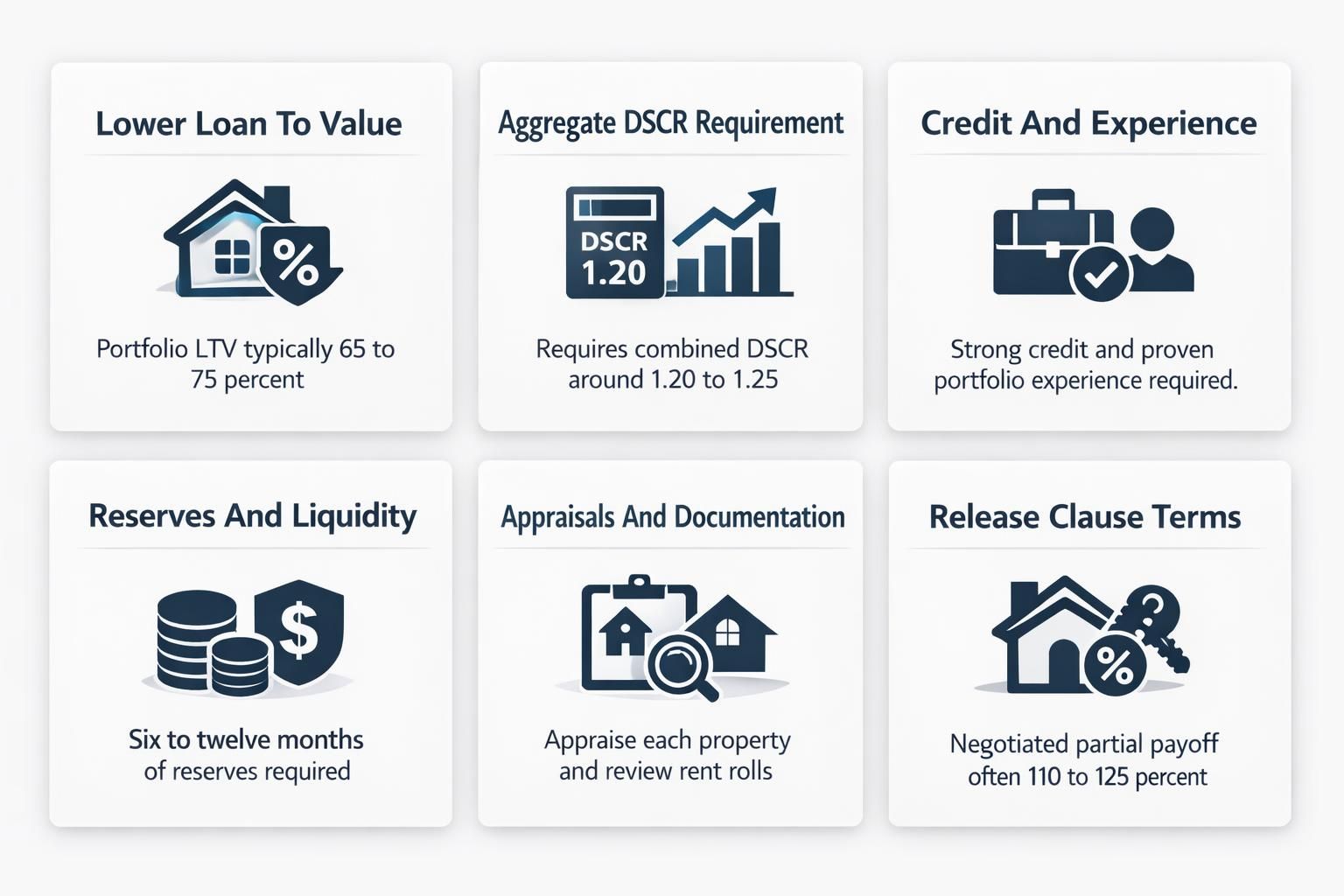
Lower loan-to-value requirements: Most blanket lenders cap LTV around 65% to 75% across the portfolio, meaning you'll need significant equity in the properties being financed, often more than the 75% to 80% LTV available on individual DSCR loans.
Aggregate debt service coverage: Lenders calculate the combined rental income from all properties and compare it to the total debt service on the blanket loan, typically requiring a DSCR of at least 1.20 to 1.25 or higher.
Credit and experience standards: Blanket loan lenders often require stronger credit scores, typically 680 or above, and prefer borrowers with a proven track record managing multiple investment properties.
Reserves and liquidity: Expect to demonstrate cash reserves covering several months of debt service across the entire portfolio, often six to twelve months, to show you can weather vacancies or repairs.
The underwriting process for a blanket loan involves appraising each property in the portfolio, reviewing rent rolls, lease agreements, and operating statements, and analyzing your overall financial position. This can take longer than a single-property loan, so plan for a 45 to 60-day closing timeline or more depending on portfolio size.
Release clauses are a critical negotiation point during underwriting. A release clause specifies the terms under which you can remove a property from the blanket loan without paying off the entire balance. Typically, this requires paying down a portion of the principal, often 110% to 125% of the individual property's allocated loan amount. Negotiating favorable release terms gives you flexibility to sell or refinance properties as your strategy evolves without being locked into the blanket structure indefinitely.
Blanket loans offer real estate investors a powerful way to consolidate financing across multiple properties, reducing administrative complexity and potentially lowering costs as portfolios grow. By understanding what is a blanket loan for real estate investors and how it compares to tools like DSCR loans, you can make informed decisions about when to pursue single-property financing and when to consolidate.
The right financing structure depends on your portfolio size, acquisition strategy, and long-term goals. For investors just starting to scale, individual DSCR loans often provide the flexibility and accessibility needed to build a collection of rental properties. As your holdings mature and you're managing multiple stabilized assets, refinancing into a blanket loan can streamline operations and free up capital for your next phase of growth.