The fix and flip loan process has evolved significantly, with approval times now typically ranging from 30 to 45 days and stricter qualification requirements emerging across the market. For real estate investors, understanding this financing structure is crucial for maintaining project timelines and optimizing cash flow. Unlike traditional mortgages, fix and flip financing aligns with construction milestones, allowing investors to access funds as renovation progress unfolds. This milestone-based approach helps minimize financial risk while ensuring adequate liquidity throughout the project lifecycle.
Pre-Application Requirements and Documentation
Pre-application requirements and documentation form the foundation of any successful fix and flip loan process. Investors must prepare comprehensive materials before approaching lenders to ensure smooth approval timelines.
Property Analysis Package: Include purchase contracts, comparable sales data, and detailed renovation scope outlining projected after-repair value
Financial Documentation: Prepare profit and loss statements, bank statements, and evidence of liquid reserves for project contingencies
Experience Portfolio: Compile previous flip projects with before/after photos, timelines, and profit margins to demonstrate track record
Contractor Network: Provide licensed contractor information, insurance certificates, and references to support rehab budget planning accuracy
Rehab Budget Planning and Cost Estimation
Rehab budget planning and cost estimation require detailed analysis of renovation scope to align with lender requirements. Accurate budgeting directly impacts loan approval and draw schedule timeline effectiveness.
Line-Item Breakdown: Create detailed cost estimates for materials, labor, permits, and contingencies typically ranging 10-15% of total budget
Market-Based Pricing: Research local contractor rates and material costs to ensure realistic budget projections that satisfy lender scrutiny
Timeline Integration: Coordinate budget phases with anticipated draw schedule timeline to maintain consistent cash flow throughout renovation
Contingency Planning: Build buffer funds for unexpected issues, code compliance updates, or market fluctuations that might affect project scope
Loan Terms and Interest Structure Options
Loan terms and interest structure options vary significantly among lenders, with most fix and flip loans featuring terms ranging from six to eighteen months. Understanding these structures helps investors optimize cash flow management during renovation phases.
Interest-Only Payments: Most lenders offer interest-only payment structures during renovation phases, helping investors maintain liquidity for project expenses
Term Length Flexibility: Loan durations typically span six to eighteen months, allowing investors to match financing with projected completion timelines
Rate Structures: Fixed and variable rate options may be available, with rates often tied to project complexity and investor experience level
Extension Options: Some lenders provide extension mechanisms for projects requiring additional time, though these might carry premium pricing
Draw Schedule Timeline Management
Draw schedule timeline management represents a critical component of the fix and flip loan process, as funds are typically released in correlation with renovation milestone completion. Effective timeline coordination prevents project delays and maintains cash flow consistency.
Milestone-Based Releases: Funds are distributed according to completed renovation phases such as demolition, framing, mechanical systems, and finishing work
Inspection Requirements: Each draw request typically requires third-party inspections to verify work completion before fund release authorization
Documentation Standards: Investors must provide receipts, lien waivers, and progress photos to support each draw request submission
Processing Timeframes: Allow 5-10 business days for draw processing and approval to prevent contractor payment delays
Step-by-Step Application Process
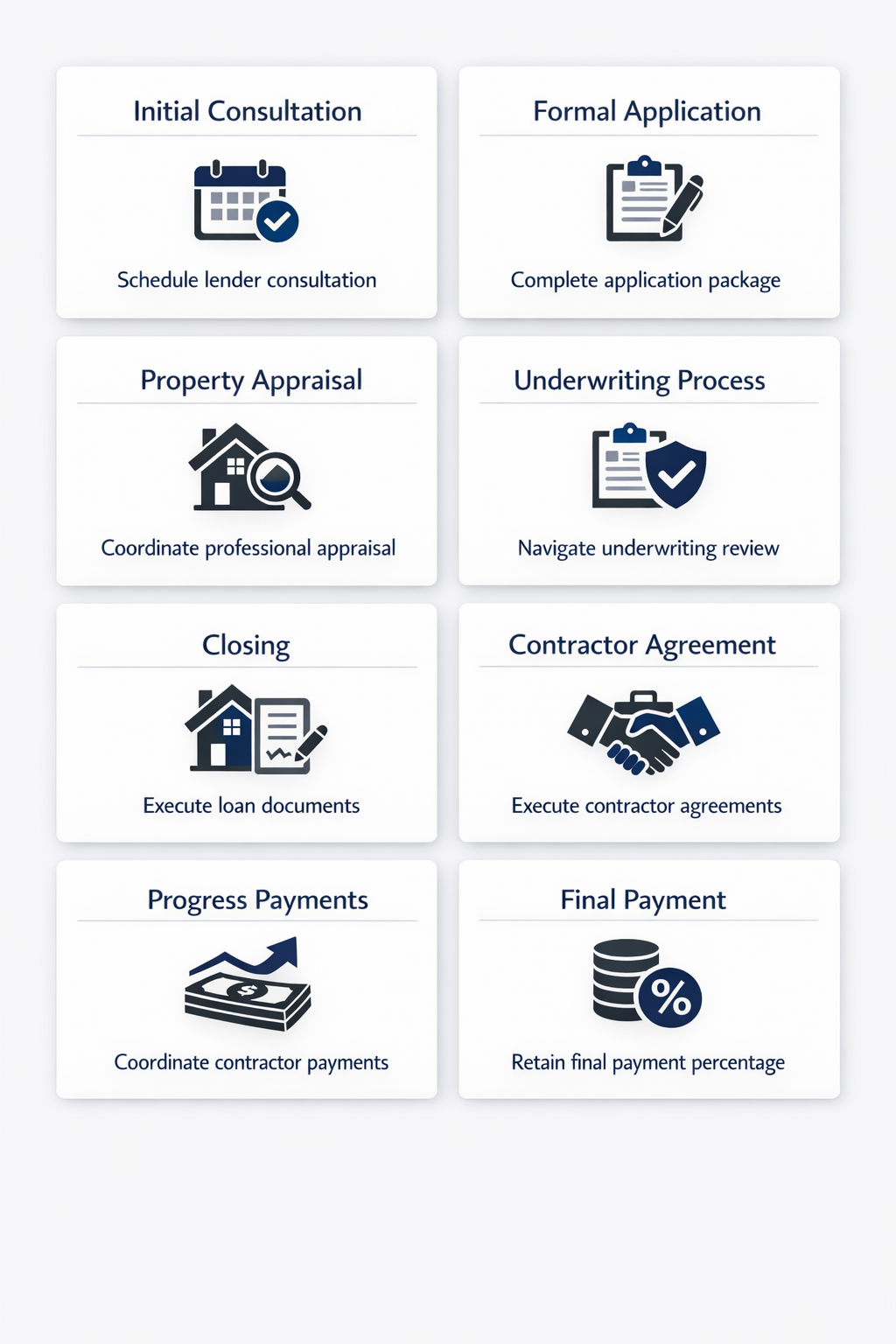
Initial Consultation and Property Evaluation: Schedule lender consultation to review property details, renovation scope, and investor qualifications while obtaining preliminary approval indication
Formal Application Submission: Complete comprehensive application package including financial documents, property analysis, and contractor agreements within required timeframes
Property Appraisal and Inspection: Coordinate professional appraisal for current and after-repair values while facilitating property condition assessment by lender representatives
Underwriting and Approval Process: Navigate underwriting review typically lasting 15-30 days, responding promptly to additional documentation requests or clarification needs
Closing and Fund Distribution: Execute loan documents and establish draw schedule framework, receiving initial fund disbursement for property acquisition and immediate renovation expenses
Contractor Payment Stages and Coordination
Contract Establishment and Initial Payment: Execute detailed contractor agreements specifying payment schedules aligned with draw timeline, typically providing 10-20% upfront for material procurement
Progress-Based Payment Structure: Coordinate contractor payments with milestone completion, ensuring work quality meets standards before releasing subsequent payments through draw process
Lien Waiver Management: Collect conditional and unconditional lien waivers from contractors and subcontractors before each payment release to protect property title
Final Payment and Project Closeout: Retain final payment percentage until project completion, final inspections, and all permit sign-offs are obtained from local authorities
Project Success Optimization
Project success optimization in the fix and flip loan process requires strategic coordination between financing milestones and renovation progress. Investors who master renovation milestone tracking often find their projects maintain better cash flow consistency and avoid costly delays. The key lies in establishing clear communication channels between contractors, lenders, and project managers while maintaining detailed documentation throughout each phase. As market conditions continue evolving with stricter qualification requirements, investors who demonstrate organized project management and milestone tracking capabilities position themselves advantageously for future financing opportunities.
The fix and flip loan process demands careful coordination between financing milestones and renovation progress to ensure project success. With approval times extending to 30-45 days and qualification requirements becoming more stringent, investors must approach this financing strategically. Effective milestone tracking, comprehensive rehab budget planning, and coordinated draw schedule timelines form the foundation of successful fix and flip ventures. By understanding contractor payment stages and maintaining detailed project documentation, investors can optimize cash flow while minimizing delays. As the market continues evolving, those who master these process fundamentals will maintain competitive advantages in securing favorable financing terms for their investment projects.