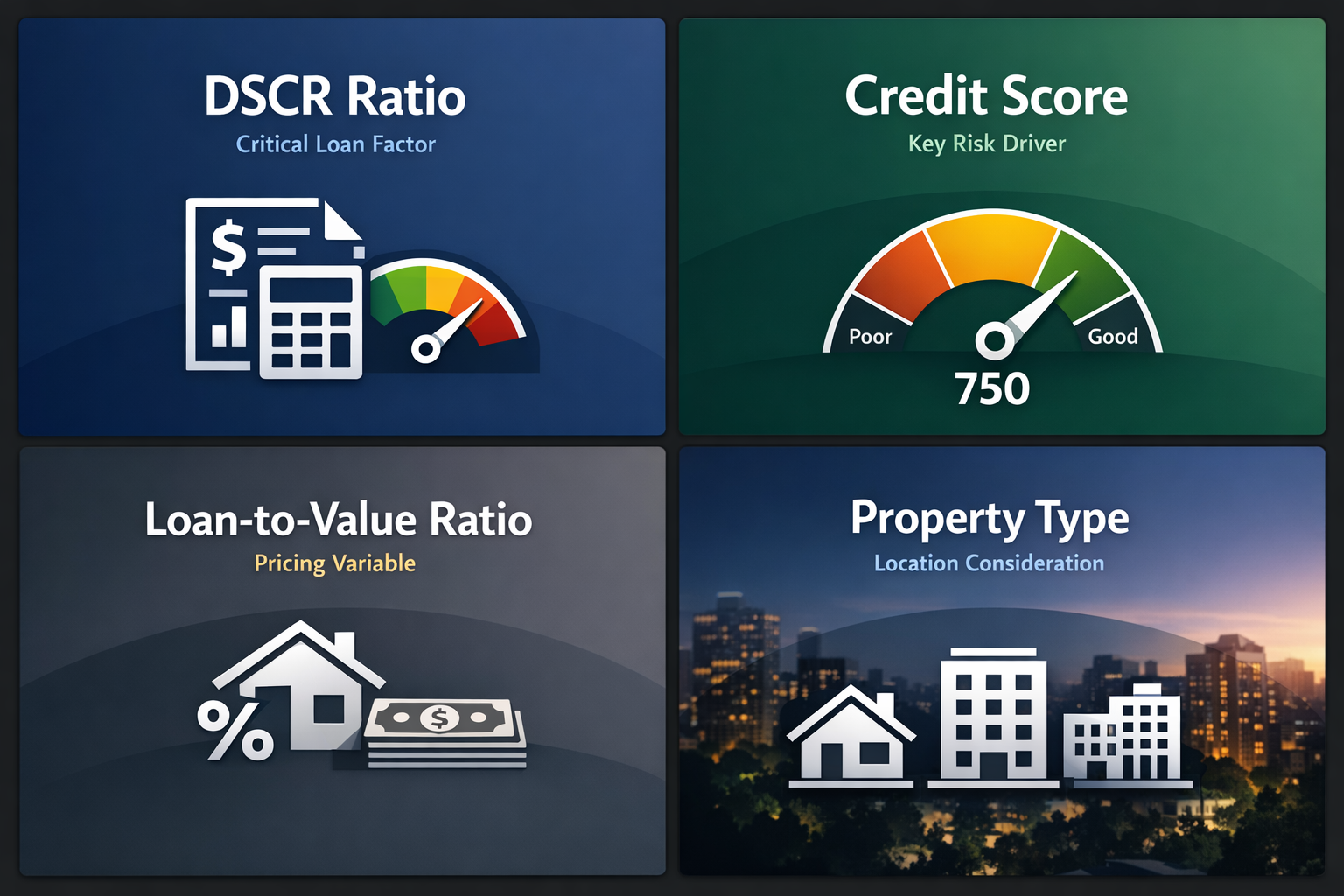
Critical Pricing Variables Every Investor Must Know
When it comes to investment property financing, understanding the 7 factors that affect DSCR rates can make the difference between a profitable deal and a mediocre return. DSCR loans have become increasingly popular among real estate investors, but the pricing variables that determine your interest rate aren't always transparent. These risk drivers and investor profile elements directly impact your borrowing costs and overall investment profitability. Smart investors who grasp these pricing factors can better position themselves to secure favorable terms and maximize their portfolio growth potential.
Your DSCR Ratio Performance
Your DSCR ratio performance stands as the most critical factor affecting your loan rates. This fundamental metric measures your property's ability to cover debt payments through rental income alone.
Strong DSCR ratios above 1.25 typically qualify for the most competitive rates, as lenders view these properties as lower risk investments
Properties with ratios between 1.15 and 1.25 may still receive favorable pricing, though rates might be slightly higher than premium tiers
DSCR ratios closer to 1.0 often result in higher interest rates, reflecting the increased risk of cash flow challenges
Most lenders prefer DSCR ratios preferably above 1.0, with stronger ratios directly correlating to better loan terms and pricing
Credit Score and Financial Profile
Your credit score and overall financial profile serve as key risk drivers that lenders use to assess your reliability as a borrower. These factors significantly influence the pricing variables in DSCR loan underwriting.
Credit scores of 720 and above typically qualify for the best available rates, demonstrating strong financial management to lenders
Scores between 700-720 may still access competitive pricing, though rates could be marginally higher than top-tier offerings
Lower credit scores often result in rate premiums, as lenders price in additional risk through higher interest costs
Strong credit profiles combined with robust DSCR ratios can lead to more favorable loan terms overall
Loan-to-Value Ratio Impact
The loan-to-value ratio represents another crucial pricing variable that affects DSCR rates. This metric reflects the amount of leverage you're taking on relative to the property's value.
Lower LTV ratios typically result in better interest rates, as they indicate stronger equity positions and reduced lender risk
Higher LTV ratios often come with rate premiums, reflecting the increased exposure lenders face in potential default scenarios
Most DSCR lenders offer their best pricing to borrowers who can maintain conservative LTV ratios while still achieving their investment objectives
The combination of strong DSCR ratios and reasonable LTV ratios can significantly affect interest rates and overall loan costs
Property Type and Location Considerations
Property type and location considerations play essential roles in determining DSCR loan pricing. These factors help lenders assess market stability and rental demand potential.
Single-family rental properties in stable markets often receive the most competitive rates due to their liquidity and broad appeal to renters
Multi-family properties may face different pricing structures based on unit count, with smaller multi-family buildings typically receiving better terms
High-demand markets like California might offer investors competitive advantages through stronger rental markets, though local economic factors also influence pricing
Properties in emerging or volatile markets could face rate premiums as lenders account for potential market fluctuations
Geographic diversification within your portfolio might help demonstrate reduced concentration risk to lenders
Market Conditions and Rate Environment
Market conditions and the broader rate environment significantly influence DSCR loan pricing. These external factors affect all investment property financing options and create opportunities for strategic timing.
Current market conditions show elevated pricing for DSCR loans compared to conventional mortgages, reflecting the specialized nature of these investment products
Interest rate trends in the broader economy directly impact DSCR loan pricing, with rising rates typically leading to higher investment property loan costs
Economic uncertainty can lead to tighter lending standards and higher risk premiums across all investment property financing products
Seasonal factors might influence lending competition and pricing, with certain periods potentially offering more favorable financing terms
Federal Reserve policy changes often cascade through investment property lending markets, affecting both availability and pricing
Understanding these 7 factors that affect DSCR rates empowers real estate investors to make informed financing decisions and optimize their investment strategies. By focusing on strengthening your DSCR ratio, maintaining excellent credit, managing LTV ratios carefully, selecting properties wisely, and timing your financing strategically, you can position yourself for the best possible loan terms. The pricing variables in DSCR lending continue to evolve, but these fundamental risk drivers remain constant considerations for lenders. As you build and scale your investment portfolio, keeping these factors in mind will help you secure competitive financing that supports your long-term wealth-building goals through real estate investment.