Real estate investors know that every fee, every clause, and every detail in a loan document can mean the difference between a profitable deal and one that drains cash flow. One clause that often catches investors off guard is the prepayment penalty. If you've ever wondered what is a prepayment penalty in simple terms, here's the straightforward answer: it's a fee your lender charges when you pay off your loan earlier than the agreed schedule.
For investors using DSCR loans or other investment property financing, these penalties aren't just fine print. They're a strategic consideration that affects your exit plans, refinancing options, and overall return on investment. Whether you're flipping properties, building a rental portfolio, or planning a quick refinance to capture better rates, understanding how prepayment penalties work and when they apply can save you thousands of dollars.
This guide breaks down everything you need to know about prepayment penalties on investment property loans, from how they're structured to when you'll encounter them, and most importantly, how to work around them or factor them into your deal analysis.
Breaking Down Prepayment Penalties for Investors
A prepayment penalty is simpler than it sounds. Lenders make money over time through the interest you pay on your loan. When you pay off that loan ahead of schedule, whether by selling the property, refinancing, or making a lump-sum payoff, the lender loses out on future interest income. To compensate for that lost revenue, many lenders include a prepayment penalty clause in the loan agreement.
Here's what investors should know about how these penalties typically work:
They're not universal: Not every loan carries a prepayment penalty. Conventional mortgages for primary residences rarely include them, but investment property loans often do.
They vary by loan type: DSCR loans, bridge loans, and other non-QM investor products may feature prepayment penalties as part of the standard terms.
The penalty amount depends on timing: Many prepayment penalties decrease over time, which means paying off your loan in year one might cost more than paying it off in year three.
They apply to full payoffs: Prepayment penalties typically kick in when you pay off the entire loan balance early, not when you make extra principal payments unless otherwise stated in your agreement.
For real estate investors, prepayment penalties are part of the cost structure you need to evaluate upfront. They're not inherently bad, but they do require you to think strategically about your hold period, refinancing plans, and exit timeline before you close on financing.
How Prepayment Penalties Are Structured on DSCR Loans
DSCR loans are a popular financing tool for investors because they're underwritten based on the property's rental income, not your personal income. Many DSCR loans come with a prepayment penalty structure, often described as a step-down penalty that spans three to five years.
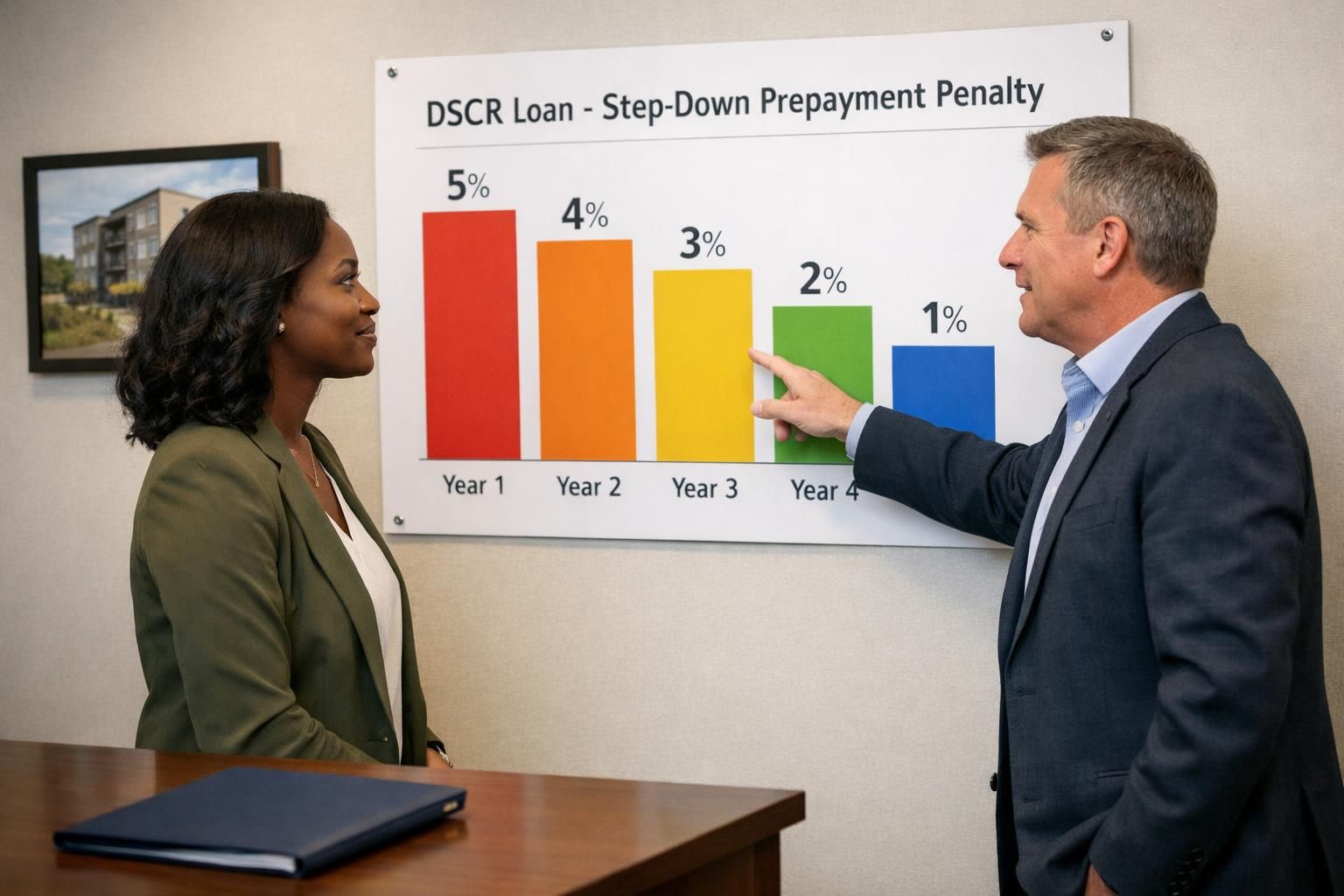
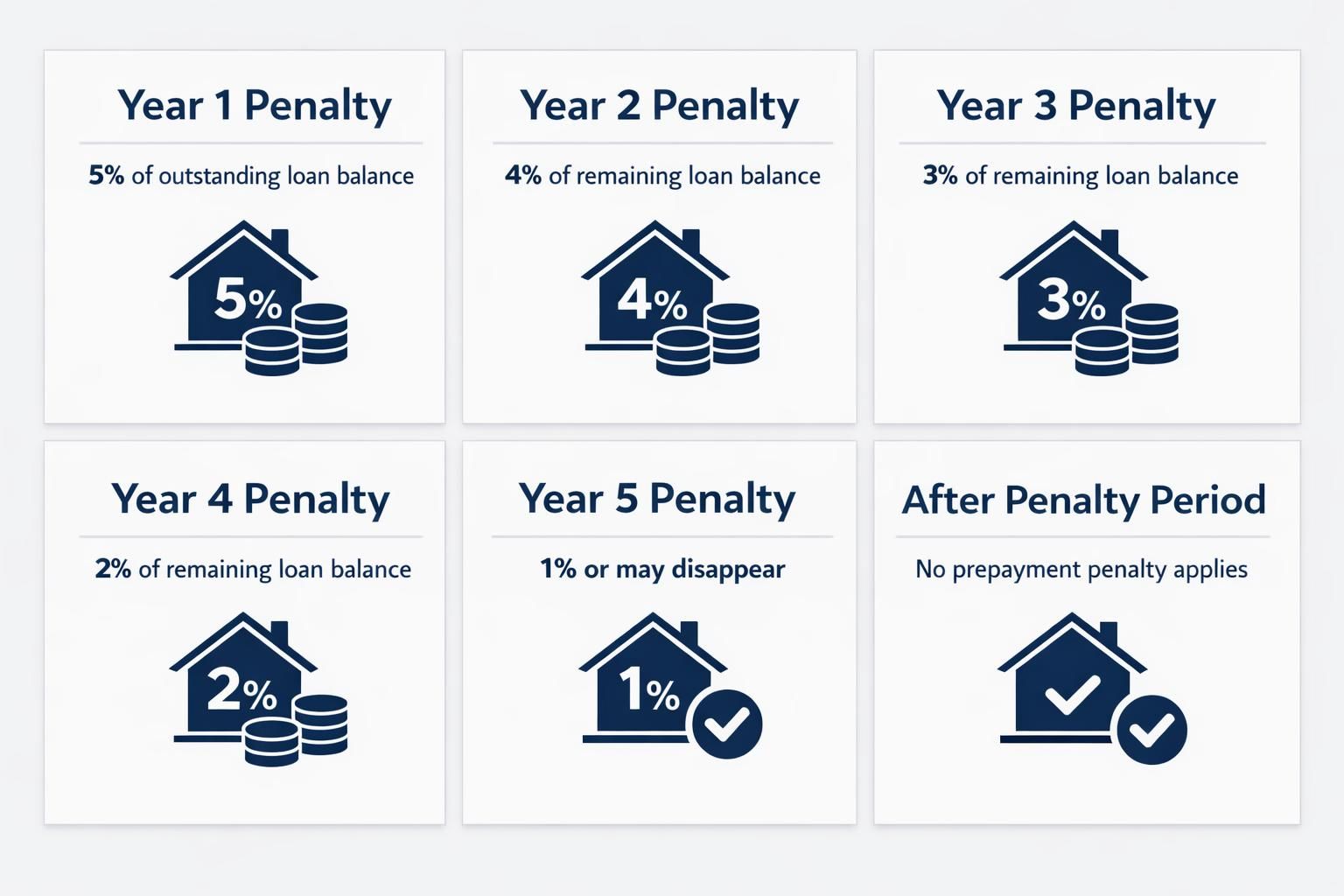
Step-down penalties decrease each year you hold the loan. A common structure might look like this:
Year 1: Pay off the loan in the first year and face a penalty of 5% of the outstanding loan balance.
Year 2: The penalty drops to 4% of the remaining balance.
Year 3: It falls further to 3%.
Year 4: Down to 2%.
Year 5: The penalty might drop to 1% or disappear entirely.
After the prepayment penalty period expires, you can refinance, sell, or pay off the loan without any penalty. The step-down structure encourages borrowers to hold the loan longer while still offering flexibility if you need to exit early.
Some DSCR lenders may offer loans without prepayment penalties, but those products might come with higher interest rates or stricter terms. It's a trade-off between upfront cost and future flexibility, and the right choice depends on your investment strategy and timeline.
When Prepayment Penalties Apply to Investment Property Loans
Prepayment penalties don't trigger with every payment or transaction. Knowing exactly when they apply helps you plan your financing strategy and avoid unwanted surprises.
Penalties typically apply in these situations:
Refinancing the property: If you refinance your DSCR loan with another lender or even the same lender under different terms during the penalty period, you're paying off the original loan, which can trigger the fee.
Selling the property: When you sell an investment property before the penalty period ends, the loan payoff at closing will include the prepayment penalty if it's still in effect.
Full loan payoff: If you come into cash and decide to pay off the entire loan balance early, the penalty will apply during the restricted timeframe.
Partial paydowns (sometimes): Most prepayment penalties focus on full payoffs, but some loan agreements restrict large partial payments as well. Always review your specific loan documents to confirm.
On the flip side, prepayment penalties usually don't apply to regular monthly payments or small extra principal payments. They're designed to discourage early exit from the loan, not penalize you for paying a bit extra each month.
For investors with short-term strategies like fix and flip projects, prepayment penalties can be a dealbreaker. But for buy-and-hold investors planning to keep a property for several years, the penalty period might align naturally with your timeline, making it a non-issue.
Calculating the True Cost of a Prepayment Penalty
Understanding the dollar impact of a prepayment penalty is essential when you're weighing your financing options or planning an early exit. The calculation is straightforward, but the implications can be significant depending on your loan size and timing.
Here's how to calculate a prepayment penalty:
Find your outstanding loan balance: This is the amount you still owe on the loan at the time of payoff, not the original loan amount.
Check the penalty percentage: Your loan documents will specify the percentage based on which year you're paying off the loan.
Multiply balance by percentage: Take your outstanding balance and multiply it by the penalty percentage to get the fee amount.
Add the penalty to your payoff: The total amount you'll owe includes your remaining principal, any accrued interest, and the prepayment penalty.
For example, if you have a $400,000 outstanding balance on your DSCR loan and your penalty in year two is 4%, you'd owe an additional $16,000 to pay off the loan early. That's a real cost that affects your net proceeds from a sale or the break-even point on a refinance.
Smart investors factor this cost into their deal analysis from day one. If you're planning a quick refinance in 18 months to capture better rates, you need to know whether the interest savings will outweigh the prepayment penalty. If you're acquiring a property with a planned sale in two years, that penalty becomes part of your exit cost and should be reflected in your projected ROI.
Strategies to Manage or Avoid Prepayment Penalties
Prepayment penalties don't have to derail your investment plans. With smart planning and a few strategic moves, you can minimize their impact or avoid them altogether.
Consider these approaches:
Negotiate at closing: Some lenders are willing to reduce the penalty period or lower the percentage in exchange for a slightly higher interest rate or a larger down payment. It never hurts to ask, especially if you know you'll need flexibility.
Choose loans without penalties: If your strategy involves frequent refinancing or quick turnarounds, seek out DSCR lenders that offer no-prepayment-penalty products. You might pay a bit more upfront, but the flexibility could be worth it.
Time your exit strategically: If you're nearing the end of the penalty period, waiting a few extra months to sell or refinance can save thousands. Run the numbers to see if the delay makes financial sense.
Use alternative financing for short holds: For projects with timelines shorter than the penalty period, consider bridge loans or other short-term financing products designed for quick exits. These loans might not carry prepayment penalties at all.
Build the cost into your model: If a prepayment penalty is unavoidable, include it as a line item in your project budget from the start. This keeps your profit projections realistic and prevents unpleasant surprises at closing.
The key is to align your financing terms with your actual investment strategy. A five-year step-down penalty is manageable if you're planning a long hold. But if you're in the business of quick flips or aggressive portfolio growth through refinancing, you need loan products that match that pace.
Real estate investing is all about controlling costs and maximizing returns, and prepayment penalties are one of those costs you can't afford to ignore. Now that you understand what is a prepayment penalty in simple terms, how it works, and when it applies to investment property loans, you're better equipped to choose the right financing and plan your exits with confidence.
Prepayment penalties aren't inherently good or bad. They're a trade-off, a financing tool that can work in your favor if your strategy aligns with the loan terms. The key is transparency, planning, and doing the math before you sign. Know your hold period, know your exit options, and know the true cost of every clause in your loan agreement.
If you're exploring DSCR loans for your next rental property or portfolio expansion and want to understand how prepayment penalties fit into your specific strategy, get a personalized DSCR loan quote and speak with a specialist who can walk you through the terms that make sense for your goals.
Ultimately, the best loan is the one that supports your investment plan without tying your hands. With the right preparation and a clear understanding of how prepayment penalties work, you can structure deals that deliver strong returns without unexpected fees eating into your profit.