
LOAN PROGRAMS
APPLY NOW

Understanding what documents needed for DSCR loan approval can significantly impact your investment timeline and success rate. Real estate investors often find themselves scrambling to gather paperwork after starting the application process, which can delay crucial property acquisitions and financing decisions.
DSCR loans offer unique advantages for investment properties, but they require specific documentation that differs from traditional residential mortgages. The right preparation and comprehensive checklist requirements can streamline your approval process and help you capitalize on time-sensitive investment opportunities.
This guide covers the essential underwriting docs and approval prep strategies that experienced investors use to navigate DSCR loan applications efficiently. With proper documentation preparation, you might reduce processing times and increase your chances of securing favorable loan terms for your investment portfolio.
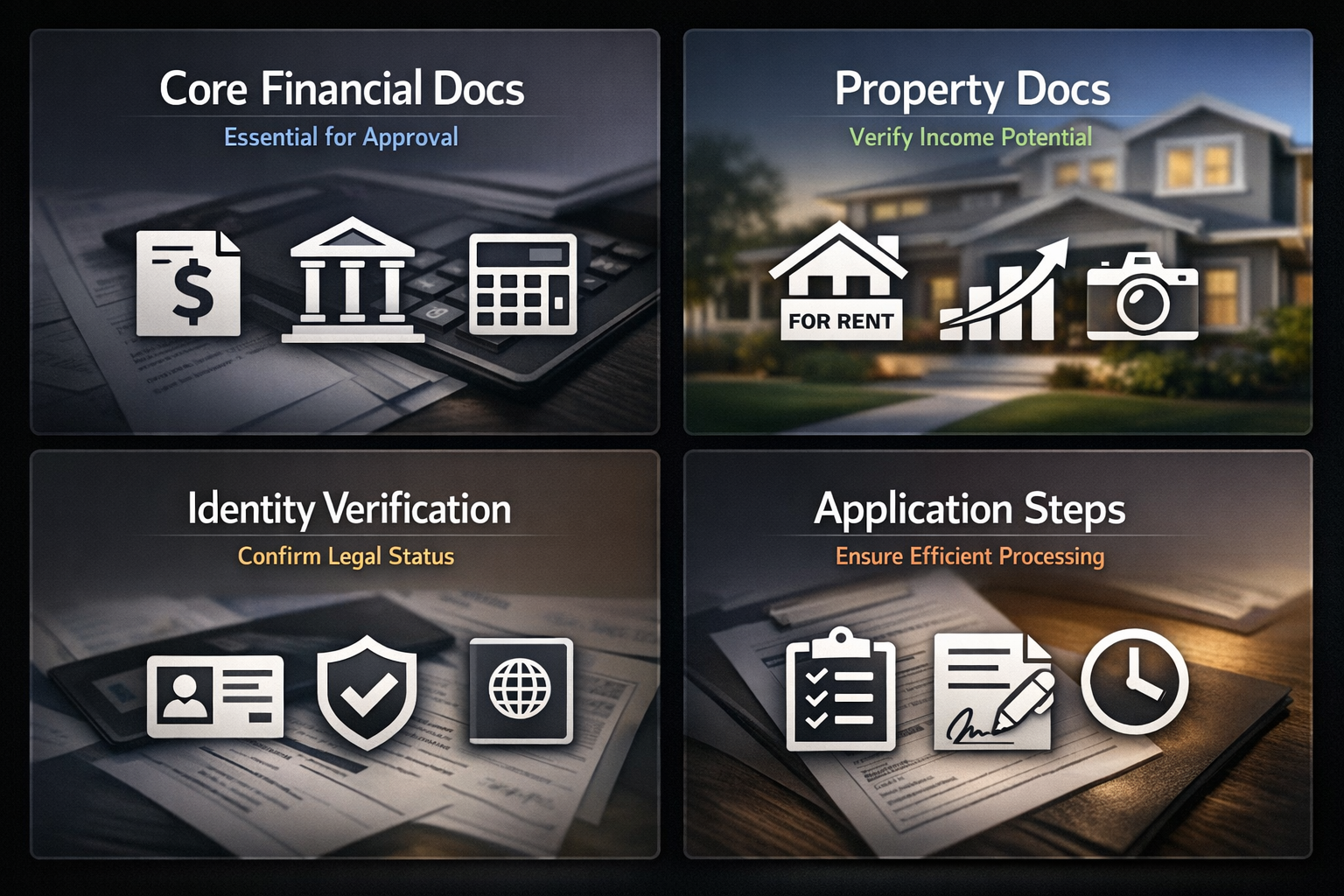
The core financial documentation requirements form the foundation of what documents needed for DSCR loan approval. These financial records help lenders assess your creditworthiness and the property's income-generating potential.
These financial documents provide lenders with a comprehensive view of your financial health and investment experience. Credit scores may need to meet minimum thresholds, with many lenders requiring scores between 1.0 and 1.25 DSCR ratios for optimal approval chances.
Property-specific documentation checklist items focus on the investment property itself and its income-generating potential. These documents help lenders evaluate the property's value and rental income prospects.
These property documents are crucial because DSCR loans focus primarily on the property's ability to generate sufficient income to cover debt service. Lenders typically require detailed property information to assess whether rental income can support the monthly loan payments effectively.
Identity and legal verification documents ensure compliance with lending regulations and confirm your legal status to enter into mortgage agreements. These verification requirements are standard across most DSCR loan applications.
Many real estate investors choose to hold properties in business entities for liability protection and tax advantages. If you're applying through an entity, lenders may require additional essential paperwork showing your ownership stake and authority to enter into loan agreements on behalf of the business.
The application process documentation steps help ensure you submit materials in the correct order and format for efficient processing. Following a systematic approach can help prevent delays and improve your approval chances.
A systematic approach to the application process might reduce processing times significantly. Lenders often appreciate well-organized submissions that demonstrate professionalism and attention to detail, which can positively influence their perception of your investment capabilities.
Underwriting documentation best practices can help streamline the approval process and avoid common pitfalls that delay DSCR loan approvals. These practices reflect lessons learned from successful investor applications.
Underwriters typically scrutinize DSCR loan applications carefully because these loans rely heavily on property income rather than personal income verification. Being proactive about potential questions or concerns can help move your application through underwriting more efficiently and demonstrate your experience as a serious real estate investor with approval preparation tips.
Understanding what documents needed for DSCR loan approval puts you ahead of many investors who start the application process unprepared. The comprehensive checklist requirements we've covered can help you gather necessary paperwork efficiently and avoid common delays that frustrate both investors and lenders.
Proper documentation preparation serves as the foundation for successful DSCR loan applications. When you organize your financial records, property information, and identity verification materials systematically, you demonstrate professionalism that lenders appreciate and recognize.
The time invested in thorough approval prep often pays dividends through faster processing times and better loan terms. Well-prepared applications might move through underwriting more smoothly, allowing you to secure financing for time-sensitive investment opportunities that could otherwise slip away.
Consider creating a master checklist based on these requirements for future DSCR loan applications. Having a systematic approach to documentation can streamline multiple property acquisitions and help you build a more efficient real estate investment process over time.
