Top Refinancing Strategies During Falling Interest Rates
When interest rates drop, real estate investors face a prime opportunity to reassess their financing structure and potentially save thousands of dollars per year. The difference between acting quickly and waiting too long can directly impact your portfolio's cash flow and overall profitability. For investors holding rental properties or managing fix-and-flip projects, understanding top refinancing strategies during falling interest rates isn't just about following trends: it's about making calculated moves that strengthen your competitive position.
Declining rates create a timing advantage that savvy investors can exploit to lower monthly payments, free up capital for new acquisitions, or shorten loan terms without significantly increasing obligations. However, the decision to refinance involves more than simply spotting a lower rate. You'll need to weigh closing costs against potential savings, consider your property's current debt service coverage ratio, and evaluate whether locking in today's rates makes more sense than gambling on further declines tomorrow.
This guide walks through practical refinancing strategies specifically designed for real estate investors who need to maximize returns while managing risk in a changing rate environment.
Essential Timing Considerations for Investment Property Refinancing
Essential timing considerations for investment property refinancing can make or break your cost savings strategy. When rates begin falling, the instinct might be to refinance immediately, but investors who take a more measured approach often secure better outcomes.
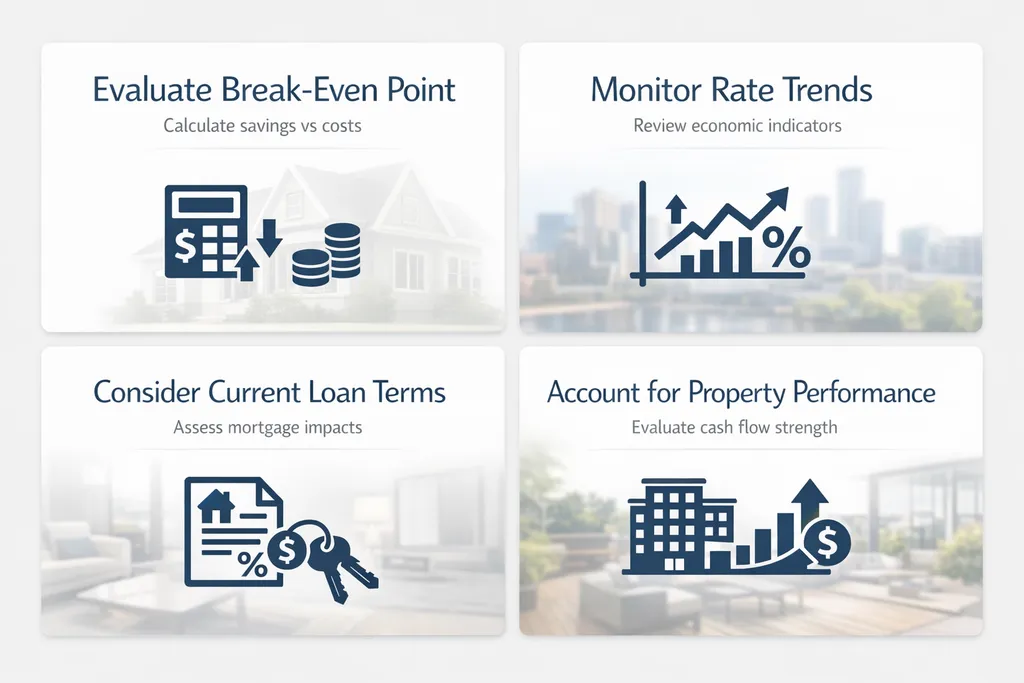
Evaluate the break-even point: Calculate how long it will take for your monthly savings to offset closing costs and fees. If you plan to hold the property for several years, refinancing may deliver substantial returns. For shorter holding periods, the math might not work in your favor.
Monitor rate trends carefully: While waiting for rates to drop further carries risk, acting too early could mean missing out on additional savings. Review economic indicators and Federal Reserve signals to gauge whether rates might continue declining or stabilize soon.
Consider your current loan terms: If you're early in a 30-year mortgage, refinancing into a new 30-year term resets the clock and increases total interest paid over time. Investors focused on long-term wealth building might opt for shorter terms when rates fall, improving equity accumulation.
Account for property performance: Strong rental income and improved debt service coverage ratios can qualify you for better rates. If your property's cash flow has strengthened since your original loan, refinancing during a rate drop could yield even more favorable terms.
The key is balancing immediate opportunities against future uncertainties. You can't predict rate movements perfectly, but you can structure your decision around concrete data: current savings, holding period, and portfolio goals.
Cost-Benefit Analysis: When Refinancing Makes Financial Sense
Understanding when refinancing makes financial sense requires looking beyond the advertised interest rate. Real estate investors need to factor in multiple costs and benefits to determine whether a refinance will truly enhance their investment returns.
Calculate total closing costs upfront: Refinancing typically involves appraisal fees, title insurance, origination charges, and other expenses that can range from two to five percent of the loan amount. Knowing these figures helps you project realistic savings timelines.
Compare interest savings over your holding period: Multiply your monthly payment reduction by the number of months you expect to own the property. If this figure exceeds your closing costs by a comfortable margin, refinancing could be worthwhile.
Assess impact on cash flow: Lower monthly payments improve cash flow and create breathing room for unexpected expenses or vacancies. For rental property investors, enhanced cash flow often matters more than long-term interest savings.
Factor in tax implications: Refinancing may affect how you deduct mortgage interest and closing costs. While this shouldn't drive your decision alone, understanding the tax treatment helps you model true after-tax returns.
Investors using DSCR loans should also consider how refinancing affects their debt service coverage ratio. A lower interest rate improves this metric, potentially opening doors for additional financing on future deals. The cumulative effect across a portfolio can be substantial, even if the per-property savings seem modest.
Strategic Refinancing Moves for Rental Property Investors
Strategic refinancing moves for rental property investors go beyond simple rate reductions. When interest rates fall, you gain flexibility to restructure debt in ways that align with your broader investment strategy and growth objectives.
Extract equity for new acquisitions: Cash-out refinancing lets you tap built-up equity while securing a lower rate. This strategy works well when you've identified attractive investment opportunities but need capital for down payments or renovations.
Consolidate multiple properties: Some lenders offer portfolio loan products that refinance several properties under one umbrella. This approach may reduce administrative burden and could yield better terms than individual refinances, though it requires careful evaluation of cross-collateralization risks.
Switch loan products strategically: Falling rates might be the right time to transition from adjustable-rate mortgages to fixed-rate products, locking in predictable payments for the long term. Alternatively, investors confident in continued rate declines might move from fixed to adjustable structures, though this carries additional risk.
Shorten loan terms without payment shock: Refinancing from a 30-year to a 20-year or 15-year mortgage during a rate drop might keep payments similar while dramatically reducing total interest paid. This accelerates equity building and positions you for faster portfolio expansion.
The best refinancing strategy depends on your investment timeline, risk tolerance, and liquidity needs. Investors planning aggressive growth might prioritize cash-out options, while those focused on stability could emphasize payment reduction and term optimization.
Step-by-Step Process to Maximize Refinancing Benefits
Following a structured step-by-step process to maximize returns helps ensure you don't overlook critical details that could cost you thousands. Here's how to approach the refinancing decision methodically when rates are falling.
Audit your current loan details: Gather documentation on your existing interest rate, remaining balance, monthly payment, and any prepayment penalties. Understanding your starting point is essential for accurate comparison. Check whether your current lender offers streamlined refinance options that might reduce paperwork and costs.
Shop multiple lenders aggressively: Don't settle for the first offer you receive. Contact at least three to five lenders who specialize in investment property financing, including those offering DSCR loans and other investor-focused products. Rate quotes can vary significantly, and negotiating power increases when you have multiple options.
Prepare updated financial documentation: Lenders will want recent tax returns, profit and loss statements for your properties, bank statements, and rent rolls. Having these organized speeds up the process and demonstrates professionalism, potentially improving your negotiating position.
Run multiple scenario analyses: Model different loan structures to see which delivers the best outcome for your specific situation. Compare 30-year versus 20-year terms, fixed versus adjustable rates, and standard refinance versus cash-out options. Use conservative assumptions about future rental income and property values.
Lock your rate strategically: Once you've selected a lender and loan product, decide whether to lock immediately or float for a period. Rate locks typically last 30 to 60 days. If rates are dropping quickly, a shorter processing timeline with a delayed lock might save money, but this carries risk if rates reverse.
Each of these steps requires attention to detail and honest assessment of your investment goals. Rushing through the process or skipping comparative analysis can mean leaving money on the table, even in a falling rate environment.
Common Refinancing Mistakes Real Estate Investors Should Avoid
Even experienced investors can stumble when refinancing investment properties during periods of falling interest rates. Being aware of common mistakes helps you sidestep costly errors and make decisions based on solid financial logic rather than emotional reactions to market movements.
Chasing rates indefinitely: Waiting for the absolute bottom in interest rates often backfires. Rates rarely move in straight lines, and the costs of delaying your refinance can exceed the potential savings from a slightly better rate later. Set a reasonable target rate based on your break-even analysis and act when you reach it.
Ignoring the total cost picture: Focusing exclusively on interest rate while overlooking closing costs, points, and fees distorts your analysis. A loan with a marginally higher rate but significantly lower closing costs might deliver better returns, especially for properties you don't plan to hold long-term.
Overextending through cash-out refinancing: While extracting equity to fund new investments can be smart, taking out too much cash leaves you vulnerable to market downturns or extended vacancies. Maintain adequate equity cushions to weather unexpected challenges without risking foreclosure.
Neglecting prepayment penalty clauses: Some investment property loans include penalties for paying off or refinancing within a certain period. These fees can eliminate the benefits of refinancing entirely. Always review your current loan documents before initiating a refinance.
Failing to reassess property values: If your property has appreciated significantly, refinancing might eliminate private mortgage insurance or qualify you for better rate tiers. Conversely, if values have declined, you might not have enough equity to refinance without bringing cash to closing. Order an updated appraisal early in your planning process.
Avoiding these pitfalls requires discipline and thorough due diligence. The excitement of falling rates shouldn't cloud your judgment or push you into decisions that don't align with your long-term investment strategy.
Key Takeaway for Investment Property Financing
When interest rates decline, the window for significant cost savings through refinancing opens, but it doesn't stay open forever. Real estate investors who act decisively while maintaining analytical rigor typically secure the best outcomes. The top refinancing strategies during falling interest rates emphasize timing advantage balanced against realistic assessments of closing costs, holding periods, and portfolio objectives.
Your refinancing decision should never rely on hope that rates will continue falling indefinitely. Instead, base it on concrete calculations showing how much you'll save, how quickly you'll recoup costs, and how the new loan structure supports your broader investment goals. Whether you're managing a portfolio of rental properties, executing fix-and-flip strategies, or building long-term wealth through real estate, understanding these refinancing principles helps you extract maximum value from favorable rate environments.
The investors who thrive aren't necessarily those who time the market perfectly. They're the ones who consistently make informed, data-driven decisions that compound over time, building stronger portfolios with each strategic move.
Falling interest rates create genuine opportunities for real estate investors willing to do the homework and act strategically. The refinancing strategies outlined here provide a framework for evaluating whether a refinance makes sense for your specific properties and investment timeline. Remember that the optimal approach varies based on your goals: some investors prioritize cash flow improvement, others focus on equity acceleration, and many seek a balance between the two.
As you navigate refinancing decisions, keep your focus on measurable outcomes rather than market sentiment. Calculate your break-even point, compare multiple lenders thoroughly, and structure loans that support your next investment moves rather than simply chasing the lowest advertised rate. The combination of favorable interest rates and disciplined analysis can substantially improve your portfolio's performance, but only if you execute with both speed and precision.
Whether you're refinancing DSCR loans on rental properties or restructuring bridge financing on fix-and-flip projects, the principles remain consistent: understand your numbers, act decisively when the math works, and always maintain adequate reserves to weather unexpected challenges. That's how you turn falling rates into lasting competitive advantages.