Top Questions Investors Ask Before Refinancing Their Investment Properties
Refinancing can be a powerful tool for real estate investors looking to optimize cash flow, reduce interest expenses, or unlock equity for new acquisitions. However, the decision to refinance rental properties or fix and flip projects isn't one you should make lightly. Understanding the top questions investors ask before refinancing helps you evaluate whether the move aligns with your investment strategy and financial goals.
For investors managing DSCR loans or rental property portfolios, refinancing decisions often hinge on factors like closing costs, interest rate environments, and how the new loan structure impacts monthly cash flow. Unlike homeowners refinancing their primary residence, investors must weigh refinancing decisions against ROI metrics, debt service coverage ratios, and the opportunity cost of tying up capital in closing expenses.
This guide walks through the essential questions every real estate investor should ask before pulling the trigger on a refinance. From understanding what you'll pay upfront to evaluating the right timing strategy, these considerations can help you make informed financing decisions that support your long-term wealth-building objectives.
What Will the Closing Costs Really Be?
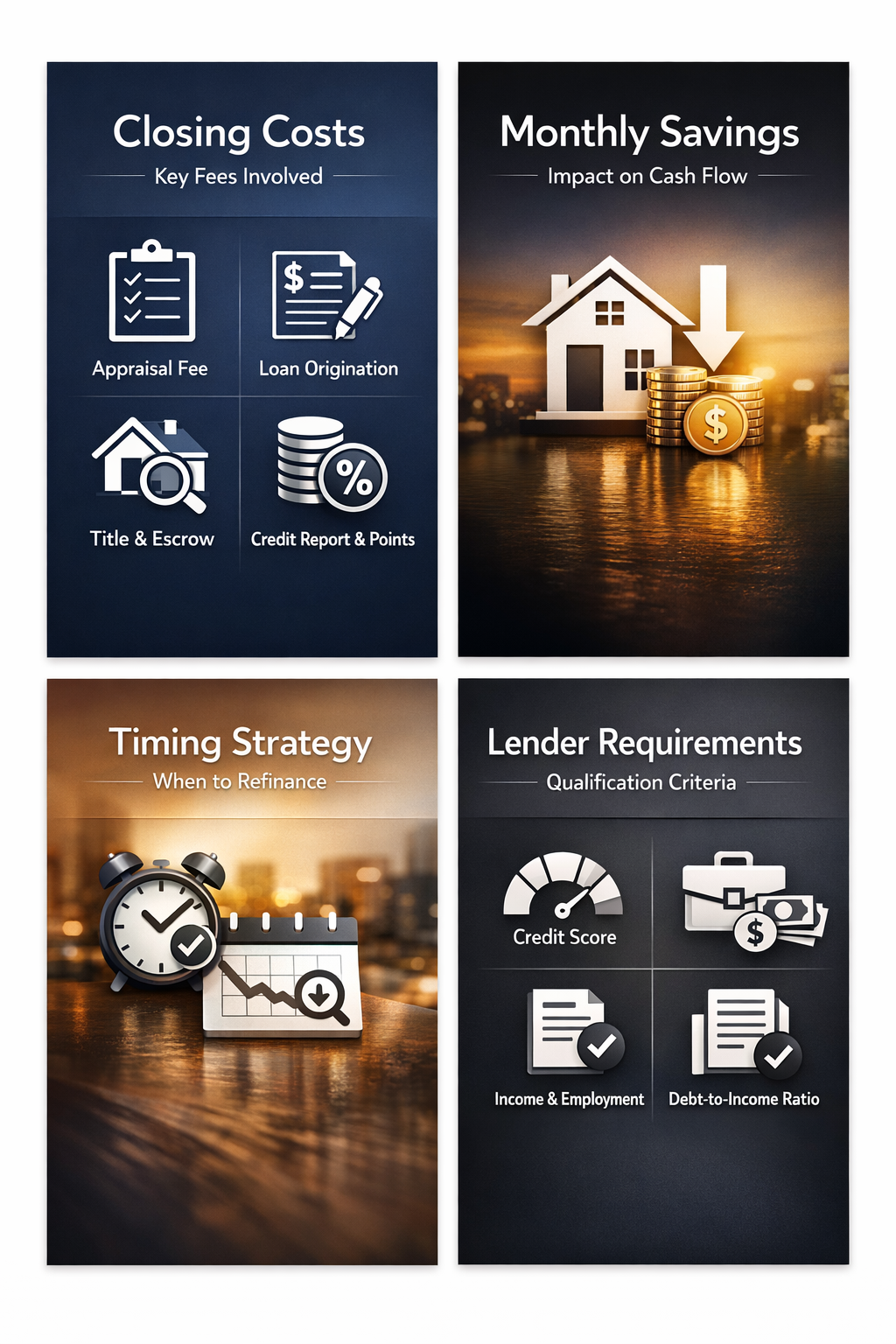
Understanding what closing costs entail is among the top questions investors ask before refinancing. These upfront expenses can significantly impact whether refinancing makes financial sense for your investment property. Closing costs typically include various fees associated with processing, underwriting, and finalizing your new loan.
Application and origination fees: Lenders may charge fees to process your refinance application and originate the new loan. These costs can vary between different mortgage lenders and loan products, so comparing multiple offers is essential for investors managing tight margins.
Appraisal and inspection costs: Most refinancing scenarios require a current property appraisal to determine market value. For rental properties or value-add projects, this step confirms the property's worth and supports your loan-to-value ratio calculations.
Title and recording fees: You'll typically pay for title search, title insurance, and recording the new mortgage with local authorities. These expenses protect both you and the lender against potential title issues that could affect ownership.
Percentage of loan value: Closing costs often represent a percentage of your total loan amount. Investors need to calculate these expenses against anticipated savings or benefits from refinancing to ensure the transaction improves your investment returns rather than draining capital.
For investors considering DSCR loans or bridge financing, closing costs must be weighed against the improved cash flow or strategic advantages the refinance provides. If you're planning to hold a rental property long-term, higher upfront costs might be justified by substantial interest savings. However, if you're refinancing a fix and flip property you plan to sell within a year, those same closing costs could eat into your profit margin.
How Much Will I Actually Save Each Month?
Calculating your potential monthly savings represents one of the top questions investors ask before refinancing, and for good reason. The monthly cash flow impact directly affects your property's performance metrics and overall portfolio returns. Simply securing a lower interest rate doesn't automatically translate to better investment results if other factors aren't considered.
Interest rate reduction impact: A lower interest rate typically reduces your monthly mortgage payment, which can improve cash-on-cash returns for rental properties. Even a modest rate reduction might free up hundreds of dollars monthly across multiple properties in your portfolio.
Loan term adjustments: Some investors refinance to extend their loan term, lowering monthly payments but potentially increasing total interest paid over time. Others might shorten the term to build equity faster, which increases monthly payments but reduces long-term interest expenses.
Removing mortgage insurance: If your property has appreciated significantly or you've paid down enough principal, refinancing might eliminate private mortgage insurance requirements. This removal can substantially improve monthly cash flow on rental properties.
Break-even timeline: Calculate how many months it takes for your monthly savings to offset closing costs. If you plan to hold the property beyond this break-even point, refinancing may make financial sense. If you're likely to sell before reaching break-even, refinancing could reduce your overall returns.
For investors using DSCR loans, improved monthly cash flow directly impacts your debt service coverage ratio, potentially opening doors to additional financing for new acquisitions. Understanding exactly how much you'll save each month, and how long it takes to recoup closing costs, helps you make data-driven refinancing decisions rather than emotional ones.
Is Now the Right Time to Refinance?
Timing strategy is consistently among the top questions investors ask before refinancing, as market conditions and personal circumstances both play crucial roles. The right time to refinance depends on interest rate trends, your property's equity position, and your broader investment strategy.
Interest rate environment: Refinancing typically makes sense when current rates are meaningfully lower than your existing mortgage rate. Many investors use a one-percent reduction as a rough threshold, though the actual calculation depends on your specific closing costs and hold period.
Property appreciation and equity: If your rental property has appreciated, refinancing can help you access that equity for new investments while potentially securing better loan terms. Higher equity positions often qualify for more favorable lender requirements and lower rates.
Portfolio expansion plans: Investors planning to acquire additional properties soon might benefit from refinancing rental properties to improve cash flow or pull out equity for down payments. This timing strategy aligns refinancing with your growth objectives rather than treating it as an isolated decision.
Credit and financial position: Your current credit profile and financial strength affect the rates and terms you'll qualify for. If your credit has improved significantly since your original loan, refinancing now could yield better terms than waiting.
For fix and flip investors, timing considerations differ from rental property owners. If you're nearing the end of a bridge loan term and converting to longer-term financing, that transition point might be ideal for evaluating refinancing options. Market cycles also matter; refinancing during a stable or appreciating market often provides more favorable appraisal values and loan terms than refinancing during downturns.
What Lender Requirements Will I Need to Meet?
Understanding lender requirements stands out as one of the top questions investors ask before refinancing because qualification criteria for investment properties often differ from owner-occupied homes. Meeting these requirements determines whether you can refinance at all, and at what terms.
Debt service coverage ratio standards: For DSCR loans, lenders typically require that your rental income covers debt obligations by a certain margin, often 1.2x or higher. Your property's rental performance directly impacts your ability to refinance and the rates you'll receive.
Credit score thresholds: Investment property refinancing generally requires higher credit scores than primary residence loans. Many lenders set minimum scores around 680 to 700 for rental property loans, with better rates reserved for scores above 740.
Cash reserves and liquidity: Lenders often require investors to demonstrate several months of reserves, covering mortgage payments, property taxes, and insurance. These reserve requirements might increase if you own multiple investment properties.
Documentation and income verification: While some DSCR loan programs offer streamlined documentation based on rental income alone, traditional refinancing might require tax returns, profit and loss statements, and other financial documentation proving your ability to service the debt.
Different loan products carry different lender requirements. If you're refinancing from a fix and flip bridge loan into long-term rental property financing, you'll need to demonstrate stabilized occupancy and rental income. Understanding these lender requirements upfront helps you prepare necessary documentation and avoid delays that could cost you favorable rate locks or disrupt your investment timeline.
Will Refinancing Align With My Investment Goals?
Evaluating how refinancing supports your broader investment strategy is perhaps the most important among the top questions investors ask before refinancing. A financially attractive refinance in isolation might not serve your long-term objectives, while a seemingly expensive refinance could unlock significant strategic value.
Cash flow versus equity building: Some investors prioritize monthly cash flow and prefer lower payments from extended loan terms or reduced rates. Others focus on equity accumulation and might refinance to shorter terms despite higher monthly payments. Your refinancing decision should reflect which strategy drives your investment approach.
Accessing equity for growth: Cash-out refinancing lets you tap accumulated equity to fund additional property acquisitions, renovations, or portfolio diversification. If scaling your portfolio is a priority, pulling equity through refinancing might outweigh the costs and slightly reduced cash flow on the refinanced property.
Loan structure optimization: Switching from adjustable-rate to fixed-rate financing provides payment predictability for long-term holds, while moving to interest-only or adjustable products might suit short-term strategies. Aligning loan structure with your hold period and risk tolerance is crucial.
Exit strategy considerations: If you plan to sell a property within a few years, the costs and effort of refinancing might not justify potential savings. Conversely, if you're converting a flip property to a long-term rental, refinancing from short-term bridge financing to a DSCR loan supports that strategic pivot.
Real estate investors succeed by making financing decisions that serve their investment thesis rather than chasing every rate drop. Before refinancing, clearly define what you're trying to accomplish: improved cash flow, equity access, risk reduction, or portfolio repositioning. Then evaluate whether refinancing delivers that outcome more effectively than alternative strategies.
The top questions investors ask before refinancing all point toward one fundamental principle: refinancing should serve your investment strategy, not the other way around. Whether you're managing a portfolio of rental properties, executing fix and flip projects, or building long-term wealth through real estate, refinancing decisions must align with your financial goals and market realities.
Understanding closing costs helps you calculate true refinancing expenses and determine your break-even timeline. Evaluating monthly savings and timing strategy ensures you're refinancing when conditions favor improved returns. Meeting lender requirements and aligning the refinance with your investment goals completes the decision-making framework.
For investors working with DSCR loans or other investment property financing, refinancing can unlock new opportunities, improve cash flow, or reduce risk exposure. The key is asking the right questions upfront and basing your decision on solid financial analysis rather than assumptions. Take the time to calculate costs, compare offers from multiple lenders, and project how the refinance impacts your property's performance over your intended hold period.
When approached strategically, refinancing becomes another tool in your investor toolkit, one that can accelerate portfolio growth, optimize capital allocation, and strengthen your overall financial position. By thoroughly addressing these essential questions before you refinance, you position yourself to make confident, profitable decisions that support your real estate investment success.