Understanding Credit Score Requirements for DSCR Loan Success
The minimum credit score for DSCR loans can significantly impact your ability to secure favorable financing for rental property investments. As debt service coverage ratio loans continue to gain popularity among real estate investors, understanding how FICO thresholds influence loan approval and pricing becomes crucial for building a successful portfolio. Unlike traditional mortgage products that focus heavily on personal income verification, DSCR loans evaluate the property's cash flow potential, but credit scores still play a vital role in determining loan terms and conditions.
What is the Baseline Minimum Credit Score for DSCR
Q: What credit score do I need to qualify for a DSCR loan?
The minimum credit score for DSCR loans typically ranges from 550 to 660, depending on the lender and loan program. Most DSCR loan programs require a minimum credit score of 640, though some lenders may accept scores as low as 550 in certain circumstances. However, meeting the minimum threshold doesn't guarantee optimal loan terms. Investors with higher credit scores generally receive better interest rates, higher loan-to-value ratios, and more favorable pricing tiers that can significantly impact long-term investment returns.
How FICO Thresholds Impact Loan Approval
FICO thresholds create distinct approval categories that influence your loan application's success rate and terms. Understanding these credit score ranges helps investors position themselves strategically in the lending market.
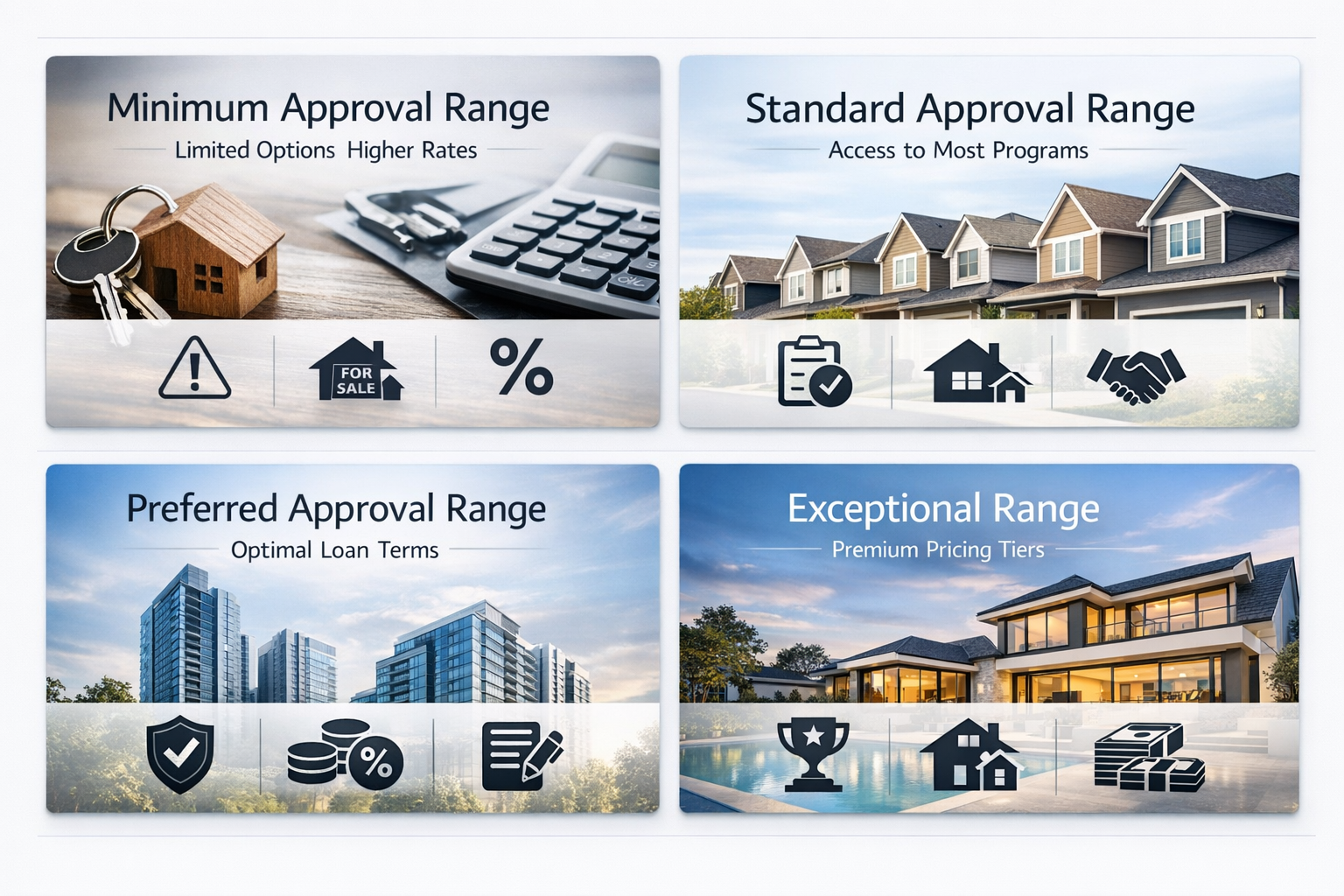
Minimum Approval Range (550-639): Limited lender options with higher interest rates and lower loan-to-value ratios, typically requiring stronger property cash flow to compensate for credit risk.
Standard Approval Range (640-699): Access to most DSCR loan programs with moderate pricing, representing the baseline where approval sensitivity begins to decrease significantly.
Preferred Approval Range (700+): Optimal loan terms, highest LTV ratios available, and competitive interest rates that can improve overall investment returns substantially.
Exceptional Range (740+): Premium pricing tiers with the most favorable terms, often including reduced documentation requirements and faster processing times for qualified investors.
Key Factors Beyond Minimum Credit Requirements
While meeting the minimum credit score for DSCR loans is essential, several additional factors influence your loan application's success and terms. These elements work together to create your overall borrower profile.
Property Cash Flow Performance: The debt service coverage ratio itself, typically requiring 1.0 or higher, demonstrates the property's ability to support mortgage payments through rental income.
Down Payment Capacity: Larger down payments can offset lower credit scores and may unlock better pricing tiers, with many programs requiring 20-25% minimum investment.
Real Estate Experience: Documented property management experience or real estate investment history can strengthen applications, particularly for borrowers near minimum credit score requirements.
Liquid Reserves: Available cash reserves equivalent to several months of mortgage payments provide additional security that lenders value in their approval decisions.
Pricing Tiers Based on Credit Score Ranges
Credit score ranges directly correlate with pricing tiers that can significantly impact your investment returns over time. Understanding these tiers helps investors evaluate the true cost of financing across different credit profiles.
Premium Tier (740+): Lowest available interest rates and minimal pricing adjustments, often saving investors thousands annually in interest payments compared to lower tiers.
Standard Tier (680-739): Moderate pricing adjustments with competitive rates that still allow for profitable real estate investments when property cash flow is strong.
Adjusted Tier (640-679): Higher interest rates and potential loan-to-value restrictions that require careful deal analysis to ensure adequate profit margins remain intact.
High-Risk Tier (550-639): Significant pricing premiums and stricter loan terms that may limit deal flow but still provide access to investor financing for qualified properties.
Steps to Improve Your Credit Before Applying
Investors who don't currently meet optimal credit thresholds can take strategic steps to improve their credit profile before applying for DSCR loans. These improvements can result in better terms and significant long-term savings.
Pay Down High Credit Card Balances: Reducing credit utilization below 30% across all cards can provide quick credit score improvements, often within one to two billing cycles.
Address Any Past Due Accounts: Bringing all accounts current eliminates ongoing negative reporting and begins the process of rebuilding positive payment history with creditors.
Review Credit Reports for Errors: Disputing inaccurate information with credit bureaus can remove negative items that artificially lower scores, potentially improving approval odds quickly.
Avoid New Credit Inquiries: Limiting new credit applications in the months before your DSCR loan application prevents additional hard inquiries from temporarily lowering your score.
Consider Authorized User Status: Being added as an authorized user on established accounts with positive payment history may provide modest score improvements for borderline applicants.
Alternative Options for Lower Credit Scores
Investors with credit scores below typical DSCR loan requirements still have financing options available, though these alternatives may come with different terms or structures that require careful consideration.
Asset-Based Lending Programs: Focus primarily on property value and equity rather than credit scores, though interest rates are typically higher and loan terms may be shorter than traditional DSCR products.
Hard Money Bridge Financing: Provides quick access to capital for acquisitions or refinancing, allowing investors to improve properties or credit profiles before transitioning to permanent financing.
Joint Venture Partnerships: Partnering with investors who have stronger credit profiles can provide access to better financing terms while sharing investment returns and responsibilities.
Seller Financing Arrangements: Direct negotiations with property sellers can create customized financing solutions that bypass traditional credit requirements entirely, though opportunities may be limited.
Portfolio Lender Programs: Some local banks and credit unions offer specialized investor programs with more flexible credit requirements for borrowers with strong banking relationships.
Understanding the minimum credit score for DSCR loans empowers real estate investors to make informed financing decisions and position themselves for success in competitive markets. While the baseline requirements typically start around 640, achieving scores above 700 can unlock significantly better pricing tiers and loan terms that improve long-term investment returns. Remember that credit scores represent just one component of your overall borrower profile, and strong property cash flow can help offset moderate credit challenges. By focusing on both credit improvement and deal analysis, investors can build sustainable portfolios using DSCR financing effectively.