Real estate investors looking to refinance rental properties face a common challenge: lenders scrutinize cash flow more closely than almost any other metric. Whether you're pursuing a DSCR loan or exploring traditional refinancing options, the numbers on your operating statement can make or break your approval odds and determine your rate.
The good news? You're not stuck with the cash flow your property generates today. Strategic adjustments made in the months leading up to a refinance application can substantially improve your income-to-expense ratio, positioning you for better terms and lower rates. This guide walks through proven tactics that investors can use to increase cash flow before refinancing a rental, drawing on rent optimization, expense reduction, and value-add strategies that deliver measurable results.
Understanding how to increase cash flow before refinancing a rental isn't just about cosmetic tweaks. It's about systematically evaluating every revenue stream and cost center in your operation, then making targeted improvements that strengthen your property's financial profile. Let's explore the specific steps that can help you maximize returns and unlock better financing opportunities.
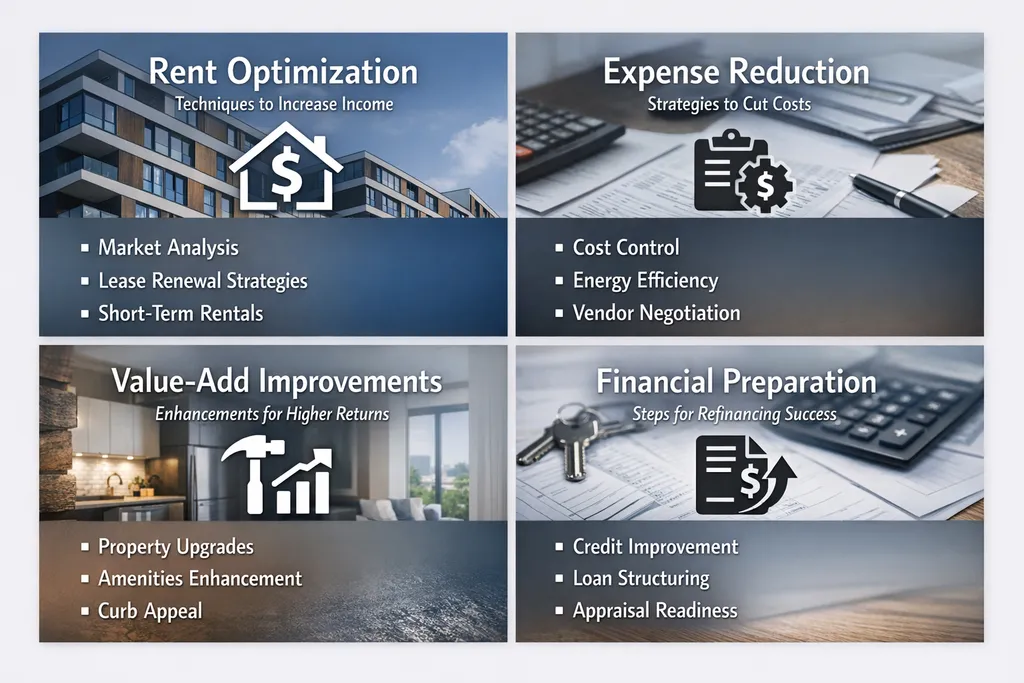
Strategic Rent Optimization Techniques
Strategic rent optimization techniques form the foundation of how to increase cash flow before refinancing a rental. Adjusting your rental rates isn't simply about raising prices across the board. It requires market awareness, timing, and an understanding of what tenants in your area value most.
Conduct thorough market research: Review comparable properties in your neighborhood to identify where your rents fall relative to the competition. Many investors discover they've been undercharging for years simply because they haven't monitored local rate trends. Bringing rents up to market standards can boost monthly income without requiring capital investment.
Structure lease terms strategically: Shorter lease terms might allow more frequent rate adjustments, while longer leases with built-in escalation clauses can provide predictable income growth. Some investors find success offering slight rent discounts in exchange for longer commitments that reduce vacancy risk and turnover costs.
Offer value-based incentives instead of rent reductions: Rather than lowering rent to attract or retain tenants, consider adding amenities or services that cost you less than the rent decrease would. This approach maintains higher reported rental income, which directly impacts your refinancing application.
Time rent increases appropriately: If you're planning to refinance within six to twelve months, implementing justified rent increases now gives you a stronger income history to present to lenders. Most refinance applications require recent rent rolls, and documented higher rents can improve your debt service coverage ratio significantly.
Rent optimization may require careful navigation of local regulations and lease agreements, but the impact on cash flow tends to be immediate and substantial. Even modest increases across multiple units can translate to thousands of dollars in additional annual income, strengthening your position when you approach lenders.
Expense Reduction and Cost Management
Expense reduction and cost management represent the other side of the cash flow equation. While boosting rental income gets most of the attention, cutting unnecessary costs can deliver equally powerful results for investors preparing to refinance.
Review recurring service contracts: Insurance policies, property management agreements, landscaping services, and maintenance contracts often carry pricing that hasn't been renegotiated in years. Soliciting competitive bids or renegotiating terms with existing providers can reduce monthly outlays without sacrificing service quality.
Address utility inefficiencies: Properties where landlords cover utilities offer particular opportunities for savings. Upgrading to energy-efficient appliances, improving insulation, or installing programmable thermostats might require upfront investment but can reduce ongoing utility expenses substantially, improving net operating income.
Implement preventive maintenance protocols: Reactive repairs typically cost more than preventive maintenance. Establishing regular inspection and maintenance schedules can help you catch small issues before they become expensive emergencies, smoothing out expense fluctuations and reducing average monthly costs over time.
Evaluate property tax assessments: Many investors pay property taxes without questioning assessments. Filing an appeal when your property's assessed value appears inflated relative to recent sales or current market conditions might reduce your annual tax burden, directly improving cash flow.
The key to effective expense reduction is distinguishing between cuts that harm your property's competitive position and those that simply eliminate waste. Deferred maintenance or reduced property standards can backfire by increasing vacancy rates or justifying lower rents. Focus instead on operational efficiencies and better vendor arrangements that preserve or enhance property quality while lowering costs.
Value-Add Improvements That Drive Returns
Value-add improvements that drive returns offer a third pathway for investors wondering how to increase cash flow before refinancing a rental. Strategic property upgrades can justify higher rents while also improving the asset's appraised value, creating a dual benefit when you apply for refinancing.
Focus on high-impact, low-cost updates: Kitchen and bathroom upgrades typically deliver the strongest rent premiums relative to investment. Replacing outdated fixtures, refinishing cabinets, or installing modern countertops can transform a unit's appeal without requiring full renovations. These improvements often pay for themselves within months through higher achievable rents.
Enhance curb appeal and common areas: First impressions matter in rental markets. Fresh exterior paint, improved landscaping, updated entrance areas, and well-maintained common spaces can justify rent increases across all units while reducing vacancy periods, since properties show better and attract quality tenants more quickly.
Add amenities tenants value: Depending on your market, additions like in-unit laundry, dedicated parking spaces, storage options, or smart home features might command meaningful rent premiums. The calculation is straightforward: if an improvement costs less to install than the net present value of future rent increases it enables, it strengthens your refinancing position.
Value-add strategies work best when they're tailored to your specific market and tenant demographic. What commands premium rents in one neighborhood might not move the needle in another. Research local preferences and prioritize improvements that your competition hasn't yet adopted, giving you a differentiation advantage that supports both higher occupancy and stronger rental rates.
Steps to Prepare Your Financials for Refinancing
Steps to prepare your financials for refinancing matter just as much as the operational improvements themselves. Lenders evaluate rental properties based on documented income and expenses, so how you present your property's financial performance can significantly influence approval decisions and rate offerings.
Organize at least 12 months of financial records: Compile complete documentation of rental income, operating expenses, and occupancy rates. Most lenders require trailing 12-month statements when underwriting refinance applications. Clean, organized records speed the approval process and demonstrate professional property management, which some lenders view favorably.
Document recent improvements and rent increases: If you've implemented rent optimization or value-add strategies, create a clear record showing when changes occurred and their financial impact. This documentation helps underwriters understand income growth trends and may support projections of future performance that improve your debt service coverage calculations.
Calculate your current DSCR accurately: Debt Service Coverage Ratio divides your net operating income by total debt service. Knowing this number before you apply lets you assess whether additional cash flow improvements are necessary to meet lender requirements. Many DSCR loans require ratios of 1.0 or higher, though requirements vary by lender and property type.
Address any deferred maintenance issues: Appraisers and underwriters may flag properties with visible maintenance problems, potentially affecting both appraised value and loan terms. Resolving these issues before refinancing can prevent complications and support stronger valuations that improve your loan-to-value ratio.
Gather current rent rolls and lease agreements: Lenders verify rental income through actual lease documents and tenant payment history. Having current, accurate rent rolls readily available accelerates the underwriting process and substantiates the income figures you're claiming in your application.
Financial preparation isn't glamorous, but it's often the difference between a smooth refinancing experience and a frustrating one. Investors who approach refinancing with thorough documentation and clear financial narratives tend to receive faster approvals and more competitive terms than those who scramble to assemble records during the application process.
Understanding How Cash Flow Impacts Refinancing Terms
Understanding how cash flow impacts refinancing terms helps investors prioritize which improvements will deliver the greatest benefit. Lenders structure rental property loans differently than owner-occupied mortgages, placing primary emphasis on the property's ability to generate sufficient income to cover debt service.
Higher cash flow typically unlocks better interest rates: Properties that demonstrate strong, stable cash flow present lower risk to lenders. This reduced risk often translates to more competitive rates, potentially saving thousands of dollars over the life of the loan. Even modest improvements in cash flow can shift you into a more favorable rate tier.
Improved DSCR may increase maximum loan amounts: Lenders often cap loan-to-value ratios based on debt service coverage. If your cash flow improvement raises your DSCR above key thresholds, you might qualify for a larger loan amount, allowing you to pull more equity out through a cash-out refinance for additional investments.
Documented income growth can influence underwriting decisions: While lenders primarily evaluate trailing performance, demonstrating upward income trends through recent rent increases or occupancy improvements can strengthen your application. Some underwriters consider forward-looking rent rolls when evaluating properties with documented momentum.
Lower operating expense ratios signal efficient management: Properties with lean, efficient operations and lower expense ratios relative to income often receive more favorable consideration. This metric suggests the investor manages the property professionally and maintains it properly, reducing the lender's long-term risk exposure.
The relationship between cash flow and refinancing terms isn't always linear, and different lenders weigh factors differently. However, the general principle holds: stronger cash flow and better debt service coverage consistently improve your negotiating position and expand your financing options. Investors who optimize these metrics before approaching lenders typically secure terms that support better long-term returns.
Learning how to increase cash flow before refinancing a rental gives investors concrete tools to strengthen their financial position and access better loan terms. The strategies outlined here, from rent optimization and expense management to strategic property improvements and financial preparation, work together to improve the metrics lenders evaluate most closely.
The timeline for implementing these changes matters. Most strategies require at least three to six months to show documented results in your financial statements, and some value-add improvements may take longer to complete and stabilize. Starting early gives you the flexibility to make adjustments methodically rather than rushing changes that might not deliver optimal results.
Remember that refinancing isn't just about lowering your current payment or accessing equity. It's an opportunity to reset your property's financial foundation for the next several years. Approaching the process with improved cash flow, organized documentation, and a clear understanding of your property's performance positions you to negotiate from strength and secure terms that support your broader investment strategy.
Whether you're preparing to refinance a single rental or building a portfolio, the principles remain consistent: maximize income, minimize unnecessary expenses, make strategic improvements that justify higher rents, and document everything thoroughly. These fundamentals not only improve your refinancing outcomes but also strengthen your properties' long-term performance and your position as a professional real estate investor.