Finance Rental Properties Through LLC Successfully
August 21, 2026
•
7 min read
How to Finance Rental Properties Through LLC: A Strategic Guide for Investors
Real estate investors constantly look for ways to protect personal assets while expanding their portfolios. Understanding how to finance rental properties through LLC structures offers a dual advantage: liability protection and access to specialized loan products that prioritize property performance over personal income metrics.
When you purchase investment properties through a limited liability company, you're creating a legal separation between your personal finances and your rental business. This entity structure can shield your personal assets from potential claims related to the property, while also opening doors to financing options specifically designed for investor portfolios.
The key to successfully financing rental properties through an LLC lies in understanding the documentation requirements, lender expectations, and loan products that align with your investment strategy. DSCR loans, for instance, focus on the rental income a property generates rather than your personal tax returns, making them particularly suitable for LLC-owned investments.
This guide walks you through the essential steps, from forming your LLC correctly to meeting lender requirements and securing funding that supports your growth objectives. Whether you're acquiring your first rental property or scaling an existing portfolio, the right entity structure paired with appropriate financing can make all the difference in your investment outcomes.
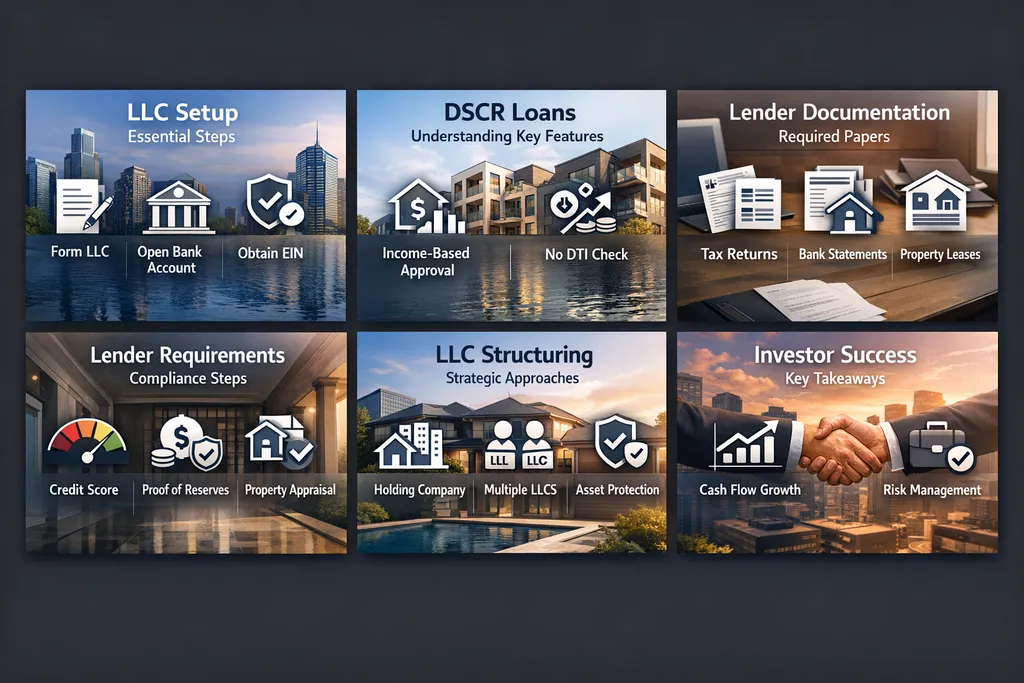
Essential Steps to Set Up Your LLC for Property Financing
Setting up your LLC correctly from the start can help streamline the mortgage application process and position you for better lending terms. Proper entity structure formation involves several critical administrative steps that lenders typically verify during underwriting.
Before approaching lenders about how to finance rental properties through LLC ownership, you'll need to complete these foundational tasks:
Register your LLC with the appropriate state authorities and obtain your articles of organization, which serve as proof of your entity's legal existence
Apply for an Employer Identification Number from the IRS, as most lenders require this separate tax identification for business entities rather than using your Social Security number
Draft an operating agreement that outlines ownership structure, management responsibilities, and capital contribution rules, even if you're a single-member LLC
Open a dedicated business bank account in the LLC's name to establish clear financial separation between personal and business funds
Obtain proper business licenses and permits required in your state or municipality for operating a rental property business
These preparatory steps may expedite your loan application by demonstrating that your entity structure is compliant and properly documented. Lenders often need to verify your LLC's legal standing before approving financing, so having these documents organized can reduce processing delays.
Many investors overlook the importance of maintaining their LLC in good standing after formation. This means filing annual reports, paying state fees, and keeping corporate records updated. Lenders may request proof that your LLC remains active and compliant as part of their due diligence process.
Understanding DSCR Loans for LLC Property Purchases
Understanding DSCR loans is central to learning how to finance rental properties through LLC structures effectively. These specialized loan products evaluate qualification primarily based on the property's rental income rather than your personal employment history or tax returns.
DSCR stands for Debt Service Coverage Ratio, which measures whether a property generates sufficient rental revenue to cover its mortgage payment. This metric-driven approach aligns well with LLC financing because it focuses on the asset's performance rather than the borrower's personal financial profile.
DSCR loans typically require the property's rental income to meet or exceed the monthly mortgage obligation, with ratios above 1.0 indicating positive cash flow
These loan products may allow investors to qualify based on current or projected rental income, depending on whether the property is already leased or will be rented after acquisition
Documentation requirements often center on lease agreements, rent rolls, and property appraisals rather than extensive personal income verification
LLC ownership is commonly accepted and sometimes preferred by lenders offering DSCR products, as the entity structure demonstrates investment intent
For investors looking to scale their portfolios, DSCR loans can be particularly valuable. Since qualification doesn't rely heavily on your personal debt-to-income ratio, you may be able to secure multiple investment property loans without the same constraints that traditional residential mortgages impose.
The property's income potential becomes the primary underwriting factor. If you're acquiring a rental with strong cash flow in a stable market, your LLC may qualify for financing even if you've recently purchased other investment properties. This income-based approach can facilitate portfolio expansion in ways that conventional lending often cannot.
Key Documentation Lenders Require from LLCs
When you're figuring out how to finance rental properties through LLC ownership, understanding lender documentation requirements helps you prepare a complete application package. Different lenders may have varying requirements, but certain documents appear consistently across most LLC loan applications.
Proper documentation demonstrates that your entity structure is legitimate and that the property represents a sound investment. Here's what lenders typically need:
Articles of organization or certificate of formation showing your LLC's legal registration with the state
Operating agreement detailing member ownership percentages, voting rights, and management structure, even for single-member LLCs
EIN confirmation letter from the IRS proving your entity has a separate tax identification number
Certificate of good standing from your state, confirming the LLC is current with all filing requirements and authorized to conduct business
Business bank statements in the LLC's name, typically covering the most recent two to three months to verify operational activity
Beyond entity documents, lenders also require property-specific information. This might include current lease agreements if the property is already rented, market rent analysis for vacant properties, property insurance quotes naming the LLC as the insured, and detailed property condition reports or inspection summaries.
Some lenders may request personal financial information from LLC members, particularly if you're seeking a loan with a personal guarantee or if the LLC is newly formed without established credit history. However, DSCR loans generally minimize personal financial scrutiny compared to conventional mortgage products.
Organizing these documents before you approach lenders can significantly speed up your application timeline. Many investors create a standardized folder with their core LLC documentation that they can quickly update and submit whenever they pursue new property acquisitions.
Meeting Lender Requirements for LLC Property Loans
Knowing how to finance rental properties through LLC structures means understanding that lender requirements can differ from traditional residential mortgage standards. Compliance with these specific expectations can improve your approval odds and potentially secure better loan terms.
Follow these steps to align with typical lender requirements for LLC-based property financing:
Ensure your LLC has been established for the minimum timeframe required by the lender, which might range from immediate acceptance for newly formed entities to requiring 1-2 years of operating history, depending on the loan product and lender policies.
Prepare financial documentation that demonstrates the property's income potential, including current lease agreements with rent amounts, market rent comparables from similar properties in the area, and historical income statements if you're refinancing an existing rental.
Verify that your LLC's registered agent and address are current and accurate, as lenders will use this information for official correspondence and may reject applications with outdated or inactive registration details.
Obtain adequate property insurance with the LLC named as the insured party and the lender named as the loss payee, as most lenders require proof of insurance before closing and may have minimum coverage requirements.
Different lending institutions may specialize in different types of investment property loans. Some focus exclusively on DSCR products for seasoned investors, while others offer portfolio loans or commercial financing options that accommodate LLC ownership under different qualifying criteria.
Understanding each lender's particular requirements can help you target the right financing partners for your investment strategy. If you're acquiring multiple properties annually, establishing relationships with lenders who specialize in investor loans and understand LLC entity structures can streamline future transactions.
Credit requirements may also vary. While DSCR loans often emphasize property performance over personal credit scores, most lenders still maintain minimum credit standards, typically in the 620-680 range. Higher credit scores might qualify you for better interest rates even when the loan primarily underwrites based on rental income.
Structuring Your LLC for Maximum Financing Flexibility
How to finance rental properties through LLC arrangements extends beyond simply forming an entity. The way you structure your LLC can impact your financing options, tax treatment, and operational flexibility as your portfolio grows.
Consider these strategic structuring approaches as you establish or refine your entity setup:
Evaluate whether a single-member or multi-member LLC best serves your goals, keeping in mind that some lenders have preferences and that tax treatment differs between these structures under IRS guidelines.
Decide whether to create one LLC that holds multiple properties or establish separate LLCs for individual properties, weighing liability isolation benefits against administrative complexity and potential financing implications.
Consider the state where you form your LLC, as some states offer more favorable legal protections or lower filing fees, though you'll typically need to register as a foreign entity in any state where you own property.
Determine your management structure clearly in your operating agreement, specifying whether the LLC is member-managed or manager-managed, as lenders may need to know who has authority to bind the entity to loan agreements.
Each structuring decision carries implications for how lenders view your applications. For example, a newly formed LLC created specifically for a single property purchase might be viewed differently than an established LLC with an existing portfolio and operating history.
Some investors opt for a series LLC structure where available, which creates separate liability protection for each property under one master entity. However, not all states recognize this structure, and lender acceptance varies. Understanding your lender's familiarity with different entity structures can prevent complications during underwriting.
Tax elections also matter. Most LLCs are taxed as pass-through entities by default, but you can elect corporate taxation if it serves your strategy. This decision might affect how lenders evaluate your financial position and what documentation they require, so consulting with a tax professional alongside your financing strategy is often worthwhile.
Strategic Takeaway for Investor Success
Learning how to finance rental properties through LLC ownership represents more than just a financing tactic. It's a comprehensive approach to building and protecting wealth through real estate investment.
The combination of proper entity structure, targeted loan products like DSCR financing, and thorough documentation creates a foundation for scalable portfolio growth. By focusing on properties that generate strong rental income and structuring your ownership to limit personal liability, you position yourself to take advantage of financing that evaluates assets on their own merits rather than solely on your personal financial profile.
Success with LLC-based property financing typically requires upfront preparation. Investors who invest time in properly forming their entities, understanding lender expectations, and organizing documentation tend to experience smoother transactions and may access better loan terms. The initial administrative effort often pays dividends through streamlined processes on subsequent acquisitions.
Remember that different lenders specialize in different products and have varying appetites for LLC lending. Building relationships with lenders who understand investor needs and regularly work with LLC-owned properties can become a competitive advantage as you scaling your portfolio real estate business.
LLC Financing FAQs
Do I need to form an LLC before I start shopping for a DSCR loan?
No. Many investors identify a property and go under contract first, then finalize their LLC formation before closing, as long as the entity is properly set up and documented by the time loan documents are signed.
Does closing in an LLC change my DSCR loan rate?
Not directly. DSCR loan pricing is driven mainly by your DSCR ratio, credit score, and loan-to-value, generally 6.25% to 8.00% in 2026 for standard residential investment properties, rather than by whether you close in your personal name or an LLC.
Can I move a property I already own into an LLC and refinance it as a DSCR loan?
Many investors do this, though lenders may want to confirm the transfer was for estate or asset protection purposes. Confirm your specific lender's requirements before initiating a transfer.
Whose credit score does the lender check if I'm borrowing through an LLC?
Lenders generally evaluate the personal credit of the LLC's members or guarantors, typically looking for a minimum in the 620 to 680 range, since the entity itself has no independent credit history.
Financing rental properties through an LLC combines asset protection with strategic access to investor-focused loan products. By establishing a compliant entity structure, understanding DSCR loan mechanics, and meeting lender documentation requirements, you create a framework for sustainable portfolio growth.
The key is approaching LLC financing as an integrated strategy rather than isolated steps. Your entity structure should support your financing goals, and your financing approach should leverage the benefits that LLC ownership provides. When these elements align, you gain both the liability protection of business entity ownership and the financing flexibility to pursue properties based on their income potential.
As you move forward with your investment plans, focus on building systems that make each subsequent property acquisition more efficient. Standardize your documentation, maintain your LLC in good standing, and cultivate relationships with lenders who specialize in investment property financing. These practices compound over time, making it progressively easier to identify opportunities, secure funding, and expand your rental portfolio with confidence.
Whether you're structuring your first LLC for a rental property purchase or refining an existing entity to improve your financing options, the principles remain consistent: proper documentation, compliance with lender requirements, and alignment between your entity structure and investment objectives create the foundation for long-term success in rental property investing.