Real estate investors often face a unique challenge: their income doesn't fit the conventional W-2 mold that most lenders expect. Self-employed investors, portfolio owners with multiple properties, and entrepreneurs typically generate wealth through cash flow and assets rather than steady paychecks. Traditional mortgage approval processes can feel restrictive and outdated for investors who've built substantial portfolios but lack the documentation that conventional lenders require.
Fortunately, the lending landscape has evolved to meet investor needs. Understanding how investors qualify without traditional income opens doors to financing solutions that prioritize what really matters: the earning potential of your properties and the strength of your investment portfolio. This shift toward cash flow lending and rental income qualification offers investors the flexibility to scale their portfolios without being held back by personal income documentation requirements.
In this guide, we'll explore the practical strategies investors use to secure financing based on property performance, asset value, and alternative approval criteria. Whether you're expanding an existing portfolio or diving into your next investment opportunity, these methods can help you access the capital you need.
Common Questions About Qualifying Without Traditional Income
Common Questions About Qualifying Without Traditional Income can help clarify the fundamentals before diving deeper into specific loan products. Many investors wonder if financing is even possible without the standard employment verification process.
Q: Can I really qualify for an investment property loan without showing W-2 income or tax returns?
Yes, several loan programs are designed specifically for investors who may not have traditional employment income. DSCR loans, for example, focus on the rental income generated by the property itself rather than your personal earnings. These programs evaluate whether the property's cash flow can cover the mortgage payment, typically looking for a debt service coverage ratio that demonstrates the property generates sufficient income. Asset-based loan programs also allow investors to qualify by leveraging their existing assets rather than demonstrating ongoing employment income.
Q: What do lenders look at instead of my personal income?
When personal income isn't the focus, lenders typically examine the property's rental income potential, your existing asset portfolio, credit profile, and down payment strength. For DSCR loans, the property's current or projected rental income becomes the primary qualification metric. In asset-based programs, lenders may evaluate your liquid assets, investment accounts, and real estate holdings to determine your ability to support the loan. The shift moves away from proving what you earn month-to-month and toward demonstrating the financial strength of your investment strategy.
Understanding DSCR Loans and Cash Flow Lending
Understanding DSCR Loans and Cash Flow Lending is essential for investors looking to leverage property performance rather than personal earnings. DSCR stands for Debt Service Coverage Ratio, and these loans have become increasingly popular among real estate investors who want to expand their portfolios efficiently.
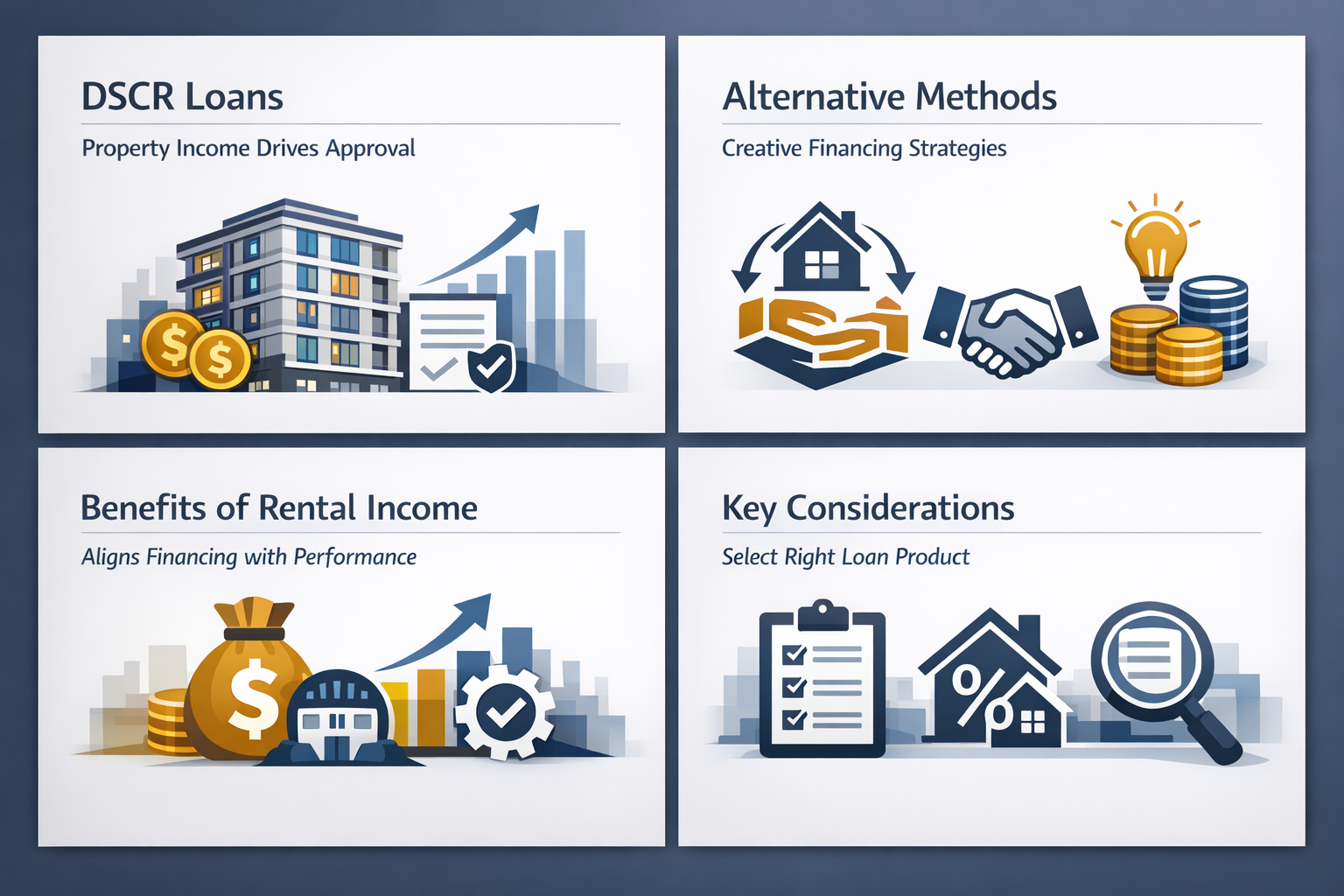
Property income drives approval: DSCR loans focus on the rental income the property generates or is expected to generate. Lenders calculate whether the monthly rent covers the mortgage payment, taxes, insurance, and other costs. This approach typically streamlines the approval process because it removes the need for extensive personal income verification, tax returns, or employment letters.
Ideal for portfolio expansion: Investors with robust property cash flows but irregular personal income often find DSCR loans advantageous. If you're self-employed, own multiple properties, or have income streams that don't show up cleanly on tax returns, rental income qualification through DSCR loans may align better with your investment strategy. This method enables quicker access to financing essential for acquiring additional properties.
Flexible documentation requirements: Unlike conventional loans that require two years of tax returns and employment verification, DSCR loans generally require minimal personal income documentation. Instead, lenders focus on rent rolls, lease agreements, and property appraisals to assess the investment's viability. This shift can significantly reduce paperwork and speed up closing timelines.
Scalability for growing investors: Because each property is evaluated on its own cash flow merit, investors can potentially secure financing for multiple properties simultaneously without hitting the income-to-debt ratio walls that traditional loans impose. This scalability makes DSCR loans particularly useful for investors building larger portfolios.
Alternative Approval Methods for Real Estate Investors
Alternative Approval Methods for Real Estate Investors extend beyond DSCR loans and include several creative financing strategies that bypass traditional income verification altogether. These options cater to investors with unique financial profiles.
No income, no job loan products: Some lenders offer loan programs specifically designed for investors who prefer to qualify based on property cash flow rather than personal income. These products target entrepreneurial investors with diverse income streams that may not appear on standard employment documentation. By emphasizing the property's earning potential, these loans can secure necessary funds without conventional employment checks.
Asset-based qualification programs: Investors with substantial assets but intermittent or unconventional income can leverage asset qualifier loan programs. These programs allow you to use your investment accounts, retirement funds, real estate equity, or other holdings in place of income verification. Lenders may calculate a theoretical income stream from your assets to demonstrate repayment ability, optimizing wealth management by tapping into asset value for property investment.
Bridge and fix-and-flip financing: Short-term financing options like bridge loans and fix-and-flip loans often focus more on the property's after-repair value and your experience as an investor rather than personal income. These loans are designed to move quickly, which means underwriting criteria may emphasize deal quality, exit strategy, and project feasibility over traditional income documentation.
Benefits of Rental Income Qualification
Benefits of Rental Income Qualification are substantial for investors seeking to align their financing with portfolio performance rather than personal earnings. This approach offers multiple advantages that can accelerate growth and simplify the borrowing process.
Direct alignment with investment goals: Rental income qualification ensures that your financing is directly tied to the cash flow your properties generate. This alignment makes sense for investors who prioritize property performance and returns over personal income stability. It allows you to demonstrate the strength of your investment strategy rather than your employment situation.
Faster approval and closing: Because rental income qualification typically requires less personal documentation, the approval process can move more quickly. You're not waiting for tax returns to be processed or employment letters to be verified. Instead, lenders focus on property appraisals, rent rolls, and lease agreements, which can often be gathered and reviewed more efficiently.
Greater portfolio flexibility: Using rental income as the basis for qualification means each property stands on its own merit. You're not constrained by personal debt-to-income ratios that limit how many properties you can finance. This flexibility is particularly valuable for investors looking to scale quickly and take advantage of market opportunities as they arise.
Reduced tax documentation complexity: Many investors structure their finances to minimize taxable income through deductions and depreciation. Traditional lenders may view this as a weakness, while rental income qualification programs recognize that lower reported personal income doesn't necessarily reflect your true financial capacity or the strength of your investment portfolio.
Steps to Prepare for Non-Traditional Loan Approval
Steps to Prepare for Non-Traditional Loan Approval can help you position yourself for success when pursuing cash flow lending or alternative qualification methods. Even without traditional income documentation, preparation remains important.
Organize property performance documentation: Gather current rent rolls, lease agreements, and any historical income data for properties you own. If you're purchasing a new investment, research comparable rental rates in the area and prepare a market rent analysis. Lenders evaluating rental income qualification will want to see that the property can generate sufficient cash flow, so having this documentation ready can speed up the process.
Strengthen your credit profile: While alternative approval methods may focus less on personal income, credit history still matters. Most DSCR and asset-based loan programs require a minimum credit score, often in the mid-600s or higher. Review your credit reports, address any errors, and work to improve your score if needed. A stronger credit profile may also help you secure better terms and lower rates.
Prepare a solid down payment: Non-traditional loan programs often require larger down payments than conventional mortgages, sometimes 20% to 25% or more. Having substantial equity in the deal reduces lender risk and demonstrates your commitment to the investment. Building cash reserves and preparing for this upfront capital requirement is an important step in positioning yourself for approval.
Document your asset portfolio: If you're considering asset-based qualification, compile statements for investment accounts, retirement funds, and other liquid assets. Some programs may also consider real estate equity. The more comprehensive your asset documentation, the stronger your application will be. This can be particularly useful for investors with significant wealth but unconventional income streams.
Work with investor-focused lenders: Not all lenders offer DSCR loans or alternative approval programs. Seek out mortgage providers who specialize in real estate investor financing and understand the unique needs of portfolio owners. These lenders are more likely to offer flexible underwriting and can guide you through the specific requirements of each program.
Key Considerations When Choosing Alternative Financing
Key Considerations When Choosing Alternative Financing help ensure you select the right loan product for your investment strategy. While these programs offer flexibility, understanding the trade-offs is important.
Interest rates and costs:DSCR loans and alternative financing options may carry slightly higher interest rates than conventional loans. This is often because lenders perceive greater risk when personal income isn't verified. However, the benefits of faster approval, reduced documentation, and portfolio scalability may outweigh the additional cost for many investors. Always compare rates from multiple lenders and calculate the total cost of the loan over its term.
Property eligibility and requirements: Not all properties qualify for DSCR or alternative approval loans. Lenders typically prefer single-family rentals, small multifamily properties, or condos in good condition with strong rental markets. Properties requiring significant repairs or in declining markets may not meet lender criteria. Understanding these requirements upfront can help you target the right properties for your financing strategy.
Debt service coverage ratio thresholds: Most DSCR lenders look for a ratio of at least 1.0, meaning the property's rental income covers the mortgage payment. Some lenders prefer ratios of 1.2 or higher, which provides a cushion for vacancies and expenses. Properties with lower ratios may still qualify but could face higher rates or larger down payment requirements. Running these calculations before you apply can help you gauge your chances of approval.
Prepayment penalties and loan terms: Some alternative financing products include prepayment penalties, which can limit your flexibility if you want to refinance or sell the property early. Review loan terms carefully and understand any restrictions or fees associated with paying off the loan ahead of schedule. This is particularly important for investors who plan to refinance into conventional loans once they can provide traditional income documentation.
Your long-term investment strategy: Consider how the loan fits into your overall portfolio goals. If you're planning to hold properties long-term and build cash flow, DSCR loans can be an excellent fit. If you're focused on short-term flips or quick exits, bridge loans or other short-term products may be more appropriate. Aligning your financing with your investment timeline and strategy will help you maximize returns and minimize costs.
Understanding how investors qualify without traditional income is a game-changer for real estate portfolio growth. The shift toward cash flow lending, rental income qualification, and asset-based approval methods reflects a more sophisticated approach to investor financing, one that recognizes the realities of modern wealth building and entrepreneurship.
By focusing on property performance rather than W-2 income, DSCR loans and alternative approval programs offer investors the flexibility to scale portfolios, access capital more quickly, and align financing with their actual financial strength. These strategies remove many of the barriers that traditional lending imposes, opening doors for self-employed investors, portfolio owners, and anyone whose income doesn't fit the conventional mold.
If you've been held back by traditional income verification requirements, it's time to explore the options available to you. With the right preparation, documentation, and lender partnership, you can secure the financing you need based on what truly matters: the earning potential of your properties and the strength of your investment strategy. The lending landscape has evolved to support real estate investors, and taking advantage of these alternative approval methods can help you achieve your portfolio goals faster and more efficiently.