Fix and flip loan requirements can make or break your investment strategy in today's competitive market. Understanding these criteria before you start hunting for properties could save you time, money, and frustration down the road. While traditional mortgages focus on your ability to live in a home, fix and flip financing evaluates your potential to generate profit from distressed properties.
These short-term, interest-only loans typically offer the flexibility and speed that active investors need. However, lenders have specific benchmarks they use to assess both you as a borrower and the properties you're targeting. Getting familiar with these requirements helps you prepare stronger applications and negotiate better terms.
Credit Score and Financial Foundation Requirements
Credit score and financial foundation requirements form the backbone of any successful fix and flip loan application. Most lenders typically look for credit scores that demonstrate your reliability with previous financial obligations.
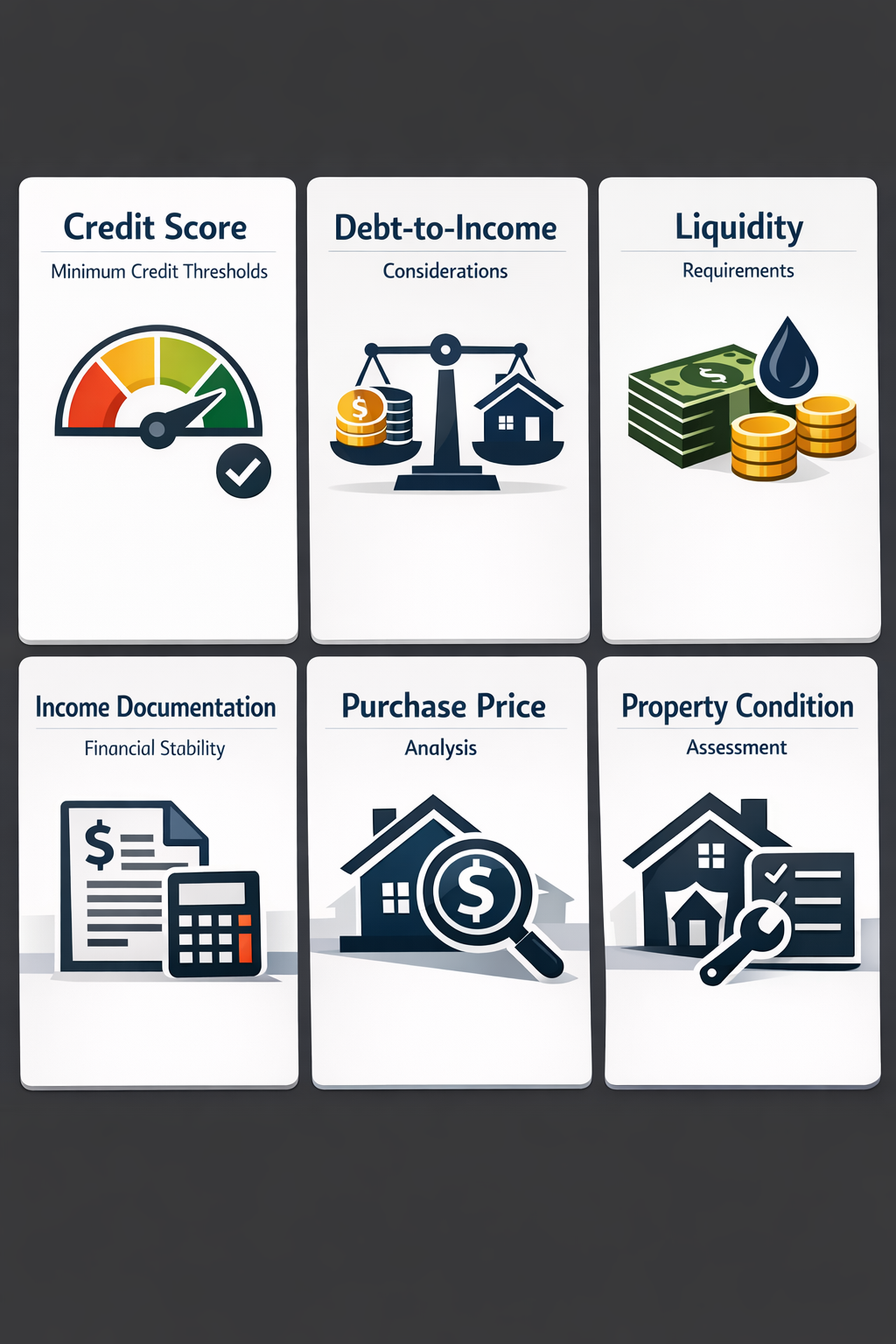
Minimum Credit Thresholds: Many lenders may require credit scores in the mid-600s or higher, though some programs might accept lower scores with compensating factors like larger down payments or extensive experience.
Debt-to-Income Considerations: Your existing debt load could impact approval, especially if you're carrying multiple investment properties or significant personal obligations that might strain cash flow during renovation periods.
Liquidity Requirements: Lenders often want to see substantial cash reserves beyond your down payment and renovation budget, typically enough to cover several months of payments and unexpected costs.
Income Documentation: Unlike traditional mortgages, some fix and flip lenders focus more on the deal's potential profitability than your W-2 income, though financial stability still matters for approval.
Purchase Price Analysis and Property Evaluation
Purchase price analysis and property evaluation represent critical components that lenders use to assess deal viability. These requirements help ensure that both you and the lender have realistic expectations about the project's potential returns.
Maximum Loan-to-Purchase Ratios: Most lenders might finance 70-90% of the purchase price, requiring you to bring substantial equity to the table from day one.
Property Condition Assessment: Lenders typically require detailed inspections or contractor estimates to understand the scope of work needed and whether the property's bones are sound enough to justify the investment.
Market Comparables Review: Your lender will likely analyze recent sales of similar properties in the area to validate that your purchase price makes sense within current market conditions.
Exit Strategy Evaluation: Some lenders want to see clear evidence that you can sell or refinance the property profitably, often requiring market analysis showing demand for renovated homes in that price range.
After Repair Value Estimate Criteria
After repair value estimate criteria determine how much financing you can secure for your project. This calculation directly impacts your total loan amount and influences whether the deal makes financial sense for both parties.
Professional Appraisal Standards: Most lenders require licensed appraisers to provide after repair value estimates based on comparable sales and the proposed renovation scope, not just your contractor's optimistic projections.
Conservative Valuation Approaches: Lenders typically use more conservative ARV estimates than investors might prefer, often applying additional discounts to account for market fluctuations during the renovation period.
Renovation Quality Requirements: Your ARV estimate must align with the quality level of improvements you're planning, meaning luxury finishes need to be supported by comparable high-end sales in the neighborhood.
Timeline Impact Factors: Some lenders may adjust ARV estimates based on how long your project might take, recognizing that longer renovation periods could expose you to changing market conditions.
Down Payment Structure and Capital Requirements
Down payment structure and capital requirements often surprise new fix and flip investors with their complexity. Understanding these financial obligations helps you plan your capital allocation across multiple potential deals.
Initial Down Payment Percentages: Most fix and flip lenders require down payments ranging from 20-30% of the purchase price, significantly higher than traditional residential mortgages and often paid at closing.
Renovation Fund Reserves: Many lenders hold renovation funds in escrow and release them based on completed work phases, meaning you might need additional capital to cover initial renovation expenses before reimbursement.
Interest Reserve Accounts: Some lenders require you to escrow several months of interest payments upfront, ensuring loan payments continue even if renovation delays prevent quick resale.
Closing Cost Considerations: Fix and flip loans often carry higher origination fees and closing costs than traditional mortgages, requiring additional capital beyond your down payment and renovation budget.
Contingency Fund Requirements: Experienced lenders might require proof of additional reserves equal to 10-20% of your total project budget to handle unexpected complications or cost overruns.
Borrower Experience and Track Record Standards
Borrower experience and track record standards vary significantly among lenders, but most recognize that successful fix and flip projects require specific skills beyond general real estate knowledge.
Previous Project Documentation: Many lenders prefer borrowers who can demonstrate successful completion of similar renovation projects, often requiring detailed records of past purchases, renovation costs, and sale prices.
Construction Management Capabilities: Some lenders evaluate your ability to manage contractors, stay on budget, and complete projects on schedule, recognizing that these skills directly impact loan performance.
Market Knowledge Assessment: Lenders might assess your understanding of local market conditions, renovation costs, and buyer preferences in your target areas, particularly for newer investors.
Professional Network Evaluation: Your relationships with reliable contractors, real estate agents, and other professionals could influence lending decisions, as strong networks often correlate with project success.
Alternative Experience Recognition: Some lenders accept related experience in construction, real estate sales, or property management as partial substitutes for direct fix and flip experience, especially when combined with strong financial profiles.
Meeting fix and flip loan requirements might seem challenging, but preparation typically pays off in better terms and smoother closings. Focus on building strong credit, maintaining adequate liquidity, and developing realistic deal analysis skills that align with lender expectations.
Remember that these requirements exist to protect both you and your lender from deals that might not generate expected returns. While market conditions and lending standards continue evolving, investors who understand and prepare for these criteria often find themselves better positioned to capitalize on opportunities when they arise.
Take time to research different lenders' specific requirements, as terms can vary significantly based on your experience level, target markets, and project scope. The right financing partner can make the difference between a profitable flip and a costly learning experience.