Structuring a rental portfolio effectively can determine the difference between moderate returns and exceptional wealth building through real estate investment. Today's lending landscape offers sophisticated financing tools that enable investors to scale beyond traditional income verification barriers. DSCR loans have emerged as a particularly powerful instrument for portfolio expansion, allowing investors to qualify based on property cash flow rather than personal income documentation.
The evolution of rental property financing has created new opportunities for strategic portfolio development. Understanding how to leverage these modern financing solutions while maintaining proper risk management becomes crucial for sustainable growth. This comprehensive guide explores the essential components of building and structuring a rental portfolio that can withstand market fluctuations while generating consistent returns.
Foundation Planning for Portfolio Success
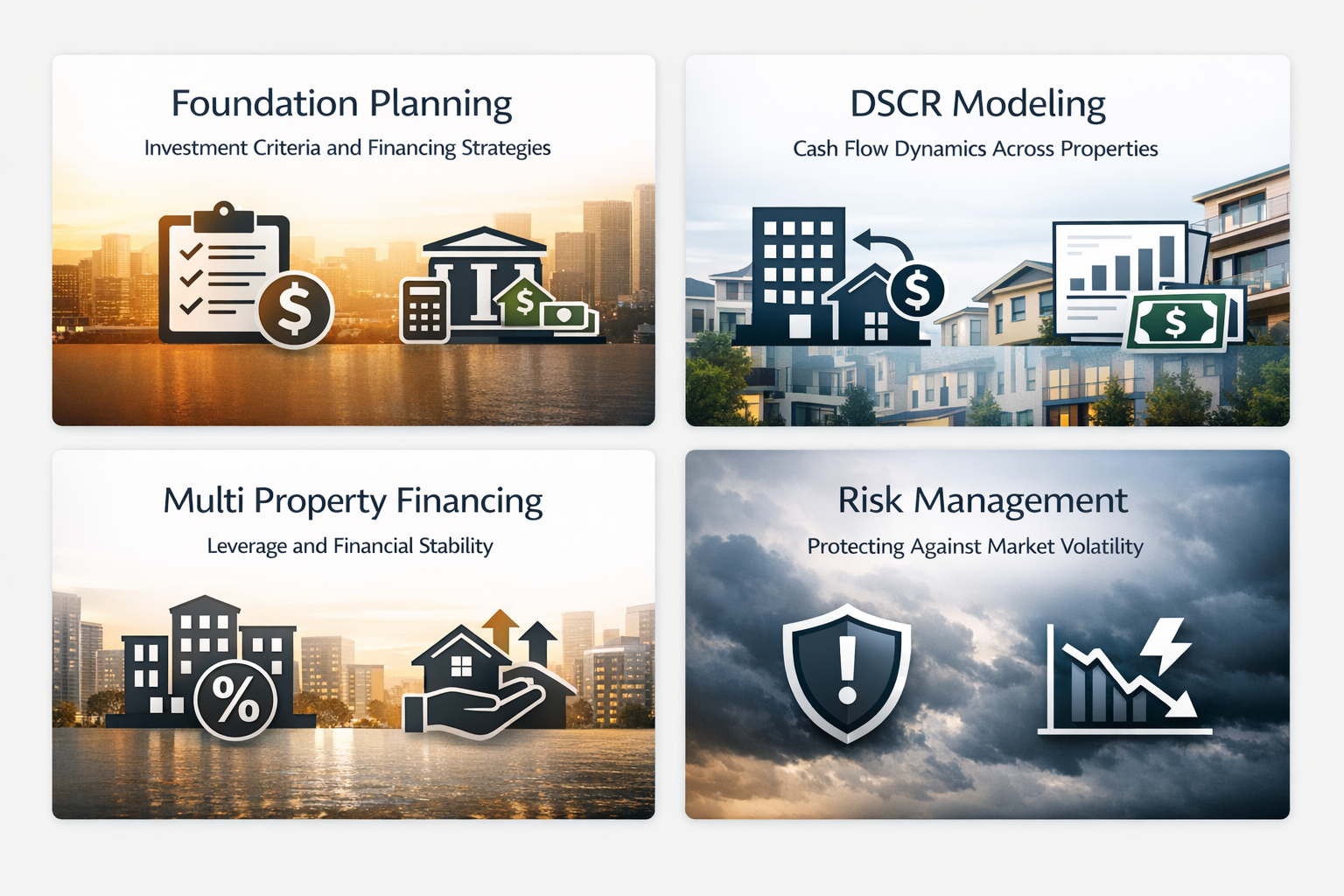
Foundation planning for portfolio success starts with establishing clear investment criteria and financing strategies that align with your long-term goals. The key lies in understanding how different loan products can support various stages of portfolio development.
Define your investment parameters early: Establish specific criteria for property types, locations, and expected returns before you start shopping. This approach helps you move quickly on opportunities while maintaining consistent portfolio quality.
Build relationships with specialized lenders:DSCR loan providers often offer more flexible terms for repeat investors. Establishing these connections early can streamline future acquisitions and potentially improve your lending terms as your portfolio grows.
Create a scalable financing framework: Plan how you'll transition between different loan types as your portfolio expands. Bridge loans might fund initial acquisitions, while DSCR loans could provide long-term financing for stabilized properties.
DSCR Portfolio Modeling Strategies
DSCR portfolio modeling strategies form the analytical backbone of successful rental property investment. These models help investors understand cash flow dynamics across multiple properties while optimizing financing structures.
Calculate portfolio-wide debt service coverage: While individual properties need to meet minimum DSCR requirements of typically 1.25, modeling your entire portfolio's combined coverage ratio provides insight into overall financial health and borrowing capacity.
Factor in vacancy and maintenance reserves: Conservative DSCR modeling should account for periodic vacancies and ongoing maintenance costs. This ensures your calculations reflect realistic operating scenarios rather than optimistic projections.
Model different financing scenarios: Compare how various loan structures affect your portfolio's overall returns and cash flow stability. Sometimes a slightly higher rate with better terms can improve long-term portfolio performance.
Multi Property Financing Coordination
Multi property financing coordination requires careful timing and strategic planning to maximize leverage while maintaining financial stability across your portfolio. The key is understanding how different loan products can work together.
Stagger loan origination dates: Timing your acquisitions to spread loan origination across different months can help manage cash flow and renewal schedules. This approach also allows you to take advantage of favorable market conditions when they arise.
Balance short-term and long-term financing: Use bridge loans for properties requiring immediate improvements, then refinance into DSCR loans once stabilized. This strategy optimizes both acquisition speed and long-term cash flow.
Coordinate with portfolio lenders: Some lenders specialize in portfolio financing and can offer better terms when you bring multiple properties. These relationships become more valuable as your portfolio grows beyond individual property lending limits.
Risk Management Through Diversification
Risk management through diversification helps protect your rental portfolio from market volatility and localized economic downturns. Smart diversification goes beyond just buying properties in different neighborhoods.
Geographic diversification: Spread your properties across different markets to reduce exposure to local economic downturns. Consider markets with diverse economic bases and varying rental demand drivers.
Property type variation: Mix single-family rentals with small multifamily properties to balance cash flow stability with growth potential. Different property types often perform differently during various market cycles.
Tenant demographic diversification: Target properties that appeal to different tenant profiles, from young professionals to families. This approach helps maintain occupancy even when specific demographic groups face economic pressure.
Financing term diversification: Use a mix of loan terms and interest rate structures to balance payment stability with flexibility. Fixed-rate loans provide predictability while adjustable rates might offer initial savings.
Scaling Strategy Implementation
Scaling strategy implementation becomes the engine that drives portfolio growth from a few properties to a substantial real estate business. The approach you take here determines how quickly and efficiently you can expand.
Reinvestment of cash flow: Systematically reinvest rental income and tax benefits into new acquisitions rather than lifestyle expenses. This compound approach accelerates portfolio growth significantly over time.
Leverage appreciation for acquisitions: As properties appreciate, use cash-out refinancing or home equity lines of credit to fund additional purchases. This strategy allows you to expand without depleting personal savings.
Optimize tax advantages: Structure your portfolio to maximize depreciation benefits and 1031 exchanges. These tax strategies can provide additional capital for reinvestment and portfolio expansion.
Build operational systems: Develop standardized processes for property management, maintenance, and tenant relations. Efficient operations become crucial as your portfolio grows beyond what you can manage personally.
Technology and Data Integration
Technology and data integration have become essential components of modern rental portfolio management and decision-making. These tools can significantly improve your ability to analyze opportunities and manage properties efficiently.
Property analysis software: Modern analysis tools can quickly evaluate potential acquisitions by comparing rental rates, property values, and neighborhood trends. These platforms often integrate with MLS data to streamline your deal evaluation process.
Portfolio tracking systems: Comprehensive tracking systems help you monitor cash flow, maintenance schedules, and loan payments across all properties. This data becomes invaluable for making informed decisions about future acquisitions or dispositions.
Market data integration: Access to real-time market data helps you identify emerging opportunities and potential risks in your target markets. This information can guide both acquisition and exit strategies.
Financial reporting automation: Automated reporting systems can track key performance indicators across your portfolio, making it easier to identify trends and opportunities for improvement.
Structuring a rental portfolio requires a systematic approach that balances growth opportunities with risk management. The key lies in understanding how modern financing tools like DSCR loans can support your expansion goals while maintaining sustainable cash flow across all properties.
Success in rental property investment often comes down to consistent execution of proven strategies rather than trying to time markets perfectly. By focusing on solid fundamentals like proper DSCR modeling, diversification, and efficient financing coordination, you can build a portfolio that generates reliable returns regardless of market conditions.
The rental property market continues to evolve with new financing products and technology solutions that make portfolio management more efficient than ever before. Staying informed about these developments while maintaining disciplined investment criteria will position you for long-term success in real estate investing.