Best DSCR Portfolio Scaling Tips for Real Estate Investors
Growing a real estate investment portfolio requires more than just finding good properties. The best DSCR portfolio scaling tips focus on strategic financing that leverages property cash flow rather than personal income limitations. DSCR loans have transformed how investors approach multi property growth, offering opportunities to expand portfolios through innovative leverage strategies and income stacking techniques.
Traditional mortgage products often limit investors based on personal debt-to-income ratios, creating barriers to rapid portfolio expansion. DSCR financing changes this dynamic by underwriting loans based on the property's ability to generate rental income. This shift enables investors to scale more efficiently while maintaining better control over their investment strategy.
Common Questions About DSCR Portfolio Scaling
Q: How quickly can investors scale their portfolios using DSCR loans?
The scaling speed depends on several factors including deal flow, property cash flow ratios, and market conditions. Many investors find they can acquire properties more frequently with DSCR loans since the underwriting process typically focuses on rental income potential rather than personal income verification. However, each deal should still meet sound investment criteria for long-term success.
Q: What's the minimum DSCR ratio needed for portfolio expansion?
Most lenders require a DSCR of 1.0 or higher, though some may accept ratios as low as 0.75 for strong borrowers. Properties with higher ratios generally provide more financing options and better terms for scaling strategies.
Essential DSCR Leverage Strategies for Growth
Successful portfolio scaling through DSCR loans requires understanding key leverage strategies that maximize growth potential while managing risk effectively.
Cash Flow Optimization: Focus on properties that generate strong rental income relative to debt service, creating positive cash flow that can fund additional acquisitions
Strategic Refinancing: Use DSCR loans to refinance existing properties with improved terms, freeing up capital for new investments
Bridge-to-DSCR Transitions: Move from high-cost hard money loans to stable DSCR financing after completing fix and flip projects, reducing carrying costs significantly
Portfolio Cross-Collateralization: Some lenders may allow using multiple properties as collateral, potentially improving loan terms for the entire portfolio
Multi Property Growth Through Income Stacking
Income stacking represents one of the most effective approaches to multi property growth, allowing investors to layer different income sources and financing strategies for accelerated expansion.
Diversified Property Types: Combine single-family rentals, small multifamily properties, and commercial real estate to create multiple income streams
Geographic Diversification: Spread investments across different markets to reduce concentration risk and capture various growth opportunities
Rental Income Layering: Stack rental income from multiple properties to qualify for larger DSCR loans on subsequent acquisitions
Value-Add Strategies: Implement property improvements that increase rental income, boosting DSCR ratios for future financing opportunities
Advanced Portfolio Expansion Techniques
Sophisticated investors often employ advanced techniques that combine DSCR financing with other investment strategies to accelerate portfolio growth and optimize tax efficiency.
1031 Exchange Integration: Combine DSCR loans with 1031 exchanges to defer taxes while scaling into larger or multiple properties
Balance Sheet Lending: Work with portfolio lenders who keep loans in-house, potentially offering more flexible terms for large-scale acquisitions
Secondary Market Opportunities: Explore loans that can be sold to secondary market aggregators, providing additional exit strategies and financing flexibility
Hybrid Financing Structures: Utilize innovative DSCR products that combine different lending approaches for optimal portfolio financing
Step-by-Step DSCR Portfolio Scaling Process
Following a systematic approach to DSCR portfolio scaling helps investors build sustainable growth while maintaining proper risk management throughout the expansion process.
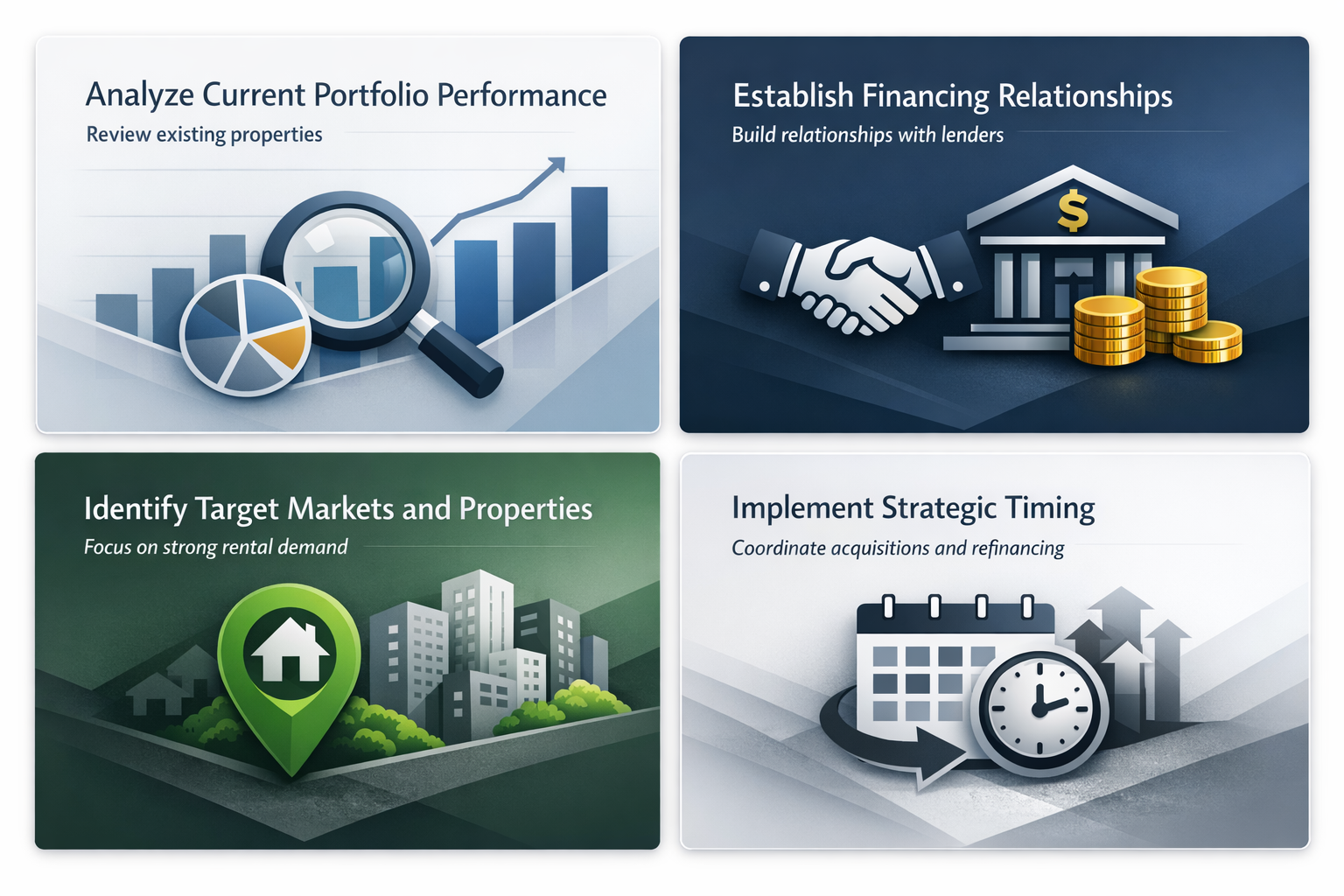
Analyze Current Portfolio Performance: Review existing properties' DSCR ratios, cash flow patterns, and market values to identify refinancing opportunities and establish baseline metrics for future acquisitions
Establish Financing Relationships: Build relationships with multiple DSCR lenders to compare terms, understand different product offerings, and ensure consistent access to capital for scaling activities
Identify Target Markets and Properties: Focus on markets with strong rental demand and properties that meet minimum DSCR requirements, prioritizing cash flow generation over appreciation speculation
Implement Strategic Timing: Coordinate acquisitions and refinancing activities to maximize leverage opportunities while maintaining adequate cash reserves for property management and unexpected expenses
Risk Management in Scaled DSCR Portfolios
As portfolios grow through DSCR financing, implementing proper risk management becomes increasingly important to protect investments and ensure long-term sustainability.
Maintain Adequate Cash Reserves: Keep sufficient liquidity to cover vacancy periods, maintenance costs, and debt service across the entire portfolio, typically 3-6 months of expenses per property
Monitor Market Conditions: Track rental market trends, interest rate movements, and local economic indicators that could impact property performance and refinancing opportunities
Diversify Financing Terms: Avoid concentrating all loans with similar maturity dates or rate adjustment periods to reduce refinancing risk and maintain flexibility in changing market conditions
Regular Portfolio Performance Reviews: Conduct quarterly assessments of each property's DSCR performance, identifying underperforming assets that may need attention or disposal
The best DSCR portfolio scaling tips focus on leveraging property cash flow to build sustainable investment growth. By combining strategic financing approaches with sound risk management, investors can achieve multi property growth that might not be possible through traditional mortgage products. Success in DSCR portfolio scaling requires understanding both the opportunities and limitations of cash flow-based underwriting.
Effective leverage strategy involves more than just accessing capital. It requires careful property selection, market analysis, and ongoing portfolio management to maintain strong DSCR ratios across all investments. Income stacking through diversified properties and markets can provide the stability needed for long-term portfolio growth.
As the DSCR lending market continues evolving with new product innovations and hybrid structures, investors who master these scaling techniques may find themselves well-positioned to capitalize on emerging opportunities in the rental property financing landscape.