
LOAN PROGRAMS
APPLY NOW

Real estate investors face a crucial balancing act when securing financing for rental properties. Understanding how DSCR rates and loan to value ratios interact can mean the difference between profitable deals and costly mistakes. These two factors work together to determine not only your qualification odds but also your long-term investment returns.
DSCR loans typically offer LTV ratios up to 80% with interest rates starting around 7.00%, creating opportunities for investors to leverage properties effectively. However, the relationship between these metrics requires careful consideration to optimize your investment strategy and maintain healthy cash flow.
The current DSCR loan market conditions reveal important trends that investors should understand when evaluating financing options. Interest rates and loan-to-value ratios have settled into ranges that provide both opportunities and challenges for property investors.
The LTV impact on pricing creates a direct correlation between the amount you borrow and the cost of that borrowing. Higher loan-to-value ratios often result in increased interest rates, but they also reduce your initial capital requirements.
Successfully managing leverage vs cost requires investors to evaluate both immediate financing expenses and long-term portfolio growth potential. The balance between these factors determines your overall investment success.
Finding the right investor balance involves coordinating your financing strategy with your investment goals and risk tolerance. This balance affects both short-term cash flow and long-term wealth building potential.
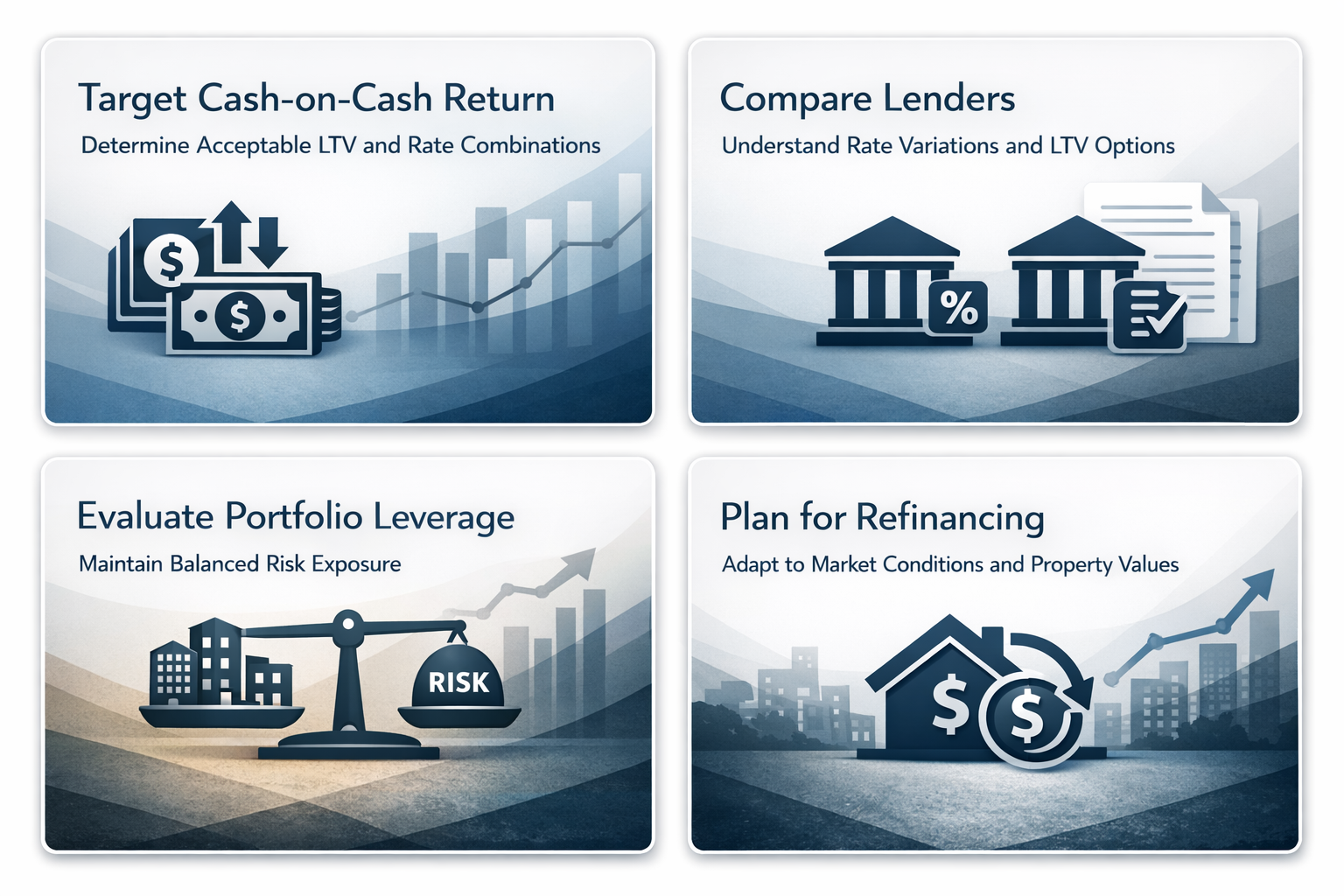
Developing a comprehensive DSCR loan strategy requires following essential steps that align your financing approach with your investment objectives. These steps help ensure you're making informed decisions about rates and loan-to-value combinations.
Understanding the relationship between DSCR rates and loan to value ratios empowers real estate investors to make strategic financing decisions that support their long-term success. With current market conditions offering LTV ratios up to 80% and rates starting around 7.00%, opportunities exist for investors who can balance leverage with cost effectively.
The key lies in evaluating how different rate and LTV combinations align with your investment goals, cash flow requirements, and risk tolerance. Whether you're acquiring new rental properties or refinancing existing investments, these considerations will guide you toward financing solutions that enhance your portfolio's performance and profitability.
