DSCR Loan Underwriting Rules for Non Permanent Resident Aliens
Real estate investing in the United States has long attracted foreign nationals seeking to build wealth through rental properties. Yet traditional mortgage products often present roadblocks for visa holders who lack extensive U.S. credit histories or domestic employment verification. That's where DSCR loans come in, offering a practical alternative that focuses on what really matters: the income-generating potential of the property itself.
Understanding DSCR loan underwriting rules for non permanent resident aliens can unlock opportunities that might otherwise remain out of reach. Instead of digging through tax returns or pay stubs, lenders evaluate the rental income your investment property produces. This shift in focus has opened doors for thousands of foreign investors who bring capital and ambition but face traditional lending barriers.
Whether you hold an H-1B, L-1, E-2, or another eligible visa, navigating the underwriting landscape requires clarity on what lenders expect and how you can position your deal for approval. Let's break down the key elements that make DSCR financing accessible to non permanent residents and how you can leverage these programs to grow your portfolio.
What Makes DSCR Loans Accessible to Non Permanent Residents
What makes DSCR loans accessible to non permanent residents is their fundamental departure from conventional mortgage underwriting. Traditional loans hinge on personal income verification, employment history, and U.S. credit scores. For visa holders who may have just arrived or earn income abroad, these requirements create unnecessary friction.
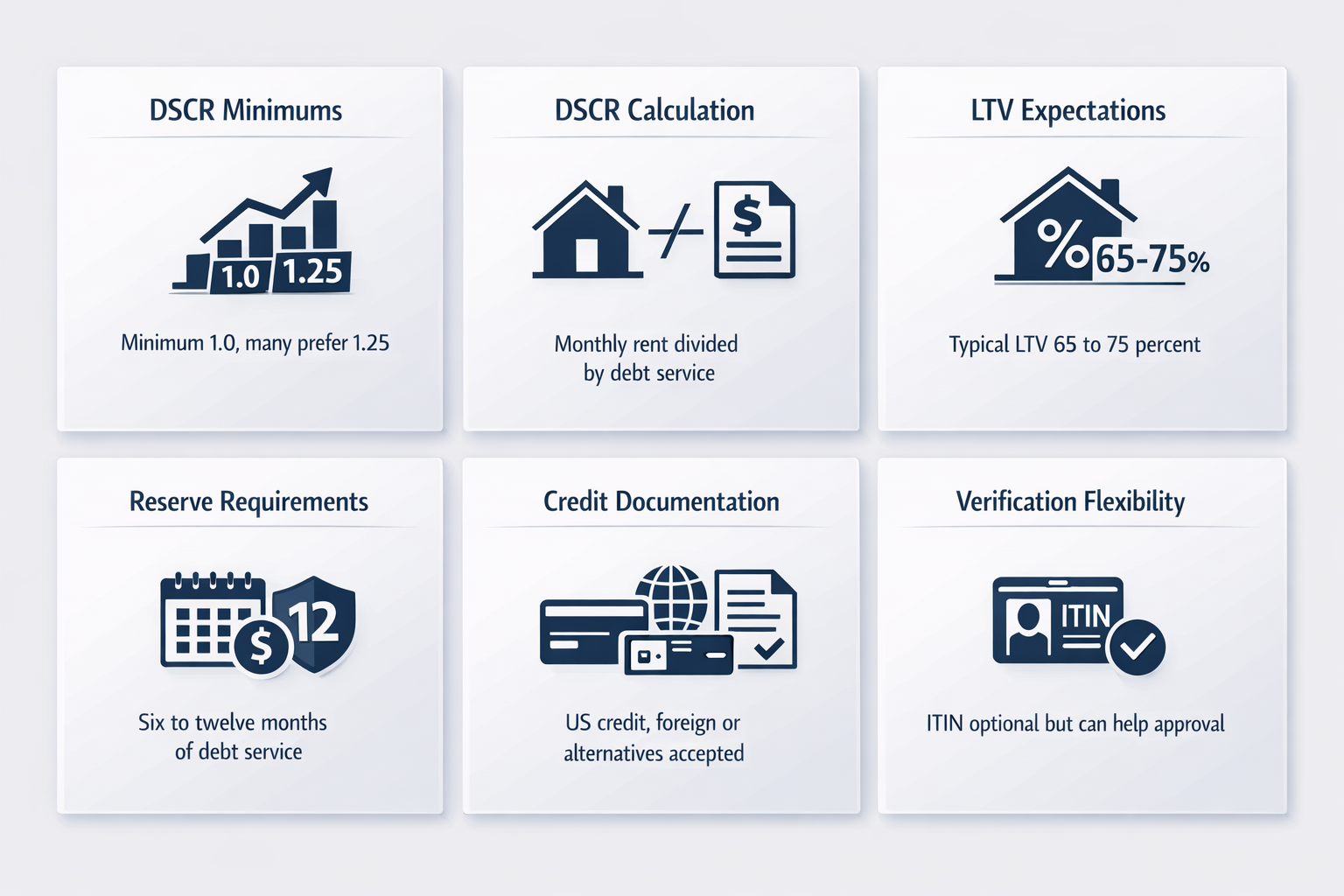
DSCR stands for Debt Service Coverage Ratio, a simple calculation that divides the property's monthly rental income by its monthly debt obligations (mortgage principal, interest, taxes, insurance, and HOA fees if applicable). A ratio above 1.0 means the property generates enough rent to cover its expenses. Lenders typically look for a DSCR of at least 1.0, though many prefer 1.25 or higher for added cushion.
Non permanent resident aliens holding specific visa types can qualify under these programs. According to available guidelines, eligible visa categories often include:
A05 visas: Issued to employees of foreign governments and international organizations.
E visas: Treaty traders and investors who actively manage their U.S. business interests.
G visas: Representatives of international organizations recognized by the U.S.
H visas: Temporary workers in specialty occupations, including the widely held H-1B.
L visas: Intracompany transferees working for multinational companies.
Additional categories such as O, P, R1, and TN visas may also be eligible, broadening access for artists, athletes, religious workers, and NAFTA professionals. This inclusive approach reflects the reality that capable investors come from diverse backgrounds and professional fields.
By concentrating on the property's ability to service its debt rather than the borrower's W-2, DSCR loans remove many of the obstacles that stall foreign national financing. You don't need years of U.S. tax returns or a lengthy domestic employment record. What you do need is a rental property with verifiable income potential and enough liquidity to meet reserve requirements.
Core Underwriting Criteria You Need to Know
Core underwriting criteria you need to know revolve around property performance and borrower liquidity rather than traditional income documentation. Lenders evaluate DSCR loans through a different lens, and understanding these benchmarks helps you prepare a stronger application.
First, the DSCR itself takes center stage. Most programs require a minimum ratio of 1.0, meaning the property's gross rental income matches or exceeds the total monthly debt service. Many lenders prefer a ratio of 1.25 to provide a margin of safety against vacancy or unexpected expenses. If your property generates more income relative to its debt load, you stand a better chance of approval and may even secure more favorable terms.
Calculating the DSCR is straightforward. Take the property's anticipated monthly rent, then divide it by the sum of your monthly mortgage payment (principal and interest), property taxes, insurance premiums, HOA dues, and any other recurring expenses tied to the property. For example, if your rental brings in four thousand dollars per month and total debt service runs three thousand dollars, your DSCR would be 1.33, comfortably above most lender minimums.
Loan-to-value ratios tend to be more conservative for foreign nationals. Research indicates that typical LTV ranges fall between 65 percent and 75 percent, meaning you'll need to bring a down payment of 25 to 35 percent. This larger equity cushion protects the lender and reflects the added complexity of underwriting for non permanent residents. Higher down payments can also improve your interest rate and reduce overall borrowing costs over the life of the loan.
Reserves play a crucial role in the approval process. Lenders want assurance that you can weather short-term vacancies or maintenance issues without defaulting. Reserve requirements might range from six to twelve months of the property's total debt service, held in liquid accounts. Demonstrating strong reserves signals financial stability and reduces perceived risk, especially when you lack a long U.S. credit history.
Credit documentation differs from traditional mortgages. Some lenders may accept a U.S. credit report if you have one, while others work with foreign credit histories or alternative documentation. In certain cases, you may not need a Social Security Number or Individual Taxpayer Identification Number at all, though having an ITIN can streamline the process and expand your lender options.
Documentation and Identification Requirements for Visa Holders
Documentation and identification requirements for visa holders emphasize proving your legal status and demonstrating the property's income potential. While DSCR loans reduce the burden of personal income verification, you'll still need to assemble a clear paper trail that satisfies underwriting standards.
Your visa documentation forms the foundation. Lenders require a valid, unexpired visa and supporting immigration paperwork. This might include your I-94 arrival/departure record, Employment Authorization Document if applicable, and any approval notices from U.S. Citizenship and Immigration Services. Maintaining up-to-date status is essential, as lenders need confidence that you'll remain legally present throughout the loan term.
Property documentation centers on verifiable rental income. If the property is already tenanted, provide a copy of the executed lease agreement, rent roll, and bank statements showing timely rent deposits. For properties you plan to purchase and rent, lenders may use an independent appraisal with a rental income addendum or market rent analysis to estimate cash flow. Accurate rent projections grounded in local comparables strengthen your case and support a favorable DSCR calculation.
Bank statements typically cover the last two to three months and demonstrate sufficient reserves. These accounts can be held domestically or abroad, though U.S. accounts may simplify verification. If you're using foreign bank statements, expect to provide certified translations and possibly additional documentation explaining the source of funds. Transparency in your financial picture builds trust and accelerates underwriting.
Proof of down payment and closing costs is non-negotiable. Because DSCR loans for non permanent residents often require 25 to 35 percent down, lenders scrutinize where those funds originate. Seasoned funds in your accounts for at least two months generally receive less scrutiny. Large recent deposits may trigger requests for gift letters, sale documentation from other assets, or proof of wire transfers from foreign accounts.
Some lenders accept passport identification in lieu of a driver's license or state ID, making the process more accessible to recent arrivals. Having multiple forms of identification on hand, including your passport, any U.S.-issued ID, and your visa documentation, ensures you're prepared for whatever the lender requests.
Navigating Interest Rates and Loan Terms as a Foreign Investor
Navigating interest rates and loan terms as a foreign investor requires realistic expectations and strategic planning. DSCR loans for non permanent resident aliens typically carry slightly higher rates compared to conventional mortgages or even domestic DSCR products, reflecting the added underwriting complexity and perceived risk.
Here's what influences your rate and how to position yourself for the best outcome:
Understand the rate premium. Research suggests that foreign nationals may encounter interest rates elevated by a small margin over comparable domestic DSCR loans. This premium compensates lenders for limited U.S. credit history and the challenges of verifying foreign income or assets. While the exact spread varies by lender and market conditions, budgeting for a modestly higher rate helps you model deals accurately and avoid surprises at closing.
Improve your loan-to-value ratio. Bringing a larger down payment often unlocks better pricing. If you can afford to put down 30 or 35 percent instead of the minimum 25 percent, lenders may reward that equity stake with a lower rate. The added cushion reduces their exposure and positions you as a lower-risk borrower, even without extensive U.S. credit history.
Strengthen your DSCR. Properties with higher cash flow relative to debt service signal stability and profitability. A DSCR of 1.4 or 1.5 looks far more attractive than the bare minimum of 1.0, and lenders may offer more competitive terms when they see strong income coverage. Targeting properties in solid rental markets with proven demand can make a meaningful difference in both approval odds and pricing.
Consider the loan term carefully. Many DSCR programs offer 30-year fixed-rate options, providing payment stability and simplifying long-term planning. Some lenders also offer adjustable-rate products or interest-only periods, which can improve near-term cash flow but introduce rate risk down the line. Align your loan structure with your investment strategy and exit timeline, whether you plan to hold the property for decades or refinance once you establish more U.S. credit history.
Shopping multiple lenders is critical. Not all programs treat foreign nationals the same way, and rate spreads can vary significantly. Some lenders specialize in real estate investor financing for visa holders in the U.S. and have streamlined processes that reduce costs and close times. Others may lack experience with non permanent residents and price in extra margin to offset perceived uncertainty.
Common Pitfalls and How to Avoid Them
Common pitfalls and how to avoid them can save you time, money, and frustration as you pursue DSCR financing. Even experienced investors sometimes stumble when navigating loans designed for non permanent residents, so knowing where others have tripped up gives you a head start.
Underestimating reserve requirements. Many foreign nationals focus on the down payment and overlook the cash reserves lenders demand. If you drain your liquidity to hit the minimum down payment, you may find yourself unable to meet reserve thresholds. Plan ahead by maintaining at least six to twelve months of debt service in accessible accounts, and avoid large withdrawals or transfers that could raise red flags during underwriting.
Choosing properties with weak rental fundamentals. DSCR loans hinge on rental income, so selecting a property in a soft market or one with limited rental demand can doom your application. Conduct thorough market research, review comparable rent data, and ensure the property's cash flow supports a healthy DSCR before making an offer. Properties in strong rental markets with diversified tenant demand offer the best chance of approval and long-term profitability.
Failing to maintain visa status. Lenders verify your legal presence at application and often reconfirm it before closing. Any lapse in visa status or uncertainty about renewal can derail the loan. Stay proactive with immigration paperwork, renew your visa well in advance of expiration, and keep your lender informed of any changes to your status. Transparency prevents last-minute surprises and builds confidence with underwriters.
Neglecting to compare lender programs. Not all DSCR loan programs welcome foreign nationals equally. Some lenders have strict overlays that make approval difficult, while others specialize in working with visa holders and offer more flexible terms. Taking the time to compare multiple lenders, ask about their experience with non permanent residents, and review sample scenarios can reveal significant differences in rates, fees, and approval criteria.
Avoiding these missteps comes down to preparation and partnership. Work with lenders and advisors who understand the nuances of DSCR loan underwriting rules for non permanent resident aliens, and don't rush the process. Taking a methodical approach to documentation, property selection, and financial planning sets you up for a smooth closing and a profitable investment.
DSCR loans represent a powerful tool for non permanent resident aliens looking to invest in U.S. rental real estate. By shifting the underwriting focus from personal income to property cash flow, these programs remove many of the traditional barriers that foreign nationals face. Understanding the eligible visa types, core underwriting criteria, documentation requirements, and common pitfalls puts you in a strong position to secure financing and build a profitable portfolio.
Success in this space requires careful planning, realistic expectations about rates and terms, and a commitment to selecting properties with solid rental fundamentals. The larger down payments and reserve requirements may feel demanding, but they also reduce risk and improve your long-term financial stability. With the right preparation and the right lender, you can leverage DSCR financing to grow your real estate holdings and achieve your investment goals.
If you're ready to explore your options and see how DSCR loans can fit your strategy, get a personalized DSCR loan quote tailored to your unique situation as a visa holder investing in the U.S. market.