DSCR Loan Reserve Requirements: Your Complete Guide for 2026
Real estate investors seeking DSCR financing face evolving landscape with stricter cash requirements. Understanding DSCR loan reserve requirements has become crucial for successful property acquisitions in today's competitive market. These reserve standards directly impact your cash flow planning and deal structuring strategies.
The current lending environment typically demands liquid reserves equivalent to six months of Principal, Interest, Taxes, Insurance, and Association dues post-closing. However, variations exist across lenders, with some accepting as little as three months while others might waive requirements based on specific loan factors. This guide explores the essential reserve requirements every investor must understand.
Current DSCR Reserve Standards
Current DSCR reserve standards vary significantly across the lending landscape. Most lenders establish their reserve requirements based on risk assessment and portfolio management principles.
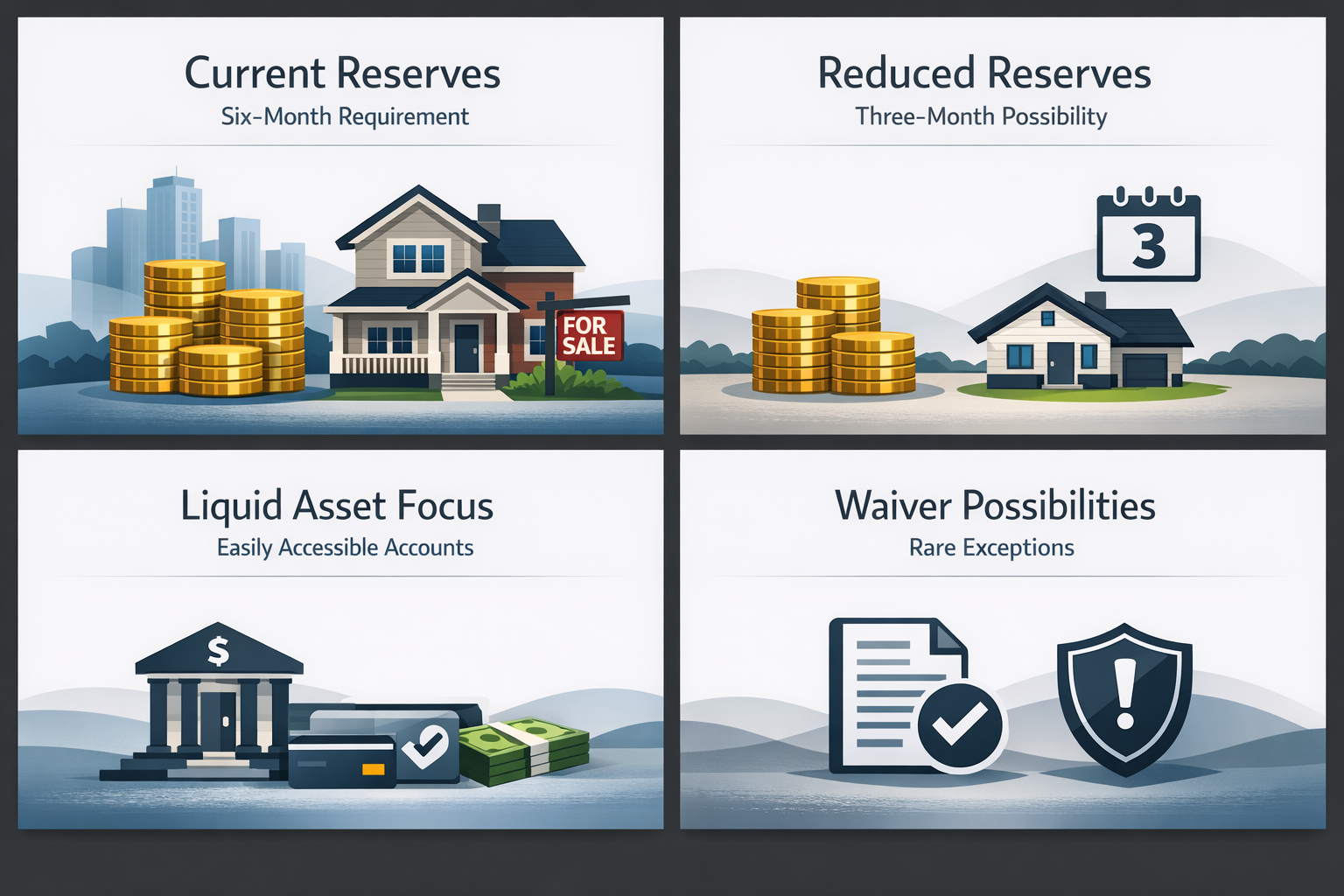
Six-month PITIA reserves: The standard requirement covers Principal, Interest, Taxes, Insurance, and Association dues for six months post-closing
Reduced requirements: Some lenders may accept three months of reserves depending on borrower strength and property performance
Waiver possibilities: Certain loan factors might allow lenders to waive reserve requirements entirely, though this remains uncommon
Liquid asset focus: Reserves must typically be held in easily accessible accounts rather than tied up in other investments
Essential Liquidity Thresholds
Essential liquidity thresholds serve as the foundation for DSCR loan approval and ongoing investment success. These thresholds protect both lenders and investors from market volatility.
Cash availability: Funds must be readily accessible within 30 days without significant penalties or market risks
Account verification: Lenders typically require two to three months of bank statements showing consistent reserve balances
Multiple property scaling: Investors with larger portfolios may face cumulative reserve requirements across properties
Market buffer considerations: Additional reserves beyond minimum requirements provide protection during economic downturns
Investor Safety Buffer Strategies
Investor safety buffer strategies extend beyond minimum requirements to create sustainable investment practices. Smart investors build comprehensive reserve systems that support long-term portfolio growth.
Emergency fund multiplication: Maintain reserves for multiple properties even when financing single acquisitions
Seasonal adjustment planning: Account for seasonal rental variations and potential vacancy periods in reserve calculations
Repair and maintenance allocation: Set aside additional funds for unexpected property maintenance beyond standard reserves
Market opportunity reserves: Keep extra liquidity available for quick acquisitions when favorable deals emerge
2026 Lending Evolution Impact
The 2026 lending evolution brings significant changes to DSCR loan requirements and reserve standards. Understanding these shifts helps investors prepare for tighter qualification standards.
Institutional capital influence: Large institutional investors entering the DSCR space may drive more standardized and potentially stricter reserve requirements
Hybrid product emergence: New lending products combining traditional and unconventional elements might create varied reserve structures
Credit standard tightening: Overall market conditions suggest lenders may implement more rigorous qualification processes
Innovation opportunities: Despite tighter standards, product innovations may offer new pathways for qualified real estate investors
Cash Reserve Planning Methods
Cash reserve planning methods require strategic thinking and disciplined execution. Successful investors develop systematic approaches to maintain adequate liquidity while maximizing investment opportunities.
Portfolio percentage allocation: Dedicate a specific percentage of total portfolio value to liquid reserves across all properties
Property-specific calculations: Calculate reserves individually for each property based on its unique PITIA requirements and risk factors
Staged reserve building: Gradually build reserves over time rather than depleting cash reserve rules for maximum property acquisitions
Alternative funding preparation: Establish lines of credit or other funding sources that can supplement cash reserves during emergencies
Regular reserve reviews: Conduct quarterly assessments of reserve adequacy as portfolio values and market conditions change
DSCR loan reserve requirements represent a critical component of successful real estate investing in 2026's evolving market. The typical six-month PITIA reserve standard provides lenders with confidence while protecting investors from unexpected challenges. However, variations in requirements across lenders mean investors should shop carefully and prepare accordingly.
Building adequate reserves goes beyond meeting minimum requirements. Smart investors create comprehensive safety buffers that account for market volatility, seasonal variations, and unexpected opportunities. As institutional capital and product innovations reshape the DSCR lending landscape, maintaining strong liquidity positions becomes even more valuable.
Success in today's DSCR loan market requires balancing aggressive growth strategies with prudent cash management. Investors who master reserve planning while staying informed about evolving lending standards position themselves for sustained success across market cycles. The investment in proper reserve management pays dividends through smoother transactions, better loan terms, and long-term portfolio stability.