Refinancing After Your Short Term Rental Conversion
August 26, 2026
•
6 min read
DSCR Loan Refinance After Short Term Rental Conversion
Converting a traditional long-term rental into a short-term vacation property can dramatically boost your monthly cash flow. Yet many investors hit a wall when they try to refinance: their personal income documentation doesn't reflect the new revenue stream, and conventional lenders often struggle to evaluate Airbnb booking data. That's where a DSCR loan refinance after short term rental conversion becomes a game changer.
DSCR stands for Debt Service Coverage Ratio, and these loans evaluate your property's income instead of your W-2 or tax returns. For investors who've made the Airbnb transition, this approach may sidestep the bureaucracy that comes with proving fluctuating short-term rental income through traditional channels. In this guide, we'll walk through the key considerations, documentation strategies, and steps to help you unlock better terms and tap into your property's equity after a conversion.
Why DSCR Refinancing Works for Short-Term Rental Conversions
When you refinance after a short-term rental conversion, traditional lenders typically want two years of tax returns showing consistent income from the property. If you only converted six or twelve months ago, you might not have that track record yet. DSCR refinancing works for short-term rental conversions because it focuses on the property's current or projected rental income rather than your personal financial history.
Property-based qualification: Lenders may evaluate the rental income generated by the property itself, which can include market rate estimates or booking projections for short-term stays.
Bypasses personal income limits: Your debt-to-income ratio on personal loans and credit cards often won't factor into approval, giving you more flexibility if you're managing multiple investment properties.
Faster turnaround: Without the need to gather extensive W-2s or Schedule E documentation from prior years, the underwriting process can move more quickly, especially if you provide solid rental comps or booking data.
Leverage increased cash flow: If your Airbnb transition has already boosted monthly revenue, a DSCR refinance might capture that upside and offer improved loan terms or lower interest rates compared to your original financing.
This approach tends to benefit investors who've recently shifted their strategy and want to optimize their capital structure without waiting years for tax documentation to catch up. Keep in mind that lenders still need proof the property can cover its debt obligations, so strong income documentation remains important, just in a different form.
Income Documentation Strategies for Airbnb Transitions
Income documentation strategies for Airbnb transitions differ from traditional rental verification because short-term bookings fluctuate by season, local events, and market demand. Lenders who specialize in DSCR loans may accept a variety of documentation types to assess your property's earning potential after conversion.
Platform revenue reports: Many lenders might review statements from short-term rental platforms showing gross bookings, occupancy rates, and average nightly rates over recent months.
Market rent analysis: An appraiser or third-party service can provide a market rent study comparing your property to similar short-term rentals in the area, helping establish realistic income projections.
Profit and loss statements: If you've been operating for several months, a simple P&L can demonstrate revenue minus expenses like cleaning fees, platform commissions, and maintenance costs.
Future booking calendar: Some lenders may consider confirmed reservations or booking trends to estimate near-term cash flow, though this is less common and depends on the lender's risk appetite.
Because short-term rental income can be seasonal, it's smart to provide data covering multiple months or even a full year if possible. That way, the lender gets a clearer picture of your property's performance during both peak and off-peak periods. Transparency around expenses also matters, since lenders calculate DSCR by dividing net operating income by the debt service obligation.
How Valuation Changes After a Short-Term Rental Conversion
Valuation impact is a crucial consideration when refinancing after converting to short-term rentals. Properties generating higher rental income may command a premium in certain appraisal methods, but the process isn't always straightforward.
Income approach appraisals: Some appraisers use an income capitalization method for investment properties, where higher cash flow could translate into a higher valuation, potentially increasing your loan-to-value ratio or equity position.
Comparable sales: If the appraiser relies on recent sales of similar properties in your neighborhood, those comps might not reflect the premium income potential of a short-term rental setup, which could limit your valuation boost.
Condition and amenities: Short-term rentals often require upgrades like better furnishings, faster Wi-Fi, or enhanced curb appeal to attract guests, and these improvements might add value during the appraisal process.
Market perception: In some markets, lenders and appraisers recognize the premium that well-run vacation rentals command, while in others, they may treat the property as a standard residential asset with typical long-term rental comps.
It's worth noting that not every market sees a significant valuation lift from a short-term rental conversion. The impact often depends on local demand, regulatory environment, and whether appraisers in your area have experience valuing short-term rental properties. Discuss valuation methodology with your lender early in the refinance process to set realistic expectations.
Step-by-Step: Preparing Your DSCR Refinance Application
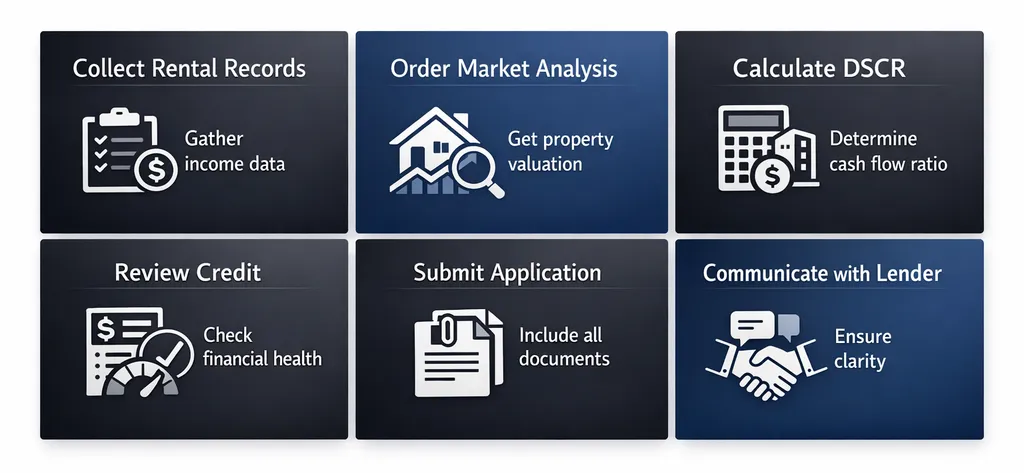
Preparing your DSCR refinance application after a short-term rental conversion requires gathering the right documents and understanding what lenders prioritize. Follow these numbered steps to streamline the process and improve your chances of approval.
Collect recent rental income records: Pull platform statements, bank deposits, or P&L summaries covering at least the past three to six months. The more data you can provide, the stronger your case for consistent cash flow.
Order a market rent analysis or appraisal: Work with an appraiser experienced in short-term rentals or request a third-party rent study that reflects current market rates for vacation properties in your area.
Calculate your DSCR: Divide your net operating income by your proposed monthly debt service. Most lenders look for a DSCR of at least 1.0, though many prefer 1.2 or higher to account for vacancies and maintenance.
Review your credit and entity structure: While DSCR loans focus on property income, lenders still check your credit score and may require the property to be held in an LLC or other legal entity, depending on their guidelines.
Submit your application with supporting documents: Include income records, rent analysis, credit reports, and any renovation receipts or expense documentation. Clear communication with your loan officer can help address questions quickly and keep the process moving.
By organizing your materials in advance and working with a lender who understands short-term rental financing, you can often close a DSCR refinance in a matter of weeks. Each lender has slightly different requirements, so confirm their checklist early to avoid surprises.
Common Pitfalls When Refinancing After Airbnb Conversion
Even with the flexibility of DSCR financing, investors can run into obstacles when refinancing after an Airbnb conversion. Understanding these common pitfalls helps you avoid delays and secure the best possible terms.
Underestimating expenses: Short-term rentals carry higher operating costs than long-term leases, including cleaning, platform fees, utilities, and frequent maintenance. If your expense projections are too optimistic, your DSCR calculation may fall short of lender requirements.
Ignoring local regulations: Some cities impose strict short-term rental rules or licensing requirements. Lenders might hesitate to refinance properties in jurisdictions where regulatory risk could impact future income or force a conversion back to long-term rentals.
Incomplete income documentation: Providing only two or three months of booking data during peak season can create an inflated picture of annual performance. Lenders typically prefer a fuller view that accounts for seasonal fluctuations.
Overlooking property condition: If your conversion involved significant renovations but you haven't documented them properly, the appraiser might not recognize the added value, limiting your equity position and refinance options.
Choosing the wrong lender: Not all DSCR lenders have experience with short-term rentals. Working with a lender unfamiliar with Airbnb income models could result in conservative underwriting or outright denial, even if your property performs well.
Taking time to address these issues before you apply can save you from costly back-and-forth during underwriting. It's often helpful to have a conversation with your lender about their specific short-term rental policies and documentation preferences before submitting a formal application.
Maximizing Your Refinance Outcome
Maximizing your refinance outcome after a short-term rental conversion means looking beyond just securing approval. Smart investors use the refinance process to unlock equity, consolidate debt, or improve their portfolio's overall cash flow. By timing your application to capture strong booking seasons, ensuring your property is well-maintained and properly documented, and shopping multiple DSCR lenders for competitive rates, you can often achieve terms that support your long-term investment strategy.
Consider whether a cash-out refinance makes sense if you want to deploy capital into additional properties or renovations. Some investors also choose to refinance multiple short-term rentals simultaneously, consolidating their loans into a single package for simplified management and potentially better pricing. Whatever your goal, clarity around your investment objectives will help you negotiate the right loan structure and avoid leaving money on the table.
A DSCR loan refinance after short term rental conversion offers real estate investors a flexible path to optimize financing without the constraints of traditional income verification. By focusing on property performance rather than personal tax returns, these loans can help you capture the increased cash flow from your Airbnb transition, unlock equity for future deals, and streamline your portfolio management.
Success hinges on thorough income documentation, realistic expense projections, and choosing a lender experienced in short-term rental financing. Whether you're looking to lower your interest rate, consolidate multiple properties, or tap into equity for your next investment, understanding the DSCR refinance process puts you in control. As short-term rental markets continue to evolve, staying informed about valuation impact and regulatory considerations will help you make confident decisions that align with your investment goals.