Understanding DSCR Loans for Corporate Owned Properties
When you're building a real estate portfolio through an LLC or corporation, traditional mortgage products often fall short. Personal income verification, debt-to-income ratios, and individual credit checks can create unnecessary friction for investors who operate through business entities. That's where a DSCR loan for corporate owned properties becomes a game changer.
These specialized investment property loans focus on what matters most: the rental income your property generates. Instead of digging into your personal tax returns or W-2 forms, lenders examine the cash flow performance of the asset itself. For investors managing multiple properties under corporate structures, this approach offers a streamlined path to scaling acquisitions without the burden of personal financial exposure.
The DSCR loan, or Debt Service Coverage Ratio loan, evaluates whether a property's rental income can adequately cover its mortgage payment. This financing method aligns perfectly with entity ownership layers that many sophisticated investors use to protect assets and optimize tax strategies. However, navigating documentation complexity and approval guidelines requires a clear understanding of how these loans differ from conventional mortgages.
Best Practices When Using DSCR Loans for Corporate Properties
Best practices when using DSCR loans for corporate properties start with understanding the advantages these products offer to entity-based investors. When you're purchasing investment properties through an LLC or corporation, the right approach can simplify your financing process considerably.
DSCR loans work by evaluating the property's income potential rather than your personal earnings. This means the rental cash flow takes center stage during underwriting. For corporate-owned properties, this approach may help you maintain the separation between personal and business finances that most investors value.
Here's what typically works well:
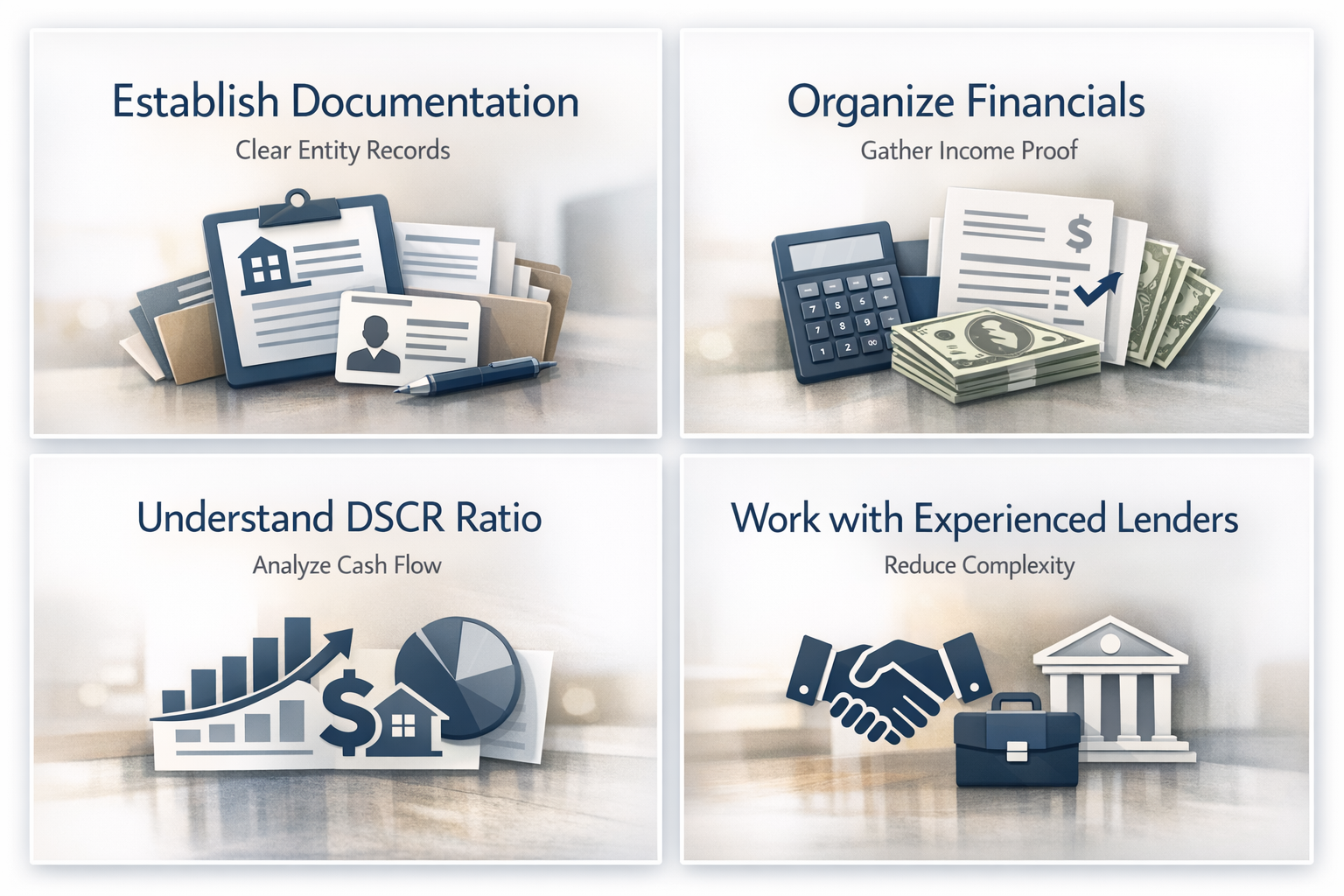
Establish clear entity documentation: Make sure your LLC or corporation has up-to-date operating agreements, articles of incorporation, and proper registration in your state. Lenders often require proof that your entity is in good standing.
Organize property financials early: Gather lease agreements, rent rolls, and any documentation showing current or projected rental income. The stronger your cash flow evidence, the smoother your approval process may be.
Understand your DSCR ratio: Most lenders look for a ratio above 1.0, meaning the property's income covers the mortgage payment. Higher ratios might qualify you for better terms, so analyze your numbers before applying.
Work with lenders experienced in entity lending: Not all mortgage providers understand the nuances of corporate ownership structures. Partnering with lenders who specialize in DSCR loans for investment properties can reduce documentation complexity.
These strategies help position your application favorably and demonstrate that your property can support the debt independently of your personal financial profile.
Common Mistakes to Avoid with Corporate DSCR Financing
Common mistakes to avoid with corporate DSCR financing often stem from misunderstanding how these loans differ from traditional mortgages. Even experienced investors can stumble when they don't adjust their approach for entity-based borrowing.
One frequent error involves assuming that DSCR loans work exactly like conventional financing. While the application might look similar on the surface, the underwriting criteria focus almost entirely on property performance rather than borrower income. This shift requires a different preparation strategy.
Watch out for these pitfalls:
Failing to establish proper entity structure before applying: Trying to close a loan with incomplete or improperly formed business entities can delay or derail your transaction. Set up your LLC or corporation correctly from the start.
Neglecting property cash flow documentation: Without solid evidence of rental income, such as executed leases or market rent analyses for vacant properties, lenders can't accurately assess your DSCR. Don't assume verbal assurances will suffice.
Overlooking entity ownership layers: Complex ownership structures with multiple holding companies or trusts can increase documentation complexity. Failing to provide clear organizational charts and ownership percentages may slow approval.
Ignoring lender-specific approval guidelines: Each lender has unique requirements for entity types, property conditions, and minimum DSCR thresholds. Applying without understanding these guidelines wastes time and can lead to unnecessary rejections.
Avoiding these mistakes positions you to move through the approval process more efficiently and helps you leverage the full benefits of DSCR financing for your corporate-owned investment properties.
5 Steps to Secure a DSCR Loan Through Your LLC
Securing a DSCR loan through your LLC involves a systematic approach that differs from personal mortgage applications. By following a clear process, you can streamline the approval timeline and position your corporate-owned property for successful financing.
The path to approval typically follows these stages:
Verify your LLC is properly established and compliant: Confirm that your limited liability company is registered, active, and in good standing with your state. Gather your operating agreement, articles of organization, and EIN documentation. Lenders need proof that your entity exists legally before they can proceed with underwriting.
Analyze your property's debt service coverage ratio: Calculate the DSCR by dividing the property's annual rental income by its annual debt service. Most lenders require a minimum ratio, often around 1.0 or higher. Properties with stronger cash flow may qualify for better loan terms and lower rates.
Compile comprehensive property financial documentation: Assemble current lease agreements, rent rolls showing payment history, and if the property is vacant, provide a market rent analysis or appraisal indicating expected rental income. This documentation forms the foundation of your loan application.
Submit your application with complete entity paperwork: Along with property financials, include all LLC documentation, proof of entity bank accounts, and clear ownership structure details. If your LLC has multiple members or layers of ownership, provide organizational charts that clarify who controls the entity.
Work through underwriting and address documentation requests promptly: The lender will review your property's income potential, order an appraisal, and may request additional documentation about your entity or property management. Responding quickly to these requests keeps your timeline on track and demonstrates professionalism.
This structured approach helps you navigate the DSCR loan process efficiently while maintaining the corporate protections and tax benefits your LLC structure provides.
4 Key Documentation Requirements for Entity-Owned Property Loans
Key documentation requirements for entity-owned property loans often determine whether your application moves forward smoothly or stalls in underwriting. Understanding what lenders need upfront saves time and reduces frustration during the approval process.
When you're financing investment properties through an LLC or corporation, documentation complexity increases compared to personal mortgages. Lenders must verify not only the property's financial performance but also the legitimacy and structure of your business entity.
Here's what you'll typically need to provide:
Complete entity formation and compliance documents: This includes your LLC operating agreement or corporate bylaws, articles of organization or incorporation, certificate of good standing from your state, and your Federal Employer Identification Number. These documents prove your entity is legally formed and authorized to conduct business.
Ownership structure and authorization documentation: If your entity has multiple members, partners, or shareholders, provide documentation showing ownership percentages and decision-making authority. You may also need to show authorization for the entity to purchase real estate and secure financing, often through resolutions or amendments to your operating agreement.
Property income verification and lease documentation: For occupied properties, provide executed lease agreements, recent rent rolls showing payment history, and bank statements reflecting rental deposits. For vacant properties, include a rent schedule or appraisal with market rent estimates that support your projected DSCR calculation.
Entity financial records and bank statements: Some lenders may request business bank account statements showing adequate reserves for closing costs and initial property expenses. While DSCR loans don't focus on personal income, demonstrating that your entity has operational funds can strengthen your application.
Gathering these documents before you start the application process positions you for a faster close and shows lenders you understand the requirements of entity-based investment property financing.
3 Approval Guidelines That Impact Corporate DSCR Loans
Approval guidelines that impact corporate DSCR loans vary among lenders but generally focus on property performance, entity legitimacy, and borrower experience. Understanding these criteria helps you evaluate whether a particular property and ownership structure will meet financing requirements.
Unlike conventional mortgages that emphasize personal creditworthiness and employment history, DSCR loans shift the focus to the investment property itself. However, lenders still maintain standards designed to minimize risk and ensure the property can sustain its debt obligations.
Three critical guidelines influence approval:
Minimum debt service coverage ratio thresholds: Most lenders require a DSCR of at least 1.0, meaning the property's rental income equals or exceeds the mortgage payment. Some lenders may accept ratios slightly below 1.0 with compensating factors such as larger down payments or strong borrower reserves. Properties with higher ratios, such as 1.25 or above, often qualify for more favorable interest rates and loan terms.
Entity type and ownership structure requirements: Lenders typically approve loans for single-member LLCs, multi-member LLCs, and certain types of corporations. However, complex ownership structures with multiple entity ownership structures layers, trusts, or international entities may face additional scrutiny or documentation complexity. Some lenders have specific requirements about how long an entity must be established before it can qualify for financing.
Property condition and occupancy standards: While DSCR loans focus on income, lenders still evaluate property condition through appraisals. Properties must typically meet basic habitability standards and be in rentable condition. Lenders may require properties to be occupied or have a clear path to rental income within a reasonable timeframe. Significant deferred maintenance or properties requiring extensive renovation might not qualify without additional reserves or renovation financing.
Knowing these approval guidelines before you apply allows you to structure your entity correctly, select appropriate properties, and partner with lenders whose criteria align with your investment strategy.
A DSCR loan for corporate owned properties offers real estate investors a powerful tool for scaling their portfolios without the constraints of traditional mortgage underwriting. By focusing on property cash flow instead of personal income, these loans align perfectly with the entity structures that sophisticated investors use for asset protection and tax efficiency.
Success with DSCR financing depends on understanding the unique documentation requirements, approval guidelines, and best practices that apply to entity-owned investments. From establishing your LLC correctly to organizing comprehensive property financials, each step in the process matters.
The ability to maintain separation between your personal finances and your investment activities can simplify your operations as you grow. Whether you're acquiring your first rental property through an LLC or adding to an existing portfolio of corporate-owned assets, DSCR loans provide a flexible financing solution that recognizes the income-generating potential of your investments.
As you evaluate properties and financing options, remember that working with lenders experienced in entity-based lending can make a significant difference in your approval timeline and loan terms. With the right preparation and understanding of how these loans work, you can leverage DSCR financing to build the real estate portfolio you've envisioned.