DSCR Loan for Accessory Dwelling Unit (ADU) Rental Income
Real estate investors are always looking for ways to maximize cash flow and expand their portfolios without the headaches of traditional mortgage paperwork. Accessory dwelling units, often called ADUs, have emerged as a smart way to boost rental income on a single property. But qualifying for financing with ADU rental income can feel tricky, especially when most lenders want to see two years of tax returns and stable W-2 employment.
That's where DSCR loans make all the difference. A DSCR loan for accessory dwelling unit (ADU) rental income allows investors to qualify based on the property's projected or actual cash flow, not personal income documents. If your ADU generates consistent rent, you might be able to use that income stream to secure financing for your next acquisition, refinance, or even cash-out deal. It's a powerful tool, but only if you understand how lenders evaluate ADU income and what steps you need to take to ensure the unit qualifies.
In this guide, we'll walk through everything you need to know about using ADU rent to qualify for a DSCR loan, from appraisal requirements to zoning rules, rate considerations, and practical tips that can help you avoid delays and denials.
What Makes an ADU Eligible for DSCR Loan Qualification
Lenders won't count just any extra structure on your property when calculating the debt service coverage ratio. Rental income from an accessory dwelling unit can be included in the DSCR calculation, but only if the unit meets specific criteria that prove it's a legitimate, income-producing asset.
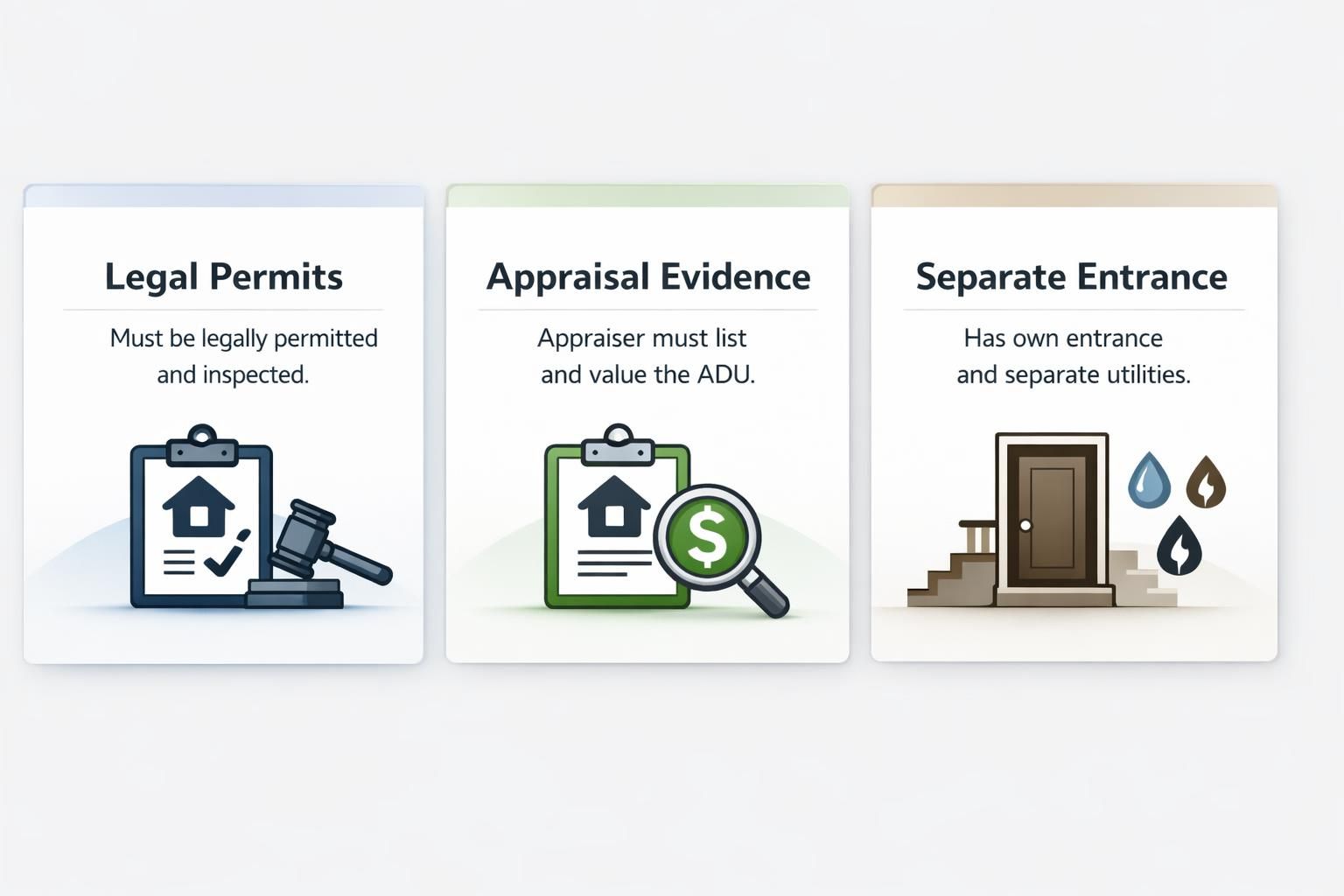
Legal and permitted status: The ADU must be legally permitted and recognized by local building authorities. If the unit was built without proper permits or doesn't comply with zoning regulations, most DSCR lenders won't count the rental income at all. This is one of the most common reasons ADU income gets disqualified during underwriting.
Appraisal documentation: The appraiser must identify the ADU on the appraisal report and assign it separate value as a distinct rental unit. Without clear documentation in the appraisal, lenders typically won't factor the ADU's income into your DSCR calculation, even if the unit is legal and producing rent.
Separate entrance and utilities: Many DSCR lenders require the ADU to have its own entrance and, in some cases, separately metered utilities. This demonstrates that the unit functions as an independent rental, which reduces risk and supports a higher appraisal valuation for income purposes.
These requirements might seem strict, but they protect both you and the lender. A properly documented ADU increases your borrowing power and ensures you're building a compliant, scalable investment portfolio.
How ADU Rental Income Affects Your DSCR Ratio
The debt service coverage ratio is a straightforward calculation: it's the property's monthly rental income divided by the monthly debt obligation, which includes principal, interest, taxes, insurance, and HOA fees if applicable. A DSCR of 1.0 means the property breaks even. A ratio above 1.0 means the property generates positive cash flow, and that's what most lenders want to see.
When you add an accessory dwelling unit to the equation, you're stacking rental income from two sources on the same property: the primary residence and the ADU. This combined rental income can significantly improve your DSCR, making it easier to qualify and potentially unlocking better loan terms.
For example, imagine a single-family rental generating $2,500 per month, with total debt service of $2,800. That's a DSCR of about 0.89, which falls short of most lender minimums. But if a permitted ADU on the same property brings in an additional $1,200 per month, your total income jumps to $3,700, pushing the DSCR to roughly 1.32. That's a strong ratio that opens doors to competitive financing.
Keep in mind that lenders calculate DSCR using either actual rents from a signed lease or fair market rents established by the appraiser. If the ADU is vacant or you're planning to build one, the appraiser will estimate what the unit could reasonably rent for based on comparable units in the area. This projection becomes the basis for your DSCR calculation.
Navigating Zoning and Permitting for ADU Financing
Zoning laws and permitting rules vary widely from city to city, and staying compliant is critical when you're using ADU rental income to qualify for a DSCR loan. Some jurisdictions have streamlined ADU approval processes, while others impose strict setback requirements, size limits, or owner-occupancy rules.
Confirm local ADU laws before you buy: Research whether the property's zoning allows accessory dwelling units and what the size, placement, and design restrictions are. This step should happen during your due diligence period, not after you've closed on the deal.
Obtain all necessary permits upfront: If you're adding an ADU to an existing property, make sure the construction is fully permitted and inspected. Unpermitted ADUs can be a major red flag for lenders and appraisers, and in some cases they won't count the income at all.
Understand recent regulatory changes: Some states have passed legislation making it easier to add ADUs, such as California's SB-9. In certain jurisdictions, appraisers might now recognize income from previously unpermitted ADUs if local laws have changed to allow retroactive compliance. This can open up financing opportunities that didn't exist a few years ago.
Work with appraisers familiar with ADU rules: Not every appraiser knows how to handle ADU valuations correctly. If possible, communicate with your lender to ensure the appraiser understands local ADU regulations and how to document the unit properly for DSCR loan purposes.
Investors who skip these steps often face delays, lower appraisal values, or outright disqualification of ADU income. Taking the time to nail down permits and zoning compliance upfront saves headaches and protects your investment returns.
Understanding DSCR Loan Rates and Terms for Properties with ADUs
Interest rates and loan terms on DSCR financing depend on several factors, including your credit score, the property's DSCR ratio, the loan-to-value ratio, and overall market conditions. For 2026, Trulo Mortgage's DSCR loan interest rates range from 6.25% to 8.00%, depending on borrower qualifications and property performance.
Higher DSCR ratios may lead to better pricing: If your property with an ADU generates a strong debt service coverage ratio, say 1.25 or higher, you're more likely to qualify for rates on the lower end of the spectrum. Lenders view stronger cash flow as lower risk, and that can translate into more favorable terms.
Credit score still matters: Even though DSCR loans don't require tax returns or employment verification, your personal credit score plays a role in rate pricing. Investors with credit scores in the mid-700s or higher typically see the best rates, while scores in the 600s might push you toward the higher end of the range.
Loan-to-value impacts your options: Most DSCR lenders allow LTVs up to 80%, though some programs go higher for strong borrowers. A lower LTV not only improves your approval odds but can also help you secure a more competitive interest rate, especially on properties with multiple income streams like an ADU.
Consider fixed versus adjustable rate structures: DSCR loans are available in both fixed-rate and adjustable-rate formats. Fixed-rate loans offer predictability, which is valuable for long-term hold strategies. Adjustable-rate mortgages might start with lower rates, which can be attractive if you plan to refinance or sell within a few years.
Remember, adding a legal ADU to your property doesn't just boost your DSCR. It also strengthens your overall loan application, which can give you leverage to negotiate better terms or move forward with deals that wouldn't pencil otherwise.
Common Mistakes Investors Make When Using ADU Income for DSCR Loans
Even experienced investors can stumble when trying to use accessory dwelling unit financing rules to their advantage. Here are the pitfalls that trip up borrowers most often, and how to avoid them.
Assuming all ADUs automatically qualify: Just because a property has an ADU doesn't mean the lender will count the income. If the unit isn't permitted, lacks a separate entrance, or doesn't appear on the appraisal, you're leaving money on the table. Always verify eligibility before you factor ADU rent into your underwriting model.
Overestimating projected rents: Appraisers determine fair market rent based on comparable units in the area, not what you hope to charge. If you're banking on $1,500 per month but comps show $1,100, your DSCR calculation will reflect the lower number. Be conservative and use realistic rent estimates when running your deal analysis.
Ignoring local owner-occupancy requirements: Some cities require the property owner to live on-site if an ADU is present. While this typically doesn't affect DSCR loan eligibility, it can limit your exit strategy or force you to adjust your investment plans. Know the rules before you buy.
Failing to plan for vacancy: DSCR loans are underwritten based on rental income, but that doesn't mean your property will always be fully occupied. Build a cash reserve to cover periods when the main unit or ADU sits vacant, especially in slower rental markets.
Skipping pre-approval on ADU properties: ADU deals can be more complex than standard single-family rentals. Get pre-approved with a lender who understands ADU income rules before you make an offer. This ensures you're not caught off guard during underwriting and helps you close on time.
Avoiding these mistakes keeps your financing on track and protects your returns. A little extra diligence upfront makes all the difference when you're leveraging ADU rental income to grow your portfolio.
Using a DSCR loan for accessory dwelling unit (ADU) rental income is one of the smartest strategies for real estate investors looking to scale without the burden of traditional mortgage documentation. When your ADU is legal, permitted, and properly appraised, the rental income it generates can significantly improve your debt service coverage ratio, making it easier to qualify for financing and secure favorable terms.
Remember that lenders evaluate ADU income carefully. They need to see documentation proving the unit is compliant, functional, and capable of producing reliable cash flow. Whether you're buying a property with an existing ADU or planning to add one, understanding zoning rules, appraisal requirements, and rate factors puts you in control of the process.
The opportunity is real, but so are the details. Take the time to verify permits, work with knowledgeable appraisers, and structure your deals with realistic rent projections. That approach not only helps you qualify for the loan you need today, but also builds a foundation for long-term portfolio growth.
If you're ready to explore how ADU rental income can work in your next deal, get a personalized DSCR loan quote and see what's possible for your investment strategy.