DSCR Loan Entity Ownership: A Strategic Approach to Investment Property Financing
Real estate investors increasingly turn to DSCR loan entity ownership structures to protect personal assets while building their rental property portfolios. Unlike traditional mortgage products designed for owner-occupants, DSCR loans accommodate LLC vesting and other entity ownership arrangements that provide liability protection and operational flexibility.
Understanding how DSCR loan entity ownership works can help investors streamline their financing processes while maintaining the asset protection benefits that entities typically provide. This comprehensive guide explores the requirements, benefits, and considerations that investors face when using entity structures for DSCR loan financing.
DSCR loan entity ownership allows investors to hold rental properties through business entities rather than personal ownership. This structure provides several advantages that traditional mortgage products often cannot accommodate.
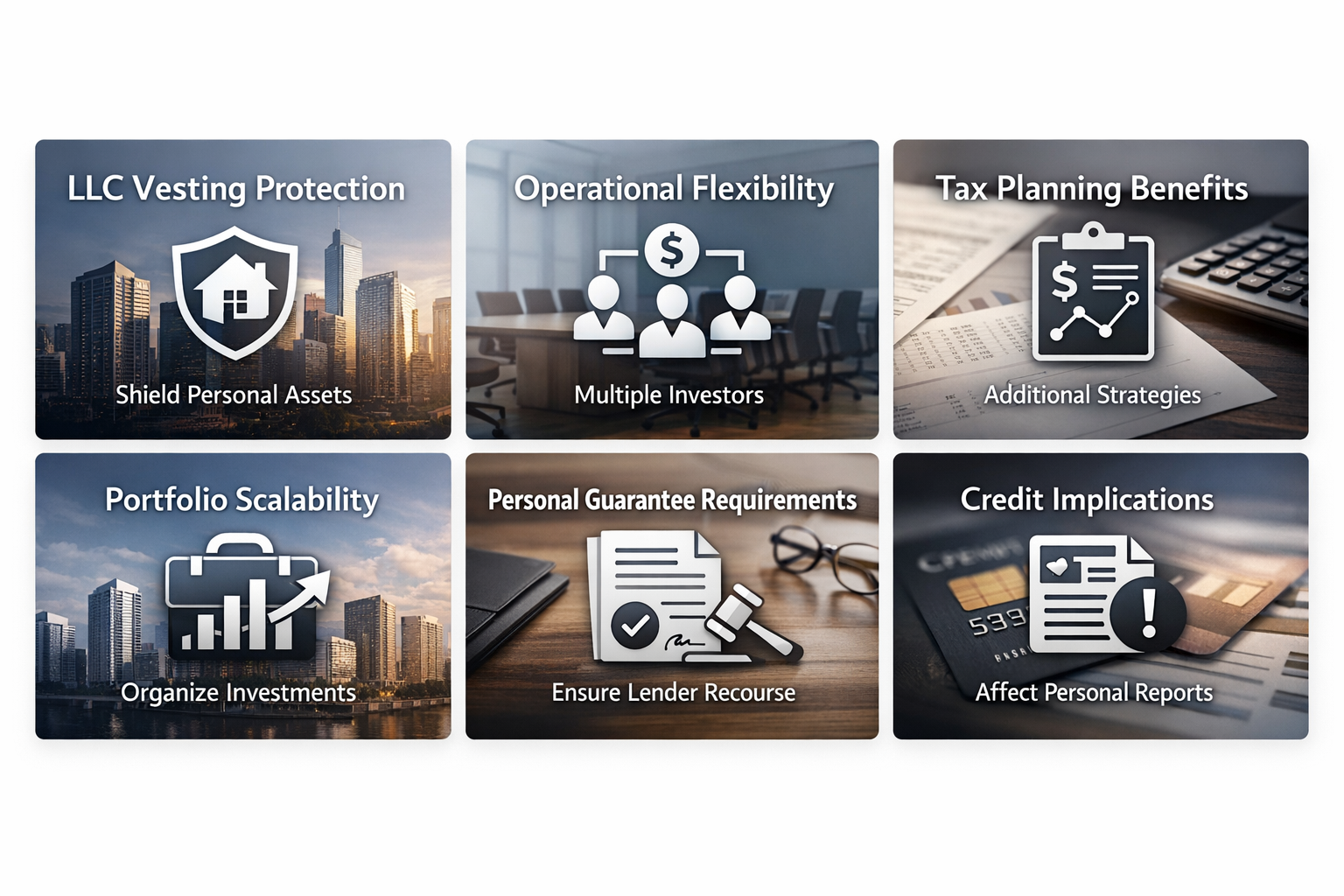
LLC vesting protection: Limited liability companies shield personal assets from potential property-related lawsuits or financial obligations
Operational flexibility: Entity ownership enables multiple investors to participate in deals through membership interests
Tax planning benefits: Business entities may provide additional tax strategies and deduction opportunities
Portfolio scalability: Separate entities for different properties can help organize and manage growing investment portfolios
Most DSCR lenders accept entity ownership arrangements, though they typically require personal guarantees from the entity's principals. This requirement ensures lenders maintain recourse while allowing investors to benefit from entity protection in most operational scenarios.
Essential Documentation for Entity-Based DSCR Loans
Entity-based DSCR loans require additional documentation beyond what personal ownership structures might need. Proper preparation of these documents can help expedite the underwriting process.
Operating agreement requirements: Complete and executed operating agreements that clearly define ownership percentages, management structure, and decision-making authority
Certificate of formation: State-filed documents proving the entity's legal existence and good standing status
Tax identification numbers: Federal EIN and any required state tax identification for the borrowing entity
Personal guarantee documentation: Signed guarantees from entity principals accepting personal responsibility for loan obligations
Ownership verification: Bank statements, tax returns, or other documents proving the entity's financial capacity and ownership structure
Lenders often require these documents early in the application process, so having them organized and readily available can help reduce processing delays that might otherwise extend closing timelines.
Benefits of LLC Vesting for Investment Properties
LLC vesting provides significant advantages for real estate investors using DSCR loans. These benefits often outweigh the additional documentation and setup requirements.
Asset protection advantages: Personal assets remain separate from property-related liabilities, providing protection against tenant disputes or property accidents
Simplified property transfers: Ownership interests can be transferred without deed modifications, making it easier to bring in partners or restructure investments
Professional credibility: Entity ownership may enhance credibility with tenants, vendors, and other business partners
Estate planning benefits: LLC interests can be more easily transferred to heirs or structured for succession planning purposes
These advantages make LLC vesting particularly attractive for investors building larger portfolios or those concerned about liability exposure from rental property operations. However, investors should consult with legal and tax professionals to ensure entity structures align with their specific circumstances and goals.
Personal Guarantee Requirements and Implications
While DSCR loans accommodate entity ownership, lenders typically require personal guarantees from the entity's principals. Understanding these requirements helps investors make informed decisions about entity structures.
Guarantee scope: Personal guarantees usually cover the full loan amount and may include interest, fees, and collection costs
Principal requirements: All members with significant ownership percentages may need to provide personal guarantees
Credit implications: Personal guarantees mean the debt may appear on guarantors' personal credit reports and affect their debt-to-income ratios
Recourse limitations: Some lenders may limit recourse to specific scenarios, such as fraud or environmental issues, rather than providing full recourse
Despite personal guarantee requirements, entity ownership still provides operational liability protection. The guarantee typically comes into play only if the borrower defaults on loan payments, while day-to-day property operations remain protected by the entity structure.
Processing Timeline and Underwriting Considerations
Entity-owned DSCR loans may require additional processing time compared to personally-owned properties. Understanding these timelines helps investors plan their acquisition strategies effectively.
Extended documentation review: Underwriters need additional time to review entity documents, operating agreements, and ownership structures
Typical processing timeframes: DSCR loans with entity ownership often close within 21 to 30 days, though complex entity structures might extend this timeline
Entity age considerations: Some lenders prefer established entities with operating history, while others accept newly-formed LLCs
Credit evaluation process: Lenders typically evaluate both entity financial capacity and personal creditworthiness of guarantors
Property evaluation focus: DSCR loans emphasize property cash flow over personal income, which may simplify income documentation requirements
Investors can help expedite processing by organizing all required documentation before loan application and working with experienced DSCR lenders who understand entity ownership structures. Clear communication about entity structure and ownership during initial discussions can also help prevent delays later in the process.
DSCR loan entity ownership provides real estate investors with powerful tools for asset protection and portfolio growth. By understanding documentation requirements, personal guarantee implications, and processing considerations, investors can effectively leverage entity structures while securing competitive financing for their rental properties.
The combination of liability protection through LLC vesting and flexible financing through DSCR loans creates opportunities for sophisticated investment strategies. As the lending landscape continues to evolve, investors who master these entity ownership structures may find themselves better positioned to scale their portfolios while protecting their personal assets.
Success with DSCR loan entity ownership requires careful planning, proper documentation, and collaboration with experienced lenders who understand these specialized financing needs. Investors considering this approach should consult with legal, tax, and lending professionals to ensure their entity structures align with both their protective goals and financing objectives.