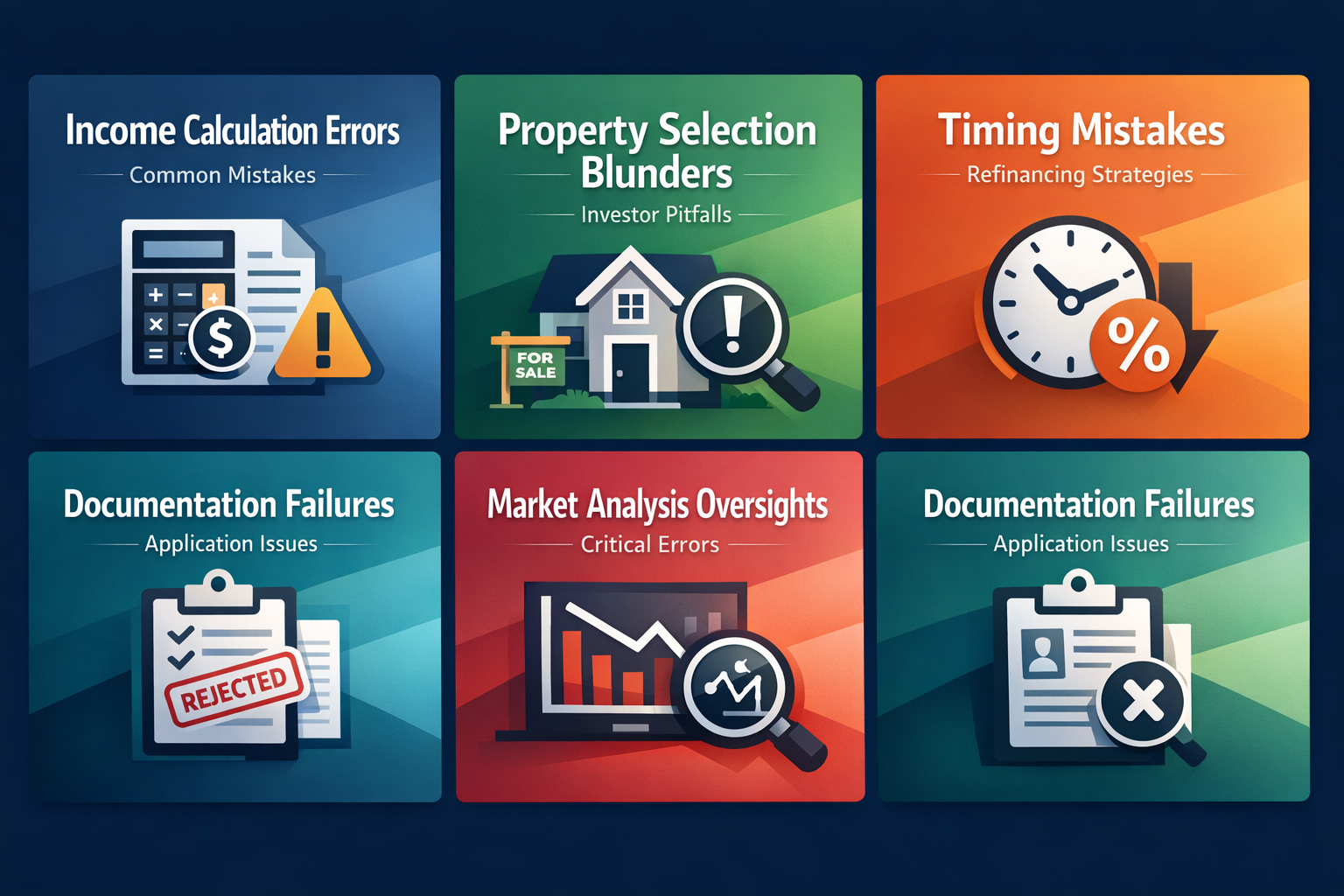
Real estate investors increasingly turn to DSCR loans for their property acquisitions, but many fall into costly traps that could have been easily avoided. These top DSCR loan mistakes can transform promising investment opportunities into financial disasters, affecting everything from loan approval to long-term profitability. Understanding these common pitfalls might help you structure better deals and maintain stronger cash flow across your investment portfolio. The key lies in recognizing these errors before they impact your bottom line.
Income Calculation Errors That Kill Deals
Income calculation errors represent some of the most devastating top DSCR loan mistakes investors make. These cash flow errors typically occur when investors overestimate rental income or fail to account for vacancy periods and maintenance costs.
Overestimating market rent without conducting proper comparable analysis in the specific neighborhood
Failing to factor in realistic vacancy rates, which can range from 5% to 15% depending on the market
Ignoring seasonal fluctuations that might affect rental demand and pricing power
Miscalculating net operating income by overlooking property management fees, insurance increases, and regular maintenance expenses
These income miscalculations often lead to DSCR ratios that look attractive on paper but fail to reflect real-world performance. When lenders discover these discrepancies during underwriting, deals can collapse at the last minute, costing investors time and money.
Property Selection Blunders
Property selection blunders create some of the most expensive investor pitfalls in DSCR loan applications. Choosing properties that don't meet lender requirements or lack sufficient income potential can derail even the most well-planned investment strategies.
Selecting properties in declining neighborhoods where rental demand may weaken over time
Purchasing properties that require extensive renovations without factoring renovation costs into the DSCR calculation
Choosing properties with unusual characteristics that might limit the tenant pool or complicate future resale
Ignoring local zoning restrictions that could affect rental use or limit property improvements
Overlooking properties with structural issues that could impact insurance costs and ongoing maintenance expenses
Smart investors typically research neighborhood trends, local employment patterns, and rental market dynamics before making purchase decisions. This due diligence helps ensure the property can generate sufficient income to support the DSCR loan requirements.
Timing Mistakes in Refinancing Strategies
Timing mistakes in refinancing strategies often create unnecessary costs and missed opportunities for real estate investors. Many investors struggle with knowing when to transition from bridge loans to DSCR loans, potentially costing thousands in additional interest payments.
Refinancing too early from hard money loans before establishing sufficient rental history and stable cash flow
Waiting too long to refinance, which can result in paying higher interest rates on bridge loans unnecessarily
Missing optimal market conditions when DSCR loan rates are more competitive
Failing to time refinancing with property improvements that could boost rental income and improve DSCR ratios
Successful investors typically develop refinancing timelines during the initial acquisition phase. They monitor market conditions and property performance to identify the optimal refinancing window that maximizes their long-term returns while minimizing financing costs.
Documentation and Preparation Failures
Documentation and preparation failures can turn straightforward DSCR loan applications into lengthy, expensive ordeals. These investor pitfalls often stem from misunderstanding lender requirements or failing to organize necessary financial documents properly.
Providing incomplete or inaccurate rent rolls that don't reflect actual rental income
Failing to obtain proper property appraisals that support the intended loan amount
Submitting financial statements that don't clearly demonstrate the property's income potential
Overlooking required insurance documentation or environmental reports that lenders need for approval
Missing deadlines for document submission, which can jeopardize rate locks and delay closings
Experienced investors often work with mortgage professionals who understand DSCR loan requirements and can help streamline the documentation process. This preparation might prevent costly delays and improve approval chances.
Market Analysis and Competition Oversights
Market analysis and competition oversights represent critical top DSCR loan mistakes that can impact long-term investment success. These cash flow errors often occur when investors fail to thoroughly research local rental markets or understand competitive dynamics.
Ignoring new construction or planned developments that could increase rental supply and reduce pricing power
Failing to analyze local employment trends that drive rental demand in the area
Overlooking transportation changes or infrastructure projects that might affect property desirability
Underestimating competition from other rental properties or alternative housing options
Thorough market analysis helps investors make informed decisions about rental pricing, property improvements, and long-term holding strategies. This research can reveal potential challenges before they impact cash flow and DSCR performance, allowing investors to adjust their strategies accordingly.
Avoiding these top DSCR loan mistakes can significantly improve your chances of investment success and long-term profitability. The key lies in thorough preparation, realistic income projections, and understanding both market dynamics and lender requirements. Smart investors learn from these common errors and develop systems to prevent them from affecting their deals. By focusing on accurate cash flow analysis, proper property selection, and strategic timing, you can structure DSCR loans that support your investment goals while maintaining strong financial performance. Remember that successful real estate investing requires ongoing education and adaptation to changing market conditions.