Finding the best states for buying rental properties right now can make or break your investment strategy. As a real estate investor, you're looking for markets that combine strong cash flow potential, favorable tax environments, and growing rental demand. In 2026, certain states have emerged as clear frontrunners, offering unique advantages that can significantly boost your returns on rental property investments.
Whether you're considering DSCR loans to expand your portfolio or evaluating your first income property purchase, understanding which states offer the most promising opportunities is essential. Market conditions vary dramatically across the country, and investors who position themselves in high yield markets with supportive landlord laws can capitalize on sustained rental income while minimizing risks.
This guide examines the states and cities that present the strongest investment cases for rental properties in 2026. From the no-tax advantages of Florida and Texas to the impressive rent-to-price ratios in Midwestern metros, we'll break down what makes these locations particularly attractive for investors seeking reliable cash flow and long-term appreciation potential.
Do's for Selecting the Best Rental Property States
When evaluating the best rental property states, certain strategies can help you identify markets with the strongest potential for consistent returns. Following these guidelines may improve your chances of securing properties that generate positive cash flow and meet DSCR loan requirements.
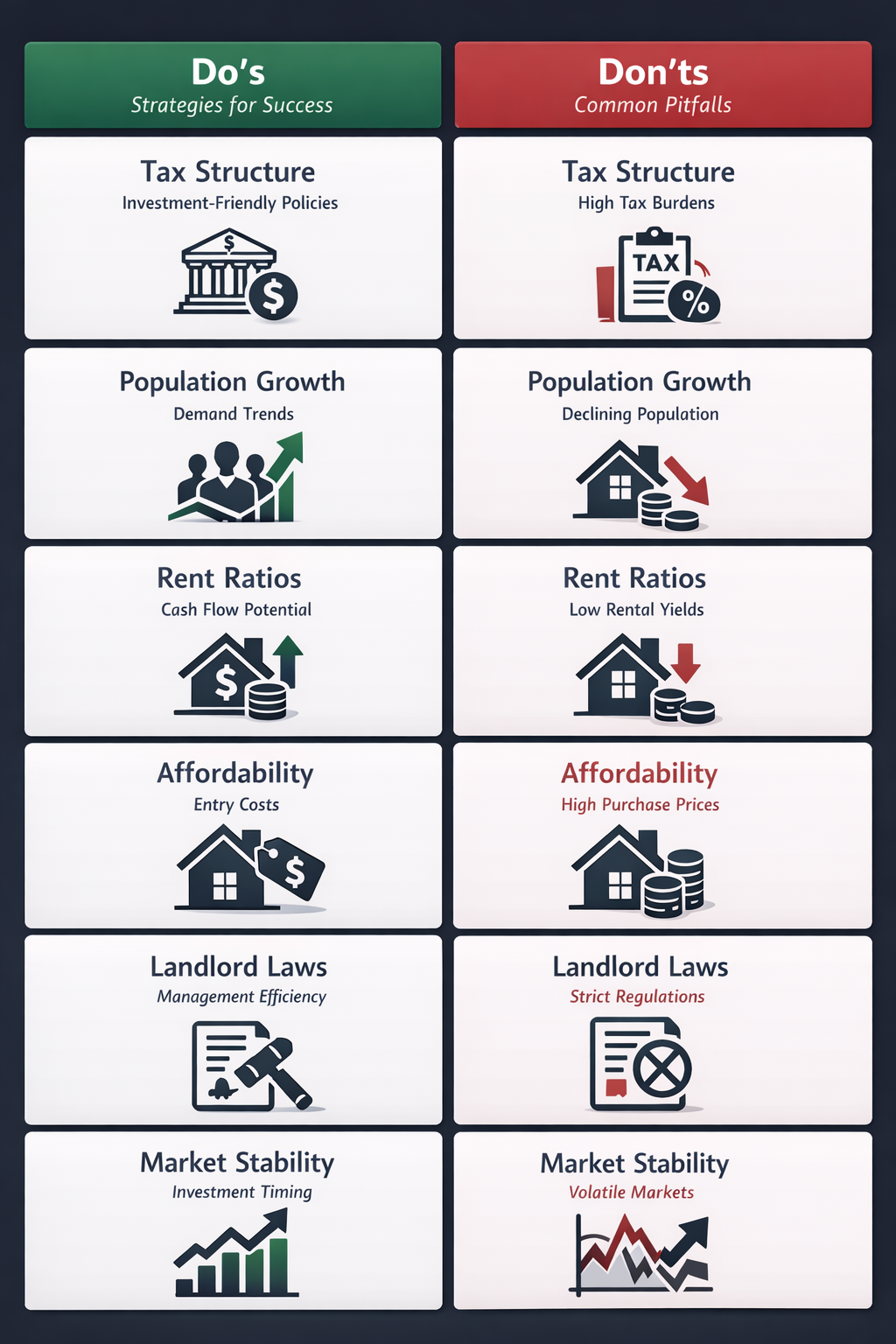
Do prioritize states with no income tax: Florida and Texas offer significant advantages by eliminating state income tax, which can enhance your overall returns. This tax structure allows investors to retain more rental income and may attract a larger pool of potential tenants seeking favorable living costs.
Do analyze rent-to-price ratios carefully: Markets like Cleveland show high rental yields relative to property prices, which typically translates to stronger cash flow. These ratios directly impact your debt service coverage and can make qualifying for rental property loans more straightforward.
Do consider job market growth and economic stability: States with expanding employment opportunities tend to sustain rental demand over time. Texas and Florida have shown strong job market growth, which could support consistent occupancy rates and rent appreciation.
Do evaluate affordability for entry points: Midwestern cities such as Indianapolis and Columbus offer below-average home prices with impressive rental yields. These markets allow investors to enter or expand portfolios without excessive upfront capital while maintaining solid income potential.
Don'ts When Evaluating Rental Property Markets
Avoiding common pitfalls is just as important as identifying opportunities when selecting rental property markets. These mistakes can erode your returns or create unexpected challenges that complicate your investment strategy.
Don't overlook landlord-tenant regulations: Each state has different landlord laws that affect your ability to manage properties efficiently. Restrictive regulations can limit rent increases, complicate eviction processes, or add compliance costs that reduce net operating income.
Don't chase appreciation alone without cash flow analysis: While some markets show strong price growth projections, rental properties should generate positive cash flow from day one. Relying solely on future appreciation can leave you vulnerable if market conditions shift unexpectedly.
Don't ignore local market saturation levels: Even in high yield markets, oversupply of rental units can depress rents and increase vacancy rates. Understanding the balance between housing demand and available inventory is crucial for sustained rental income.
Don't assume all cities within a state perform equally: State-level advantages don't guarantee success in every metro area. Local economic conditions, population trends, and neighborhood characteristics can vary significantly, requiring detailed market research for each specific location.
Top 5 States Offering High Yield Rental Markets
These states stand out for their combination of favorable economic conditions, tax advantages, and strong rental demand trends. Understanding what makes each state attractive can help you target the best states for buying rental properties right now.
Florida: Florida's robust tourism industry creates year-round rental demand, particularly in coastal and central regions. The absence of state income tax enhances net returns for investors, while the state's population growth continues to drive housing needs. Investors using DSCR loans may find that Florida's high rental income potential improves qualification prospects.
Texas: With no state income tax and expanding job markets across major metros, Texas offers a compelling environment for rental property investment. The state's business-friendly climate attracts new residents consistently, supporting sustained rental demand. Economic growth projections suggest that Texas markets could maintain their investment appeal through 2026 and beyond.
Ohio: Cleveland leads among major metros for rent yield ratios and affordability in 2026. Ohio properties typically require lower upfront investment while delivering competitive rental returns. This combination allows investors to achieve positive cash flow more easily, which can strengthen debt service coverage metrics for financing purposes.
Indiana: Indianapolis offers below-average home prices paired with impressive rental yields. The state's stable economy and moderate cost of living attract renters seeking affordable housing options. For investors focused on cash flow rather than rapid appreciation, Indiana presents a strategic entry point with manageable risk profiles.
Georgia: Columbus and other Georgia cities provide strong rental income prospects with reasonable property acquisition costs. The state's growing population and diverse economy support rental demand across multiple property types. Investors can find opportunities in both urban centers and suburban markets throughout Georgia.
5 Factors That Define Strong Rental Property States
Identifying the characteristics that make certain states superior for rental investments helps you evaluate markets systematically. These factors directly influence your ability to generate consistent returns and manage properties effectively.
Tax structure and investment-friendly policies: States without income tax or with favorable tax structures allow investors to retain more of their rental income. These tax advantages compound over time and can significantly impact long-term wealth building through real estate.
Population and job growth trends: Areas experiencing net population inflows typically show stronger rental demand. Job market expansion drives housing needs and supports rent stability, reducing vacancy risks for property owners.
Rent-to-price ratios and cash flow potential: Markets where rental income represents a higher percentage of property value tend to deliver better cash flow. High rent yields can improve DSCR calculations and make financing more accessible for real estate investors expanding their portfolios.
Housing affordability and entry costs: Lower property acquisition costs enable investors to diversify across multiple units or enter markets with limited capital. Affordable markets often provide better opportunities for positive cash flow from the outset of ownership.
Landlord-friendly legal environments: States with balanced landlord-tenant laws typically allow property owners to manage their investments more efficiently. Reasonable eviction processes and the ability to adjust rents based on market conditions help protect investor interests.
How Market Stability Affects Rental Investment Timing
The forecast for steadier home sales and modest home price growth in 2026 suggests a more predictable investment environment. This stability can influence how investors approach timing for property acquisitions and portfolio expansion.
Balanced market conditions reduce speculation risks: When home prices grow at moderate, sustainable rates rather than rapid spikes, investors face less risk of buying at peak valuations. This environment may provide better opportunities to secure properties at prices that support strong rental yields.
Predictable appraisal values improve financing outcomes: Market stability affects property appraisal processes, which directly impact loan terms for DSCR loans and other investor financing products. More consistent valuations can lead to smoother closing experiences and better loan-to-value ratios.
Entry and exit strategy planning becomes clearer: In stable markets, investors can develop more reliable timelines for both acquisitions and dispositions. This predictability helps with portfolio planning and allows for more strategic decision-making around property types and locations.
Cash flow projections gain accuracy: When rental demand and home values show steady patterns, projecting future income and expenses becomes more reliable. This accuracy supports better investment analysis and helps investors avoid properties with uncertain return profiles.
Renovation and value-add strategies show clearer returns: For investors considering fix and flip projects or property improvements, stable markets make it easier to estimate after-repair values. This clarity can improve decision-making around capital allocation and project selection.
Selecting the best states for buying rental properties right now requires careful analysis of multiple factors, from tax structures and rental yields to job growth and landlord regulations. Florida and Texas continue to attract investors with their no-income-tax advantages and expanding economies, while Midwestern markets like Cleveland, Indianapolis, and Columbus offer exceptional affordability paired with strong cash flow potential.
The anticipated market stability in 2026 may provide favorable conditions for investors to acquire rental properties with more predictable return profiles. Whether you're leveraging DSCR loans to expand your portfolio or making your first rental property purchase, focusing on high yield markets with supportive economic fundamentals can position you for sustained success.
Each state and metro area presents unique opportunities and challenges. By prioritizing markets with favorable tax policies, strong rent-to-price ratios, and growing rental demand, you can build a portfolio that generates consistent cash flow while minimizing operational headaches. The key is matching your investment strategy with markets that align with your financial goals and risk tolerance.