Finding the best rental markets for cash flow 2026 is critical for real estate investors looking to maximize returns on their rental properties. As market dynamics shift and new investor hotspots emerge, understanding where to deploy capital can make the difference between mediocre returns and exceptional rental yields.
The coming year presents unique opportunities across the United States, with certain regions offering stronger cash flow potential than others. From Sun Belt states with favorable tax policies to Midwestern cities with impressive rent-to-price ratios, investors who position themselves strategically stand to benefit from robust rental income streams.
This guide explores the top rental markets that may deliver strong cash flow in 2026, focusing on high yield cities, rent growth trends, and the factors that make these locations attractive for rental property investments. Whether you're leveraging DSCR loans or other financing options, understanding these market dynamics helps you make informed decisions that align with your investment goals.
Why Florida and Texas Lead the Rental Market Rankings
Why Florida and Texas lead the rental market rankings comes down to a combination of economic advantages and demographic trends that create ideal conditions for rental property investors. These two states consistently appear at the top of investment analyses for 2026, and for good reason.
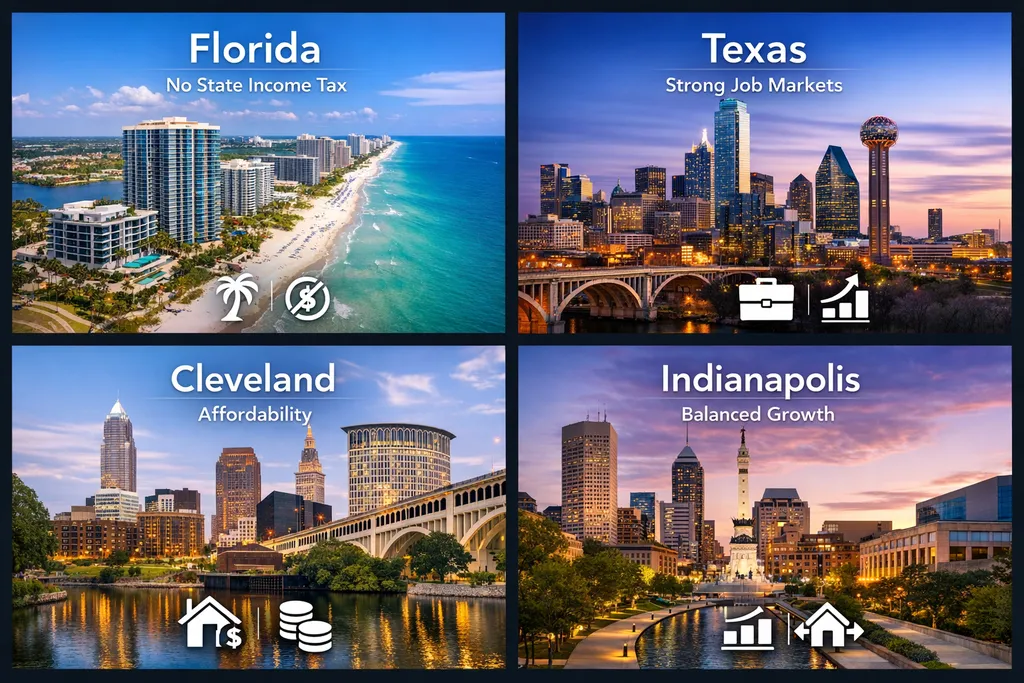
No state income tax: Both Florida and Texas offer this significant advantage, which tends to attract residents and businesses looking to maximize their take-home income. This fiscal policy often translates to population growth and increased demand for rental housing.
Strong job markets: Robust employment opportunities in technology, healthcare, energy, and other sectors drive population influx. When people move to an area for work, they typically need rental housing, especially in the first years after relocation.
Diverse metro areas: Multiple cities within each state offer investment opportunities, allowing investors to choose markets that align with their specific cash flow targets and risk tolerance.
Appreciation potential: Beyond immediate rental income, properties in these states may benefit from long-term value appreciation, enhancing overall investment returns when combined with strong monthly cash flow.
For investors using DSCR loans to finance rental properties, these markets offer the income stability that lenders look for when calculating debt service coverage ratios. The combination of steady rental demand and favorable economic conditions creates an environment where rental income can reliably cover mortgage payments and operating expenses.
Texas cities in particular benefit from continued corporate relocations and expansions, while Florida's appeal as a retirement and lifestyle destination keeps rental demand strong across various property types and price points. These fundamental drivers suggest that both states will remain among the best rental markets for cash flow 2026 and potentially beyond.
Midwestern Cities Offering Superior Rent-to-Price Ratios
Midwestern cities offering superior rent-to-price ratios represent some of the most compelling opportunities for investors prioritizing immediate cash flow over rapid appreciation. These markets might not generate headlines like coastal cities, but they often deliver stronger rental yields on day one.
Cleveland stands out for affordability: Lower property acquisition costs combined with respectable rental rates create favorable conditions for positive cash flow. Investors can typically enter these markets with less capital while still generating meaningful monthly income.
Indianapolis offers balanced growth: This market combines reasonable property prices with steady rental demand driven by a diversified economy. The rent-to-price ratio makes it easier to achieve the DSCR thresholds that lenders require for favorable loan terms.
Entry points favor smaller investors: The lower purchase prices in Midwestern markets allow investors with limited capital to acquire multiple properties, building a diversified portfolio faster than they could in higher-priced coastal markets.
Operational efficiency matters: In markets where properties cost less but generate solid rents, the percentage return on investment tends to be higher, even if absolute dollar amounts differ from expensive coastal markets.
These high yield cities typically attract investors who understand that wealth building through real estate often comes from consistent monthly cash flow compounded over time rather than speculative appreciation. The mathematics work particularly well when financing with investment property loans, as the monthly rental income more easily covers mortgage payments, taxes, insurance, and maintenance.
The Midwest's reputation for stability extends to its rental markets. While you might not see the dramatic rent spikes common in rapidly gentrifying areas, you also face less volatility during economic downturns. This predictability can be valuable when planning long-term investment strategies and managing multiple properties across different markets.
High-Demand Cities Where Rent Growth Trends Point Upward
High-demand cities where rent growth trends point upward offer investors the potential to benefit from both immediate cash flow and increasing rental income over time. These investor hotspots typically feature strong economic fundamentals and limited housing supply relative to demand.
Chicago presents scale opportunities: As a major metropolitan area with diverse neighborhoods, Chicago offers various entry points for different investment strategies. Certain neighborhoods may experience faster rent growth than others, allowing strategic investors to position themselves ahead of trends.
New York remains resilient: Despite higher entry costs, certain New York markets continue to show strong rental demand. The city's status as a global economic center creates consistent need for rental housing, though investors must carefully analyze specific neighborhoods and property types.
San Francisco's tech economy: While expensive, markets tied to technology employment often see rent growth during periods of economic expansion. Investors who can afford the entry price may benefit from both rental income and appreciation.
Emerging secondary markets: Beyond the traditional big cities, certain secondary markets show signs of accelerating rent growth as they attract companies and residents priced out of more expensive areas.
When evaluating these high-demand rental markets, investors should consider both current rental rates and projected rent growth trends. A market offering 4% cash flow today with 5% annual rent increases might outperform one offering 6% cash flow today with flat rents over a five-year holding period.
Rent growth also impacts refinancing opportunities and property valuations. As rental income increases, properties may qualify for better loan terms if refinancing becomes attractive. Additionally, cap rate compression in markets with strong rent growth can lead to significant appreciation, providing exit strategy options beyond simply collecting monthly cash flow.
Sun Belt Expansion and the Carolina Opportunity
Sun Belt expansion and the Carolina opportunity represent one of the most significant demographic and economic shifts affecting rental markets in 2026. North Carolina and South Carolina have emerged as investor hotspots due to factors that create favorable conditions for rental property investments.
Corporate relocations drive demand: Major companies establishing operations in cities like Charlotte, Raleigh, and Charleston bring employees who need housing. This employment-driven demand tends to be more stable than speculative real estate booms.
Lifestyle appeal attracts residents: Milder climates, lower costs of living, and improving urban amenities make these states attractive to remote workers and retirees alike. This diverse demographic demand creates opportunities across different property types and price points.
Infrastructure investment supports growth: Expanding airports, highways, and public transit systems in major Carolina cities suggest sustained population and economic growth, which typically translates to continued rental demand.
Balanced market conditions: The Carolinas often offer a middle ground between the high costs of Northeast markets and the lower rents of some Midwestern cities, creating attractive cash flow potential without excessive entry costs.
Tennessee also fits into this Sun Belt expansion narrative, with cities offering strong fundamentals for rental investors. The combination of no state income tax, growing employment bases, and increasing cultural amenities creates conditions where rental demand remains robust.
For investors considering DSCR loans or other rental property financing options, these Sun Belt markets often provide the sweet spot where property prices allow reasonable leverage while rental rates generate sufficient income to meet debt service coverage requirements. The growth trajectory in these regions suggests that investors entering now might benefit from both immediate cash flow and medium-term appreciation.
Emerging Markets and Less-Saturated Investment Opportunities
Emerging markets and less-saturated investment opportunities deserve attention from investors seeking the best rental markets for cash flow 2026, particularly those looking to enter before competition drives prices higher. These markets might not appear in every mainstream analysis, which can work to the advantage of informed investors.
Earlier entry means better pricing: Markets that haven't yet attracted widespread investor attention often offer better purchase prices relative to rental income potential. This creates opportunities to build equity quickly as the market gains recognition.
Higher initial yields compensate for uncertainty: Less-proven markets typically offer better cash-on-cash returns to attract capital. Investors willing to do thorough due diligence might find properties that immediately generate strong cash flow potential.
Growth catalysts create upside potential: Look for markets with identifiable drivers like new employers, infrastructure projects, or university expansions that will likely increase housing demand over the next several years.
Diversification benefits portfolios: Adding emerging markets to a portfolio of established high yield cities can improve overall returns while spreading risk across different economic drivers and geographic regions.
Identifying these opportunities requires research beyond simply reading top-ten lists. Investors should look for economic indicators like job growth rates, population trends, building permit data, and employment diversification. Markets with improving fundamentals but relatively low investor awareness might offer the best risk-adjusted returns.
When financing properties in emerging markets, lenders might scrutinize deals more carefully since these locations lack the track record of established investor hotspots. Having strong comparable rental data and demonstrating knowledge of local market conditions becomes even more important when seeking favorable loan terms for properties in less-recognized markets.
The key is balancing the potential for higher returns against the additional due diligence required. Emerging markets aren't necessarily riskier, they simply require more investor effort to understand local dynamics that might be more transparent in well-established rental markets.
How to Evaluate a Market Before You Buy
How to evaluate a market before you buy comes down to a handful of numbers that tend to matter more than a city's overall reputation. A market can trend in every headline and still deliver weak cash flow if the underlying fundamentals do not support it.
Rent-to-Price Ratio: Divide the expected monthly rent by the purchase price. A higher ratio generally points to stronger cash flow potential, though it should be weighed against appreciation prospects and neighborhood quality.
Vacancy Trends: Look at how vacancy rates have moved over the past few years rather than a single snapshot. A market with rising vacancy may be overbuilt relative to demand.
Property Tax Burden: Property taxes vary widely by state and county and can quietly erode cash flow even when rents look strong on paper.
Landlord-Tenant Regulations: Some markets have landlord-friendly eviction timelines and fewer rent control restrictions, which can reduce operational risk for investors.
Job Market Diversification: Markets anchored by a single employer or industry tend to carry more downside risk than metros with a broad mix of sectors.
Running these checks before committing to a market helps real estate investors avoid chasing headlines and instead focus on the fundamentals that actually drive rental income over time.
Once a market checks these boxes, the next step is financing that matches how the property performs rather than personal income alone. DSCR loans evaluate the deal on the property's own numbers, which is often a better fit for investors expanding into a new market where their personal income may not scale with acquisition pace.
Frequently Asked Questions: Best Rental Markets for Cash Flow
What DSCR ratio do I need to qualify for a rental property in these markets?
Most DSCR lenders require a minimum ratio of 1.0, with 1.25 or higher generally unlocking the most competitive rates and terms regardless of market.
Do stronger cash flow markets get better DSCR loan terms?
A property with a higher DSCR, often the case in markets with strong rent-to-price ratios, can help offset other factors like credit score and may support more favorable pricing within a lender's guidelines.
How much should I budget for closing costs when buying out of state?
Plan for 2% to 5% of the loan amount in closing costs, similar to in-state purchases, though title and recording fees vary by state.
What down payment should I expect in these markets?
Standard DSCR down payments run 20% to 25% regardless of market, though your specific rate and terms will depend on credit score and property DSCR.
Identifying the best rental markets for cash flow 2026 requires balancing multiple factors including current yields, growth potential, entry costs, and your specific investment strategy. The markets highlighted in this analysis offer various pathways to strong rental returns, whether you prioritize immediate cash flow, long-term appreciation, or a combination of both.
Florida and Texas continue to offer compelling fundamentals driven by favorable tax policies and strong job growth. Midwestern cities like Cleveland and Indianapolis provide superior rent-to-price ratios that translate to strong cash-on-cash returns. High-demand cities such as Chicago may experience accelerating rent growth trends, while Sun Belt markets in the Carolinas and Tennessee offer balanced opportunities combining reasonable entry costs with solid growth trajectories.
Beyond the established investor hotspots, emerging markets present opportunities for investors willing to conduct thorough research and enter before these areas gain widespread attention. Each market type serves different investment goals, and building a diversified portfolio across multiple regions might provide the best risk-adjusted returns over time.
As you evaluate these opportunities, consider how different markets align with your financing strategy. Properties that generate strong rental income relative to their mortgage payments create favorable conditions for DSCR loans and other investment property financing options. The goal is finding markets where rental economics work in your favor from day one while positioning yourself to benefit from future rent growth and appreciation.
Success in rental property investing comes from understanding market fundamentals, conducting thorough due diligence, and making strategic decisions based on data rather than speculation. The markets discussed here offer starting points for your research as you build or expand your rental portfolio in 2026.