Not all DSCR loan rates are created equal. Two investors purchasing identical rental properties in the same market can receive dramatically different interest rates from different lenders, even with similar credit profiles and down payments. Understanding why DSCR loan rates vary between lenders gives you the edge to negotiate better terms, reduce financing costs, and maximize the returns on your investment properties.
Unlike conventional mortgages that follow standardized guidelines from government-sponsored enterprises, DSCR loans operate in the non-QM space where each lender sets its own underwriting appetite, pricing tiers, and risk tolerances. From September 2026 rate comparisons across multiple lending platforms, it's clear that investor borrowers can find rate spreads of a full percentage point or more between competing offers on the same deal. That difference translates directly into your monthly cash flow and long-term equity growth.
This guide breaks down the core factors driving rate variance, the mechanics behind lender pricing strategies, and practical steps to compare DSCR loan quotes from different lenders effectively. Whether you're financing your first rental or refinancing a portfolio, knowing what moves the rate needle helps you lock in the most competitive terms available.
Core Factors That Drive DSCR Loan Pricing
Lenders set DSCR loan rates based on a combination of borrower profile, property performance, and market conditions. Each factor plays into the perceived risk of the loan and determines where you land on a lender's pricing matrix.
Credit Score and Financial History: Your FICO score remains a primary pricing lever. Borrowers with scores above 740 typically access the lowest rates, while those in the mid-600s face higher pricing. Lenders view higher credit as a signal of reliable repayment behavior, even when they don't require tax returns for income verification.
Debt Service Coverage Ratio: The DSCR itself measures whether the property's rental income can cover the mortgage payment. A DSCR of 1.25 or higher usually qualifies for standard pricing, while ratios below 1.0 (indicating negative cash flow) trigger rate premiums or stricter loan-to-value limits. Properties with strong cash flow receive favorable treatment.
Loan-to-Value Ratio: Your down payment size directly influences rate. Most lenders offer their best pricing at 75% to 80% LTV, with incremental discounts for larger equity stakes. Higher LTV deals carry more risk for the lender, especially in a market downturn, so rates climb as your down payment shrinks.
Property Type and Location: Single-family rentals generally receive better rates than multifamily or non-owner-occupied condos. Certain geographic markets may trigger lender overlays or rate adjustments based on local market conditions, foreclosure timelines, or concentration risk.
How Lender Appetite Shapes Rate Differences
Each lender operates with its own risk framework and business model, which creates the rate spread you see when shopping for DSCR financing. Some institutions prioritize volume and accept thinner margins, while others focus on specific borrower profiles and price accordingly.
Portfolio vs. Correspondent Lending: Portfolio lenders fund loans with their own capital and hold them on their balance sheet, giving them flexibility to price aggressively or tailor terms. Correspondent lenders originate loans and sell them to investors, often following stricter pricing guidelines tied to secondary market demand.
Geographic Focus and Property Concentration: Lenders active in your target market may offer more competitive rates because they understand local dynamics and already have exposure there. Conversely, lenders wary of market concentration might price higher to limit their footprint in certain regions.
Underwriting Bandwidth and Origination Goals: When lenders are actively growing their DSCR portfolios, they might reduce rates to attract volume. During periods of capital constraint or heightened risk aversion, those same lenders can reprice upward or tighten eligibility criteria quickly.
Secondary Market Conditions: Interest rate movements in the broader mortgage-backed securities market influence DSCR loan pricing. Lenders who sell their DSCR loans to institutional investors must price according to what those buyers will pay, and that appetite shifts with economic sentiment and yield expectations.
Why DSCR Loan Rates Vary Even With Identical Borrower Profiles
Two investors with the same credit score, down payment, and property type can still receive different rate quotes because lenders weight risk factors differently and operate under unique cost structures.
Margin and Overhead Structure: Lenders with lower operating costs or streamlined underwriting can afford to price more competitively. Larger institutions may have economies of scale, while smaller lenders might add margin to cover higher per-loan servicing expenses or compliance overhead.
Pricing Adjustments and Rate Sheet Layering: Most DSCR lenders use rate sheets with layered adjustments for credit tiers, LTV bands, cash-out versus purchase, and property subtypes. A lender that views a specific scenario as higher risk will layer on more pricing hits, while another might offset those with credits for compensating factors like strong reserves or additional properties in the portfolio.
Reserve and Liquidity Requirements: Some lenders require six to twelve months of PITIA reserves per property, and borrowers who exceed those thresholds can negotiate better pricing. Lenders comfortable with lower reserve cushions might price higher to compensate for perceived liquidity risk.
Broker Relationships and Origination Channels: If you're working through a mortgage broker, their negotiated rate agreements and volume commitments with specific lenders can influence the rates available to you. Direct-to-lender channels sometimes offer lower rates by cutting out intermediary compensation, though brokers can provide access to a broader set of lenders and rate options.
How to Compare DSCR Loan Quotes From Different Lenders
Shopping for the best DSCR loan rate requires more than collecting interest rate numbers. A true apples-to-apples comparison accounts for closing costs, prepayment terms, and underwriting flexibility.
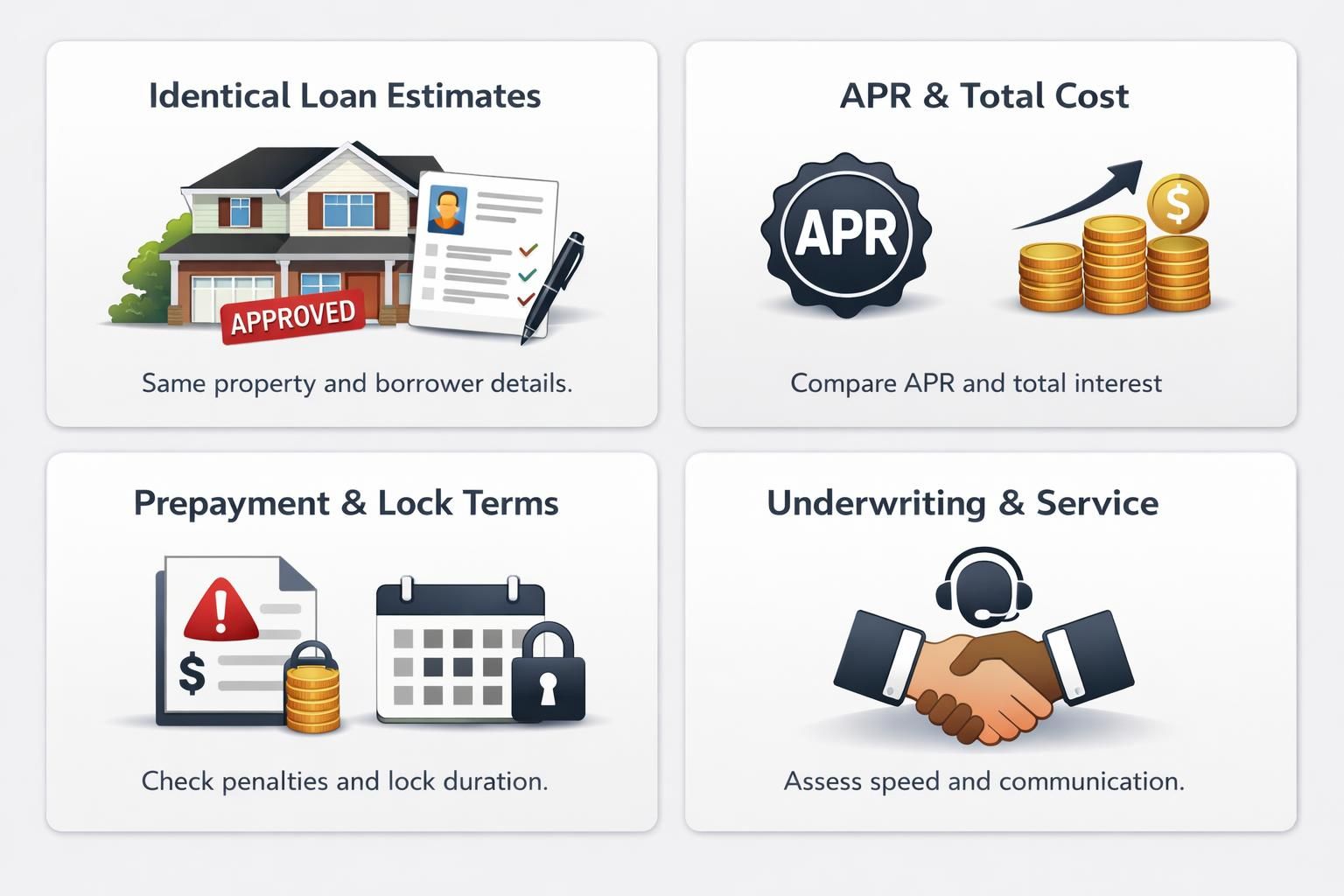
Request Loan Estimates With Identical Scenarios: Provide each lender with the same property address, purchase price or appraised value, down payment, and credit profile. Ask for itemized loan estimates that break down origination fees, third-party costs, and lender credits. This transparency reveals the true cost of borrowing beyond the advertised rate.
Compare Annual Percentage Rate and Total Interest Cost: The APR captures both the interest rate and upfront fees, giving you a more accurate picture of the loan's effective cost. Calculate the total interest paid over your expected hold period, especially if you plan to refinance or sell within a few years, since a lower rate with higher fees might not be optimal for short-term holds.
Evaluate Prepayment Penalties and Lock Terms: Many DSCR loans include prepayment penalties ranging from six months to five years. A slightly higher rate without a prepayment penalty can be more cost-effective if you anticipate selling or refinancing. Also confirm the rate lock period, extensions typically cost extra, and you want enough time to close without repricing risk.
Assess Underwriting Flexibility and Borrower Experience: Rate is only one piece of the equation. Lenders who streamline documentation, close on time, and offer responsive communication reduce deal risk and opportunity cost. A marginally higher rate from a reliable lender often beats the lowest rate from an institution known for delays or last-minute condition changes.
Rate Trends and Market Timing for DSCR Loans
DSCR loan rates move in response to macroeconomic signals, credit market conditions, and lender competition. Keeping an eye on these trends helps you time your financing to capture favorable terms.
Monitor Broader Interest Rate Movements: DSCR loan pricing typically tracks the movement of 10-year Treasury yields and mortgage-backed securities. When those benchmarks rise, DSCR rates tend to follow, though the lag and magnitude vary by lender. Watching these indicators gives you advance notice of potential rate shifts.
Seasonal Lender Competition: Lending activity often peaks in spring and summer when real estate transaction volume is highest. During those periods, lenders may offer promotional pricing or reduce margins to capture market share. Conversely, late fall and winter can see tighter pricing as lenders pull back or meet annual origination goals.
Economic Uncertainty and Risk Premiums: In times of economic volatility or credit market stress, lenders widen spreads on non-QM products like DSCR loans to compensate for perceived default risk. Conversely, stable economic conditions with strong rental demand can compress spreads and improve pricing across the board.
Portfolio Performance and Capital Availability: Lenders funded by private equity, credit funds, or warehouse lines adjust pricing based on their own capital costs and portfolio performance. When a lender's existing loan book is performing well and capital is readily available, they may price more aggressively to deploy funds. Capital constraints or elevated delinquencies can trigger immediate rate increases.
Understanding why DSCR loan rates vary between lenders arms you with the knowledge to negotiate confidently and secure the most competitive financing for your rental properties. Credit score, DSCR ratio, loan-to-value, and property characteristics form the foundation of pricing, but lender appetite, market conditions, and underwriting models create the spread you see when comparing quotes.
Taking the time to compare DSCR loan quotes from different lenders, evaluate total borrowing costs beyond the rate, and align your financing strategy with your investment timeline pays dividends in monthly cash flow and long-term wealth building. The lender offering the lowest advertised rate isn't always the best choice, and the most competitive deal balances rate, fees, closing speed, and prepayment flexibility.
As you evaluate your next acquisition or refinance, remember that rates vary by design. Every lender prices risk differently, and your job is to find the one whose underwriting philosophy and pricing structure align best with your borrower profile and investment strategy. Ready to lock in competitive terms on your next rental property? Get a personalized DSCR loan quote and see how your scenario stacks up in today's market.