Vacancy Stress Testing in Underwriting: What Real Estate Investors Need to Know
When you're seeking financing for rental properties, lenders don't just look at current income. They use vacancy stress testing in underwriting to evaluate how your investment might perform during challenging market conditions. This process helps mortgage companies assess whether your property can generate enough cash flow to service debt payments even when units sit empty.
For investors pursuing DSCR loans or rental property financing, understanding this underwriting component could make the difference between approval and rejection. Lenders typically apply various stress scenarios to your projected rental income, creating a more conservative picture of your property's earning potential.
Understanding Vacancy Rate Assumptions in Property Analysis
Understanding vacancy rate assumptions in property analysis forms the foundation of successful rental property underwriting. Lenders may apply different vacancy assumptions based on property type, location, and market conditions when evaluating your loan application.
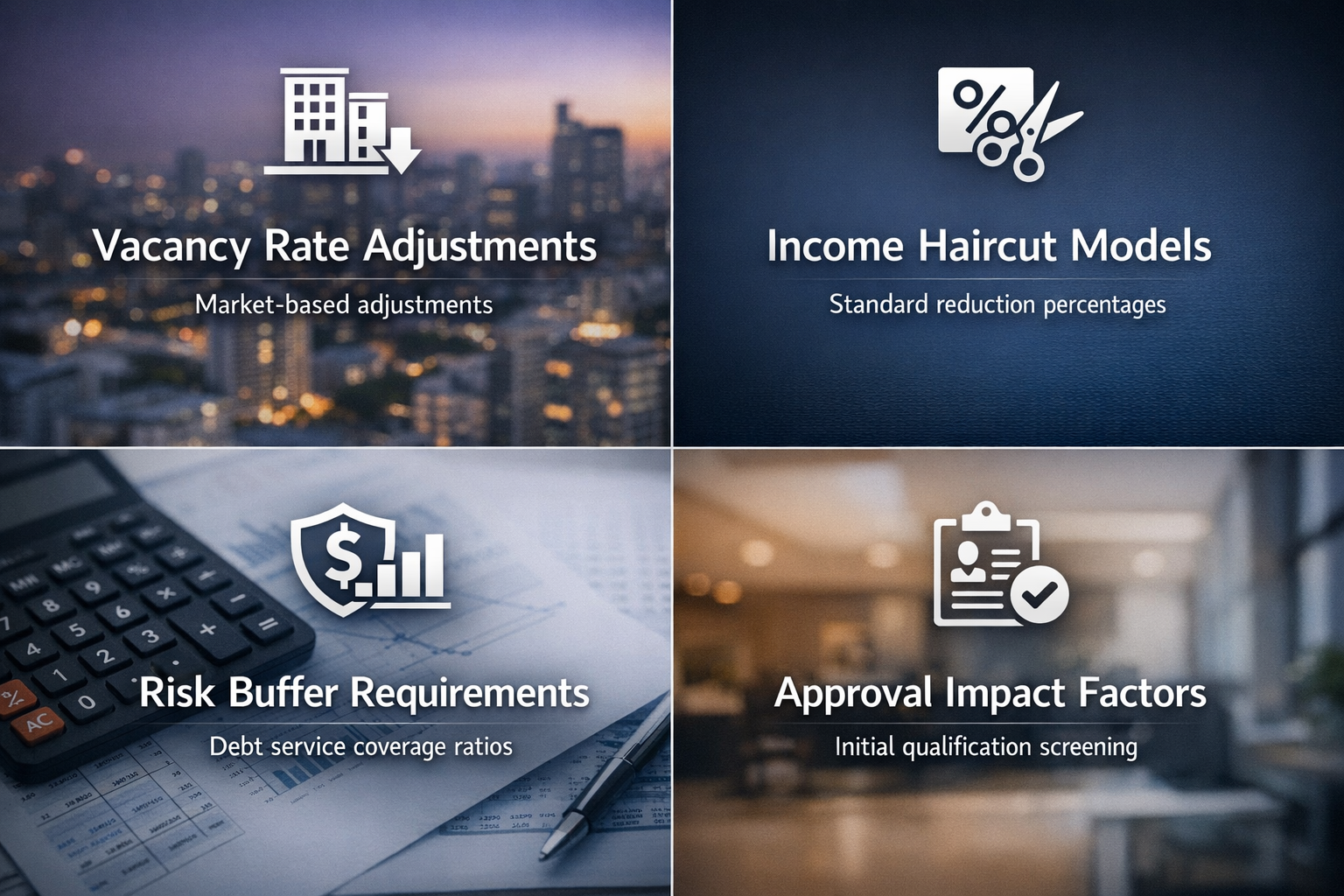
Market-based adjustments: Vacancy rates might vary from 5% in stable markets to 15% or higher in volatile areas, depending on local rental demand and economic conditions
Property type considerations: Single-family rentals could receive different vacancy assumptions compared to multi-unit properties, reflecting tenant turnover patterns
Historical performance factors: Lenders often examine past occupancy data from similar properties in your target area to establish realistic vacancy expectations
Seasonal market impacts: Some markets experience predictable vacancy fluctuations that underwriters may incorporate into their vacancy stress testing models
Income Haircut Models and Cash Flow Projections
Income haircut models and cash flow projections help lenders determine whether your rental property can sustain mortgage payments during periods of reduced occupancy. These models typically reduce your projected rental income by predetermined percentages to account for various risks.
Standard reduction percentages: Many lenders might apply haircuts ranging from 10% to 25% of gross rental income, depending on property characteristics and borrower experience
Geographic risk adjustments: Properties in economically diverse areas may receive more favorable income adjustments compared to those in single-industry markets
Borrower experience weighting: Experienced investors with proven track records could qualify for less aggressive income reductions in some cases
Property condition factors: Newer or recently renovated properties might receive more favorable treatment in income projections than older buildings requiring maintenance
Risk Buffer Requirements for Investment Property Loans
Risk buffer requirements for investment property loans establish minimum safety margins that lenders expect to see in your deal structure. These buffers help protect both you and the lender against unexpected market downturns or property-specific challenges.
Debt service coverage ratios: Most lenders require DSCR values between 1.20 and 1.40, meaning rental income must exceed mortgage payments by 20% to 40% after vacancy adjustments
Reserve fund expectations: You may need to maintain cash reserves equivalent to 2-6 months of mortgage payments, depending on property size and lender requirements
Down payment implications: Higher down payments could sometimes offset more aggressive vacancy assumptions, improving your overall loan terms
Portfolio diversification benefits: Investors with multiple properties across different markets might qualify for reduced risk buffers on individual loans
How Stress Testing Affects Your Loan Approval Process
How stress testing affects your loan approval process depends largely on your property's ability to meet lender requirements under conservative income scenarios. The approval impact often determines not just whether you get financing, but also your interest rate and loan terms.
Initial qualification screening: Properties that fail basic stress tests may be rejected early in the underwriting process, before detailed analysis begins
Interest rate pricing: Deals with stronger stress test results could qualify for more competitive rates, while marginal deals might face higher pricing
Loan-to-value adjustments: Lenders might require larger down payments for properties that barely meet stressed cash flow requirements
Documentation requirements: Weaker stress test performance may trigger requests for additional financial documentation or property management experience verification
Strategies to Improve Your Property's Stress Test Performance
Strategies to improve your property's stress test performance can help you secure better loan terms and increase your chances of approval. Smart investors often structure their deals with underwriting requirements in mind from the beginning.
Conservative rent estimates: Using below-market rent projections in your initial analysis creates built-in buffers that may impress underwriters with your realistic approach
Property improvements timing: Completing renovations before applying for financing can justify higher rent estimates and reduce lender concerns about deferred maintenance
Market research documentation: Providing comprehensive rental comparables and market data may help justify more favorable vacancy assumptions in your specific area
Professional property management: Engaging experienced management companies could demonstrate your commitment to minimizing vacancy periods and maintaining steady cash flow
Vacancy stress testing in underwriting represents a critical component of the investment property loan approval process. By understanding how lenders evaluate cash flow under stressed conditions, you can better prepare your deals for success and avoid common pitfalls that lead to rejection.
The key lies in approaching your investments with the same conservative mindset that lenders apply during underwriting. When you can demonstrate that your properties will generate positive cash flow even under challenging vacancy scenarios, you position yourself for favorable loan terms and long-term investment success.
Remember that different lenders may apply varying stress test methodologies, so it's worth comparing options to find the best fit for your investment strategy. Working with a mortgage company experienced in investor loans can help you navigate these requirements more effectively.