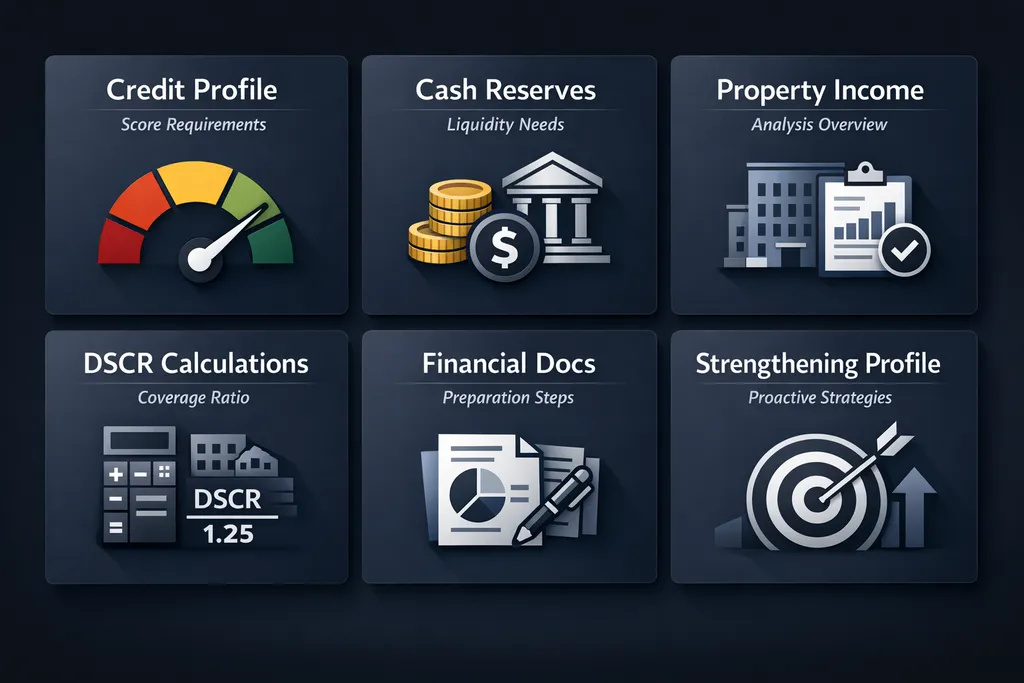
When you're building a rental property portfolio, understanding what lenders evaluate during underwriting can mean the difference between securing competitive financing and getting stuck with unfavorable terms. The top underwriting factors affecting rental loans go far beyond your personal income statement. Instead, they focus on property performance, your financial reserves, and your ability to service debt through rental income.
For investors pursuing DSCR loans or traditional rental property financing, knowing how underwriters assess risk allows you to prepare your financials strategically and position each deal for approval. Lenders evaluate several core factors when deciding whether to fund your investment, and each element carries significant weight in the final decision.
This guide breaks down the essential underwriting criteria that shape rental loan approvals, helping you navigate the process with confidence and improve your chances of securing the capital you need to grow your portfolio.
Credit Profile and Score Requirements
Credit profile and score requirements form one of the top underwriting factors affecting rental loans, and they typically carry more weight in investment property financing than in owner-occupied mortgages. Your credit profile demonstrates to lenders how you've managed past financial obligations and predicts your likelihood of repaying the loan.
Minimum credit thresholds: Most rental property loans require a credit score of at least 620 to 680, depending on the loan type and lender. DSCR loans may allow scores as low as 620 in some cases, though better terms often require 680 or higher.
Credit history depth: Lenders look beyond the score itself to examine your payment history, outstanding debts, and any past delinquencies or foreclosures. A clean track record over the past 24 months tends to carry significant weight in underwriting decisions.
Impact on loan terms: Higher credit scores can unlock lower interest rates, reduced down payment requirements, and more favorable loan-to-value ratios. Conversely, borderline credit may result in higher rates or additional reserve requirements.
Multiple property considerations: If you already own several rental properties, underwriters may scrutinize your credit more closely to ensure you can manage additional debt without overextending yourself financially.
Improving your credit profile before applying for rental property financing can pay dividends in the form of better rates and terms. Simple steps like paying down revolving balances, disputing errors on your credit report, and avoiding new credit inquiries in the months leading up to your application may help strengthen your position.
Cash Reserves and Liquidity
Cash reserves and liquidity requirements represent another critical component among the top underwriting factors affecting rental loans. Lenders want assurance that you can cover mortgage payments, property expenses, and vacancies even when rental income fluctuates or unexpected costs arise.
Reserve calculations: Most lenders require reserves equivalent to several months of principal, interest, taxes, and insurance payments for the subject property. Requirements often range from three to six months of PITI, though some lenders may require reserves for all financed properties in your portfolio.
Acceptable reserve types: Qualified reserves typically include cash in checking or savings accounts, retirement accounts (with potential penalties noted), and liquid investment accounts. Real estate equity usually doesn't count toward reserve requirements since it can't be quickly converted to cash.
Portfolio considerations: As you acquire more properties, reserve requirements may increase. Lenders might require additional reserves per property to ensure you maintain adequate liquidity across your entire portfolio.
Seasonal income factors: If you own vacation rentals or properties in markets with seasonal demand, underwriters may require higher reserves to cover low-income periods when occupancy drops.
Building and maintaining strong cash reserves not only improves your loan approval odds but also provides a safety net that protects your investment during market downturns or unexpected vacancies. Strategic investors often keep reserves in high-yield savings accounts to maintain liquidity while earning modest returns.
Property Income Analysis and Cash Flow
Property income analysis and cash flow evaluation stand as perhaps the most distinctive of the top underwriting factors affecting rental loans, especially for DSCR financing. Unlike traditional mortgages that focus on personal income, rental property underwriting centers on whether the property itself generates sufficient income to cover the debt.
Market rent assessments: Underwriters typically order an appraisal or rent schedule to determine fair market rent for the property. They may use actual lease agreements if the property is already occupied, or comparable rental data if it's vacant or being repositioned.
Income calculations: Lenders often apply a vacancy factor (typically 5% to 10%) when calculating expected rental income, accounting for turnover periods and potential collection losses. This conservative approach protects both the lender and the investor from overestimating cash flow.
Expense considerations: Property income analysis includes anticipated operating expenses such as property taxes, insurance, HOA fees, and maintenance costs. Underwriters subtract these expenses from gross rental income to determine net operating income.
Occupancy status: Properties with established tenants and documented rental history may receive more favorable income treatment than vacant properties or those requiring significant repairs before they can be leased.
For investors pursuing DSCR loans, the property income analysis becomes even more central to the underwriting decision. Since these loans don't require personal income verification, the property's ability to generate positive cash flow after debt service determines approval and loan sizing.
Debt Service Coverage Ratio Calculations
Debt service coverage ratio calculations have become one of the top underwriting factors affecting rental loans, particularly as DSCR financing has grown in popularity among real estate investors. This metric directly measures whether rental income exceeds the mortgage payment by a comfortable margin.
DSCR formula basics: The debt service coverage ratio divides the property's net operating income by its total debt service (principal and interest payments). A DSCR of 1.25, for example, means the property generates 25% more income than needed to cover the mortgage payment.
Minimum DSCR requirements: Most lenders require a minimum DSCR between 1.0 and 1.25 for rental property loans. Some DSCR loan programs may accept ratios slightly below 1.0 in strong markets or for experienced investors, though this often comes with higher rates or larger down payments.
Impact on loan sizing: The DSCR calculation directly influences how much a lender will loan against a property. If projected rental income doesn't support the requested loan amount at the required DSCR, underwriters may reduce the loan size or require a larger down payment.
Rate and term connections: Higher DSCR ratios often correlate with better interest rates and terms. A property with a 1.5 DSCR demonstrates stronger cash flow and lower risk than one barely meeting the 1.0 threshold.
Understanding how underwriters calculate DSCR helps you evaluate deals before submitting applications. Running your own DSCR analysis during due diligence allows you to anticipate underwriting outcomes and avoid pursuing properties that won't meet lender standards.
Preparing Your Financial Documentation
Preparing your financial documentation effectively addresses multiple top underwriting factors affecting rental loans simultaneously. Organized, complete documentation accelerates the underwriting process and demonstrates professionalism that may work in your favor.
Bank statements and asset verification: Gather two to three months of recent bank statements showing your cash reserves and liquidity. Ensure large deposits are documented with explanation letters if they don't come from regular income sources, as underwriters will question unexplained funds that could represent undisclosed debt.
Property documentation: Compile current leases, rent rolls, and property tax statements for the subject property and any existing rentals in your portfolio. If the property is vacant, provide comparable rent data or a market rent analysis to support your income projections.
Credit report preparation: Pull your own credit report before applying and address any errors or discrepancies. If your credit profile shows recent inquiries or new accounts, be prepared to explain these to underwriters who may view them as signs of financial stress.
Debt schedules: Create a comprehensive list of all outstanding debts, including mortgages, credit cards, auto loans, and business obligations. Underwriters will verify this information, and discrepancies between your disclosure and their findings can delay approval or raise red flags.
Tax returns and income documents: While DSCR loans don't require personal income verification, some lenders may still request tax returns to verify asset levels or rental property ownership. Having these documents ready streamlines the process even if they're not formally required.
Well-organized documentation not only speeds up underwriting but also reduces the likelihood of additional requests or clarifications that can delay closing. Many experienced investors maintain a ready-to-go documentation package that can be quickly updated for new applications.
Strategies to Strengthen Your Underwriting Profile
Strategies to strengthen your underwriting profile help you address the top underwriting factors affecting rental loans proactively, improving both your approval odds and your loan terms. Smart investors work on their underwriting profile continuously, not just when they're ready to apply.
Build reserves strategically: Consistently set aside rental income and other funds into dedicated reserve accounts. Aim to maintain at least six months of PITI for each financed property, plus an additional cushion for unexpected capital expenditures or market downturns.
Improve property cash flow: Focus on acquiring properties with strong DSCR ratios rather than marginal deals. Properties generating 1.3x to 1.5x debt service not only secure better financing but also provide cushion against market fluctuations and expense increases.
Address credit issues early: If your credit profile shows weaknesses, take corrective action months before applying for financing. Pay down high-balance credit cards, resolve collections or disputes, and avoid opening new credit lines in the six months preceding your application.
Document income thoroughly: For properties you already own, maintain detailed records of rental income, lease agreements, and property expenses. This documentation history strengthens future applications by demonstrating proven management capability and property performance.
Consider property improvements: Strategic renovations that increase rental income can improve your DSCR and make marginal deals more financeable. Focus on improvements that tenants value and that command higher rents in your market.
Work with experienced lenders: Lenders specializing in investor financing understand rental property underwriting nuances better than traditional mortgage lenders. They may offer more flexibility on certain underwriting factors or provide guidance on structuring deals for optimal approval odds.
Taking these steps positions you as a lower-risk borrower in the eyes of underwriters, which can translate into better rates, higher loan-to-value ratios, and smoother closings on your investment properties.
The top underwriting factors affecting rental loans create a framework that real estate investors must navigate to secure financing for their portfolios. By understanding how lenders evaluate credit profile, reserves, property income analysis, and debt service coverage ratios, you can position yourself strategically for loan approval and favorable terms.
These underwriting factors aren't obstacles but rather guideposts that help you identify strong investment opportunities and avoid properties that won't meet lending standards. Properties with solid DSCR ratios, investors with strong reserves, and borrowers with clean credit profiles consistently secure the best financing options and build portfolios that weather market cycles.
Whether you're pursuing DSCR loans, traditional rental property financing, or fix and flip funding for properties you plan to convert to rentals, mastering these underwriting fundamentals gives you a competitive advantage. Start by assessing where your current financial profile stands against typical underwriting standards, then take concrete steps to strengthen any weak areas.
The investors who succeed in building substantial rental portfolios aren't necessarily those with the most capital or the best connections. They're the ones who understand what lenders look for and consistently structure their finances and property acquisitions to meet those standards. By focusing on these core underwriting factors, you'll find more doors open and more opportunities to grow your investment business with confidence.