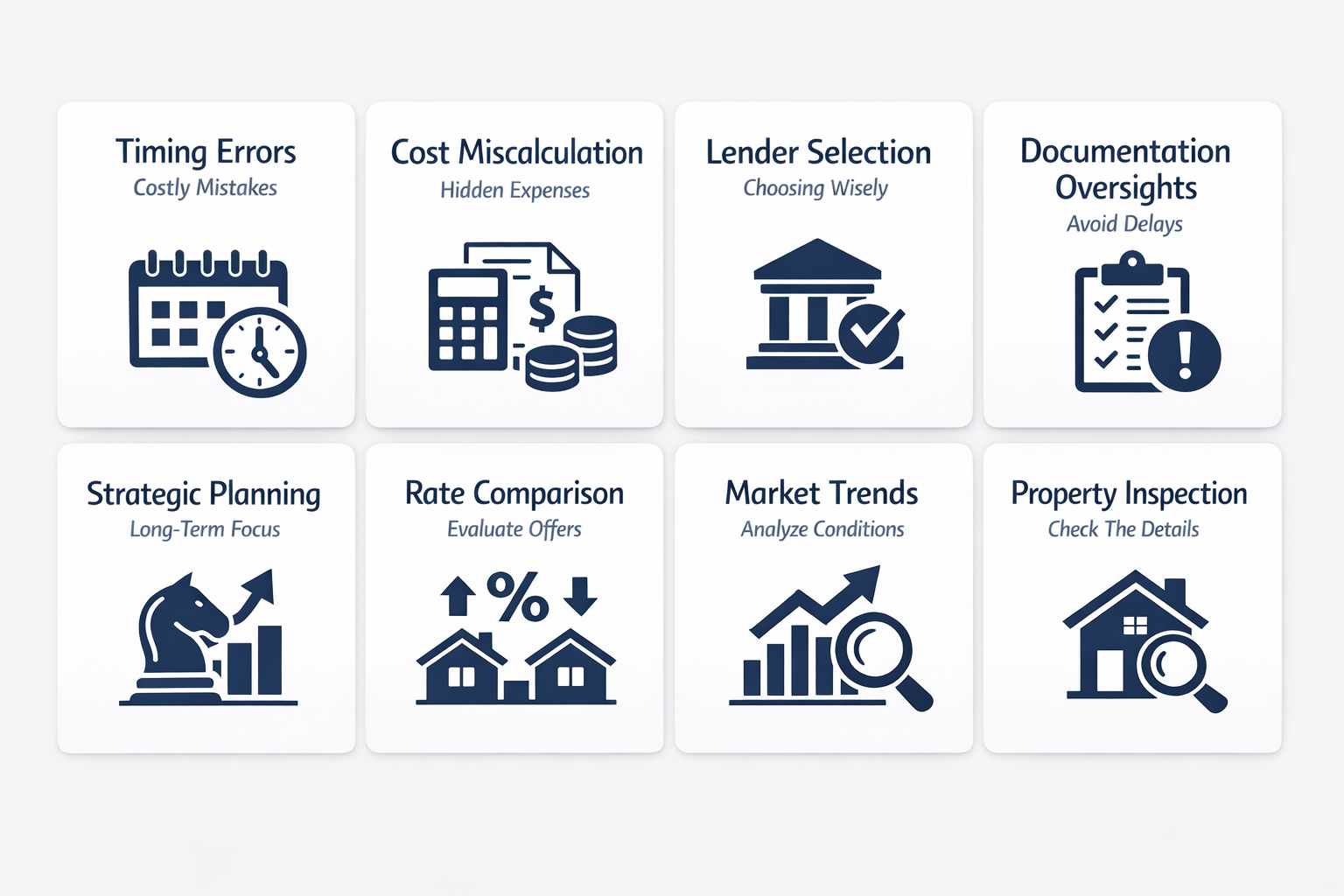
Refinancing rental properties can unlock significant capital, lower monthly payments, and improve cash flow for your investment portfolio. Yet many seasoned investors stumble into costly traps during the refinancing process that eat into their returns or derail deals entirely. Understanding the top refinancing mistakes rental investors should avoid is essential for protecting your bottom line and maximizing the benefits of restructuring your debt.
Unlike primary residence refinancing, investment property loans come with their own set of rules, qualifications, and potential pitfalls. From misjudging market timing to underestimating closing costs, these errors can transform what should be a strategic financial move into an expensive lesson. This guide walks you through the most common refinancing mistakes and shows you how to sidestep them with confidence.
Timing Errors That Cost You Money
Timing errors represent some of the most expensive mistakes in the refinancing process. Getting the timing wrong can mean leaving thousands on the table or paying far more than necessary over the life of your loan.
Refinancing too early in your current loan term: Many investors jump into a refinance without considering how much of their current loan balance is still weighted toward interest rather than principal. If you refinance shortly after taking out your original loan, you might restart the amortization clock and end up paying more interest overall, even with a lower rate.
Waiting too long when rates are rising: On the flip side, hesitation can be just as costly. Rate environments shift, and waiting for the perfect moment might mean missing a window of opportunity. Markets don't always cooperate with our timelines, and indecision during favorable conditions could lock you into higher rates for years.
Ignoring seasonal market patterns: The lending market often experiences seasonal fluctuations in both rates and lender capacity. Rushing to refinance during peak periods might result in longer processing times and less favorable terms, while off-peak seasons may offer more competitive pricing and attention from lenders.
Failing to account for property appreciation cycles: Your property's current value directly impacts your loan-to-value ratio and available refinancing options. Refinancing before your property has appreciated sufficiently might limit your choices or result in higher rates, while timing your refinance after documented appreciation can open doors to better terms.
Cost Miscalculation and Hidden Expenses
Cost miscalculation ranks among the top refinancing mistakes rental investors should avoid, yet it happens with surprising frequency. The real expense of refinancing extends far beyond the interest rate advertised in lender marketing materials.
Underestimating total closing costs: Refinancing isn't free, and the costs can add up quickly. Application fees, appraisal costs, title insurance, recording fees, and origination charges typically range from 2% to 5% of the loan amount. Investors who don't account for these upfront expenses may find their expected savings evaporate or take years longer to materialize than anticipated.
Overlooking the break-even timeline: Every refinance has a break-even point, the moment when your accumulated monthly savings offset the closing costs you paid upfront. If you plan to sell the property or refinance again before reaching that break-even point, you'll lose money on the transaction. Calculate this timeline carefully and factor in your investment strategy and holding period.
Neglecting prepayment penalties on existing loans: Some investment property loans include prepayment penalty clauses that charge substantial fees if you pay off the loan early. These penalties can sometimes reach thousands of dollars and might not be immediately obvious in your original loan documents. Review your current mortgage terms thoroughly before initiating a refinance to avoid unexpected costs that could negate any potential savings.
Poor Lender Selection and Shopping Strategy
Lender issues can sink an otherwise sound refinancing strategy. Not all lenders understand investment property financing, and choosing the wrong partner can lead to delays, unfavorable terms, or outright denial.
Settling for your current lender without shopping around: Loyalty doesn't pay in real estate investing. Your existing lender may offer a streamlined process, but they're not obligated to give you their best rate. Shopping multiple lenders often reveals significant rate and fee differences that could save you tens of thousands over the loan term.
Working with lenders unfamiliar with investment properties: Traditional mortgage lenders focus primarily on owner-occupied homes and may not offer competitive terms for rental properties. Worse, they might not understand DSCR loans or other investor-specific products that could better serve your needs. Partnering with lenders who specialize in investment property financing typically results in smoother transactions and terms designed for your business model.
Ignoring lender reputation and closing reliability: A low advertised rate means nothing if the lender can't close on time or changes terms midstream. Research lender reviews, ask for references from other investors, and verify their track record with investment properties before committing. Missing a rate lock expiration because of lender delays can cost you dearly.
Failing to compare loan products appropriately: Different loan structures serve different investment strategies. A 30-year fixed-rate loan offers stability, while an adjustable-rate mortgage might provide lower initial payments. DSCR loans eliminate personal income verification, which might be ideal for investors with complex tax situations. Not exploring all available products could mean missing the optimal financing structure for your portfolio.
Documentation and Qualification Oversights
Documentation problems can derail refinancing deals at the worst possible moment, typically after you've invested time and money into the application process. Being unprepared or providing incomplete information creates unnecessary delays and risks.
Inadequate rental income documentation: Lenders need proof that your property generates sufficient income to support the new loan. This typically means providing lease agreements, bank statements showing rent deposits, and tax returns reflecting rental income. Investors who can't document consistent rental history may face higher rates or outright denial, even if the property cash flows well in practice.
Credit score surprises during underwriting: Many investors assume their credit is in good shape without checking before applying. Small issues like late payments, high credit utilization, or errors on your report can significantly impact your rate or qualification. Pull your credit reports from all three bureaus well before applying and address any problems proactively rather than discovering them during underwriting.
Failing to prepare for property condition requirements: The appraisal process for refinancing includes a property condition assessment. Deferred maintenance, code violations, or health and safety issues can cause the appraisal to come in low or require costly repairs before the lender will proceed. Inspect your property with fresh eyes before refinancing and address obvious problems that might raise red flags.
Misrepresenting property use or ownership structure: Accuracy matters in loan applications. Misstatements about whether a property is owner-occupied, how it's titled, or its rental status constitute fraud and can result in loan denial, acceleration of your existing mortgage, or legal consequences. Always provide truthful, complete information even if you think it might hurt your chances.
Strategic Planning Failures
Strategic planning failures occur when investors view refinancing as an isolated transaction rather than a component of their broader investment strategy. These mistakes might not be immediately obvious but can constrain your options and reduce long-term profitability.
Refinancing without clear financial objectives: Why are you refinancing? To lower monthly payments, pull out equity for another investment, shorten your loan term, or switch from an adjustable to fixed rate? Each objective requires different loan structures and terms. Investors who refinance without a specific goal often end up with products that don't actually serve their needs.
Ignoring portfolio-level implications: A refinance on one property affects your overall debt-to-income ratio and might impact your ability to finance additional acquisitions. Taking on a larger loan or extending your term might improve cash flow on that specific property but limit your borrowing capacity for the next deal. Think about how each refinance fits into your portfolio growth plans.
Overlooking tax consequences of cash-out refinancing: Pulling equity out through refinancing isn't a taxable event, but how you use those funds and how the refinance affects your deductible interest can have tax implications. Consult with a tax professional who understands real estate investing before making decisions that could increase your tax burden or eliminate valuable deductions.
Failing to consider your exit strategy: How long do you plan to hold this property? If you're considering selling within a few years, refinancing might not make financial sense once you account for closing costs and the time needed to recoup them. Your refinancing decision should align with your hold period and ultimate exit plan for each property.
Rate and Terms Comparison Mistakes
Understanding the top refinancing mistakes rental investors should avoid includes recognizing that not all loan offers are created equal, even when rates look similar on paper. The details matter enormously.
Focusing solely on interest rate: The lowest advertised rate isn't always the best deal. Annual Percentage Rate better reflects the true cost by including fees, but even APR doesn't tell the whole story. Points, closing costs, prepayment penalties, and loan structure all affect your total expense. Evaluate the complete package rather than fixating on a single number.
Accepting higher fees for marginally lower rates: Lenders often offer rate buydowns where you pay points upfront to secure a lower interest rate. This might make sense if you're holding the property long-term, but if your investment horizon is shorter, you'll pay more in fees than you'll save in interest. Calculate the break-even point and compare it honestly against your plans.
Overlooking loan term implications: Refinancing from a 30-year loan you've had for five years into a new 30-year loan extends your total payoff period to 35 years. Even with a lower rate, you might pay more total interest. Consider whether a 20 or 25-year term might offer a better balance between monthly payment and long-term cost.
Ignoring rate lock periods and extension fees: Rate locks typically last 30 to 60 days. If closing takes longer, you might need to pay extension fees or watch your locked rate expire, forcing you to accept whatever the current market offers. Understand your lender's lock policies and build buffer time into your expectations.
Avoiding the top refinancing mistakes rental investors should avoid requires diligence, planning, and a clear-eyed view of both market conditions and your personal investment strategy. From timing errors that cost you advantageous rates to cost miscalculation that erodes your returns, each mistake outlined here has derailed deals for experienced investors who should have known better.
The good news is that awareness is half the battle. By shopping multiple lenders who understand investment properties, calculating your true costs including all fees and break-even timelines, preparing thorough documentation, and aligning your refinancing decisions with your broader portfolio goals, you can navigate the process successfully. Remember that refinancing is a tool, not a goal in itself. Use it strategically to improve cash flow, fund new acquisitions, or optimize your debt structure, but never lose sight of how each decision affects your overall investment returns.
Take the time to evaluate your current loans, market conditions, and investment objectives before jumping into a refinance. The investors who succeed in this space are those who treat every financial decision as part of a larger strategy, avoiding costly missteps by planning ahead and staying informed throughout the process.