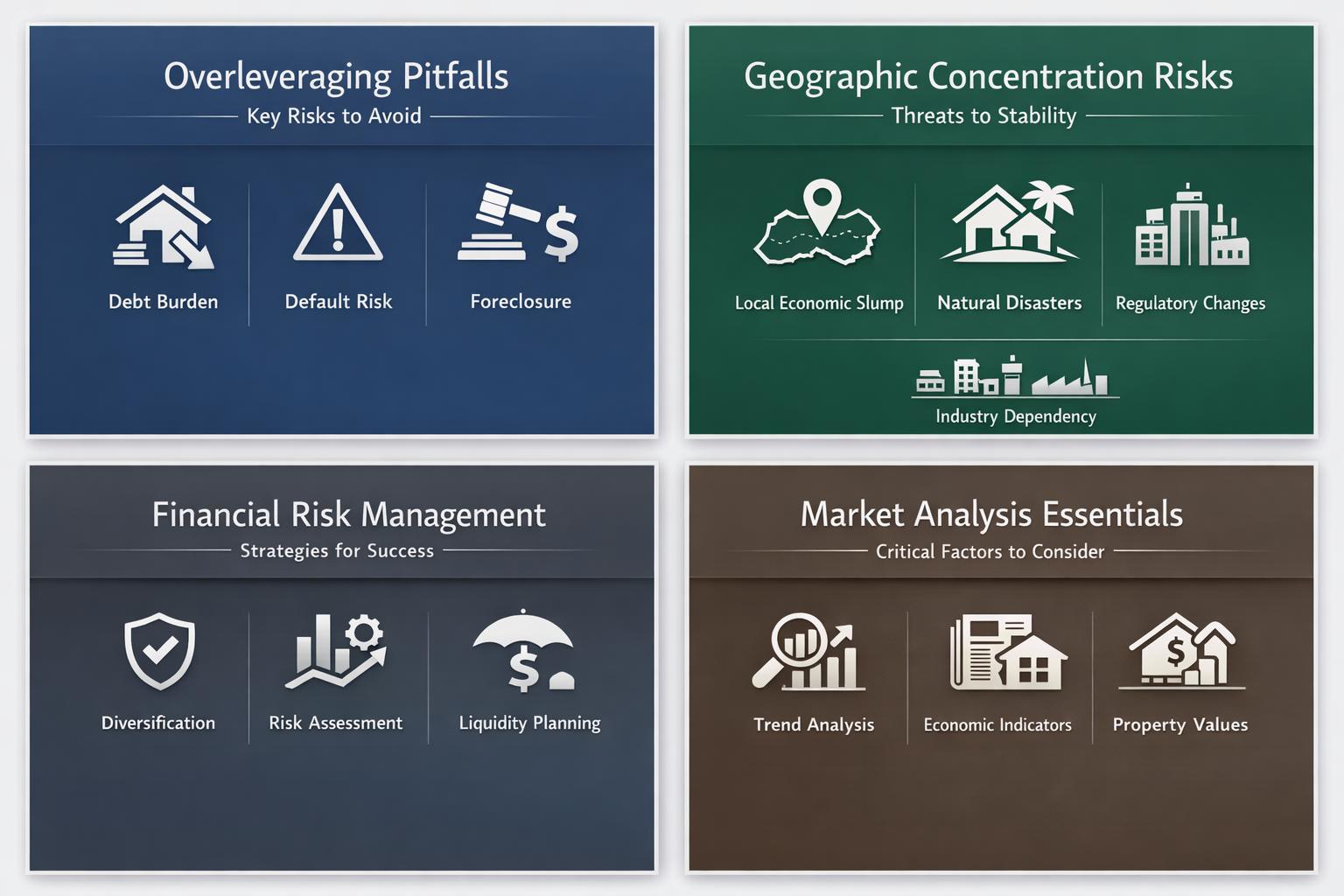
The real estate investment landscape in 2026 presents unique challenges that could make or break your portfolio expansion plans. As market conditions shift with changing interest rates and regulatory updates, investors must navigate carefully to avoid costly missteps. Understanding the top portfolio expansion mistakes in 2026 becomes crucial for maintaining profitable operations and sustainable growth.
Smart investors recognize that expansion without proper strategy often leads to financial strain and missed opportunities. The key lies in identifying potential pitfalls before they impact your bottom line. From overleveraging to geographic concentration risks, these mistakes can quickly transform promising deals into financial burdens.
Strategic Planning Framework for Portfolio Growth
Strategic planning framework for portfolio growth requires a systematic approach to avoid common expansion pitfalls. Successful investors typically follow a structured methodology that accounts for market volatility and changing economic conditions.
Assess Current Market Position: Evaluate your existing portfolio's performance metrics, cash flow stability, and debt-to-equity ratios before considering expansion opportunities.
Establish Risk Tolerance Parameters: Define clear boundaries for leverage ratios, geographic exposure, and property types to maintain balanced growth without overextending resources.
Create Contingency Plans: Develop backup strategies for various market scenarios, including interest rate fluctuations and unexpected regulatory changes that might affect financing options.
Set Performance Benchmarks: Establish measurable goals for portfolio expansion that align with your long-term investment objectives and risk management principles.
Financial Risk Assessment and Management
Financial risk assessment and management becomes increasingly critical as investors expand their portfolios in 2026's uncertain market environment. Rising borrowing costs and stricter lending requirements demand more sophisticated financial planning.
Calculate Debt Service Coverage Ratios: Ensure each property generates sufficient cash flow to cover mortgage payments with adequate buffer for unexpected expenses or vacancy periods.
Stress Test Against Rate Changes: Model your portfolio's performance under various interest rate scenarios to identify potential vulnerabilities in your financing structure.
Diversify Financing Sources: Avoid relying solely on traditional bank loans by exploring DSCR loans, private lending, and other investor-focused financing options.
Monitor Liquidity Requirements: Maintain sufficient cash reserves to handle unexpected repairs, market downturns, or opportunities for quick acquisitions.
Market Analysis and Timing Considerations
Market analysis and timing considerations play a vital role in successful portfolio expansion, especially when economic indicators suggest potential volatility ahead. Investors must balance growth ambitions with market realities.
Research Local Market Fundamentals: Analyze employment rates, population growth, and development plans in target markets before committing significant capital to new acquisitions.
Monitor Interest Rate Trends: Track federal monetary policy signals and adjust expansion timelines based on anticipated changes in borrowing costs.
Evaluate Supply and Demand Dynamics: Study rental vacancy rates, new construction permits, and absorption rates to identify markets with favorable investment conditions.
Time Entry Points Strategically: Consider seasonal patterns, economic cycles, and local market conditions when scheduling property acquisitions or major renovations.
Common Overleveraging Pitfalls
Common overleveraging pitfalls represent one of the most dangerous aspects of aggressive portfolio expansion in 2026. Many investors underestimate the risks associated with excessive debt loads in volatile market conditions.
Ignoring Cash Flow Stress Tests: Investors often fail to model scenarios where multiple properties experience simultaneous vacancies or require major repairs, leading to cash flow shortfalls.
Assuming Constant Refinancing Availability: Relying on future refinancing opportunities without considering potential changes in lending standards or property valuations can create liquidity crises.
Underestimating Operating Expense Growth: Rising insurance costs, property taxes, and maintenance expenses can quickly erode profit margins and strain leveraged portfolios.
Overlapping Debt Maturities: Concentrating loan maturities within short timeframes increases refinancing risk and potential forced sales during unfavorable market conditions.
Geographic Concentration Risks and Solutions
Geographic concentration risks pose significant threats to portfolio stability when investors focus expansion efforts in limited markets. Diversification strategies become essential for long-term success and risk mitigation.
Single Market Dependency: Concentrating investments in one metropolitan area exposes portfolios to local economic downturns, natural disasters, or regulatory changes that could impact multiple properties simultaneously.
Limited Exit Strategy Options: Heavy concentration in specific neighborhoods or property types can restrict liquidity options and complicate portfolio rebalancing efforts when market conditions change.
Regulatory Risk Exposure: Local rent control laws, zoning changes, or tax policy modifications can disproportionately affect concentrated portfolios compared to geographically diversified holdings.
Management Resource Strain: Expanding too quickly within single markets might overwhelm local management resources and compromise property performance across the entire portfolio.
Avoiding the top portfolio expansion mistakes in 2026 requires disciplined planning, conservative financial management, and strategic diversification. Successful investors recognize that sustainable growth often means saying no to attractive deals that don't fit their risk parameters.
The current market environment rewards patience and preparation over aggressive expansion tactics. By implementing proper risk assessment procedures and maintaining adequate liquidity reserves, investors can position themselves to capitalize on opportunities while protecting existing assets.
Remember that portfolio expansion should enhance your investment returns, not jeopardize your financial stability. Focus on building a foundation of profitable properties before pursuing ambitious growth targets, and always stress test your strategies against potential market changes.