All Articles
DSCR

Top DSCR Approval Challenges Investors Face

January 30, 2026
7 min read

Real estate investors often find themselves caught off guard by unexpected hurdles during the DSCR loan approval process. While debt service coverage ratio loans offer attractive benefits for investment properties, navigating the approval landscape can be tricky without proper preparation.

Understanding the top DSCR approval challenges before you apply can mean the difference between a smooth closing and months of delays. From documentation gaps to income verification issues, lenders have specific requirements that can trip up even experienced investors.

This guide breaks down the most common obstacles investors encounter and provides actionable solutions to help you secure your DSCR financing efficiently. Let's dive into what might be standing between you and your next investment property loan.

Documentation Gaps That Derail Applications

Documentation gaps represent one of the most frequent causes of DSCR loan delays and rejections. Missing paperwork can extend your closing timeline by several weeks, potentially costing you valuable investment opportunities.

  • Incomplete property documentation: Property appraisals, rent rolls, and lease agreements must be current and comprehensive to support your loan application
  • Missing financial records: Bank statements, tax returns, and asset verification documents need to be readily available and properly organized
  • Inadequate property condition reports: Lenders may require detailed property inspections and condition assessments before approval
  • Insufficient rental income proof: Current leases, rental agreements, and market rent analysis documentation should clearly demonstrate income potential

Proactive document preparation can significantly reduce approval timeframes. Creating a comprehensive file with all required paperwork before starting your application helps eliminate back-and-forth requests from underwriters.

Income Verification Issues and Solutions

Income verification issues create substantial underwriting obstacles for DSCR loan applicants. Lenders need accurate rental income documentation to calculate your debt service coverage ratio properly.

  • Unrealistic rental projections: Market rent estimates that don't align with comparable properties in the area can trigger additional scrutiny from underwriters
  • Occupancy fraud concerns: Lenders carefully verify that properties are truly investment rentals and not owner-occupied residences
  • Seasonal income fluctuations: Properties with variable rental income throughout the year require additional documentation to establish consistent cash flow
  • New construction challenges: Properties without established rental history need market analysis and comparable rent data for verification

Accurate rental income verification helps avoid complications that could jeopardize your financing. Working with qualified appraisers and providing detailed market analysis strengthens your application's credibility with lenders.

Credit Score and Financial Requirements

Credit score and financial requirements often catch investors unprepared during the DSCR approval process. Understanding these benchmarks helps you position your application for success.

  • Minimum credit thresholds: Most lenders require credit scores of 620 or higher, though better rates typically require scores above 700
  • Debt-to-income considerations: While DSCR loans focus on property income, personal debt levels still influence approval decisions
  • Asset verification requirements: Lenders need proof of reserves and liquid assets to cover potential property expenses
  • Previous investment experience: Some lenders prefer borrowers with established real estate investment track records and portfolio management experience

Meeting these financial benchmarks positions you as a qualified borrower and may unlock better loan terms. Reviewing your credit profile and financial position before applying helps identify areas that might need improvement.

Property Condition and Insurance Obstacles

Property condition and insurance obstacles can create unexpected delays in your DSCR loan approval process. These factors directly impact your property's value and risk profile from the lender's perspective.

  • Deferred maintenance issues: Properties requiring significant repairs may need completion before loan approval or additional reserves for improvements
  • Rising insurance costs: Soaring home insurance premiums can affect your debt service coverage ratio calculations and delay final approval
  • Coverage availability problems: Some properties in high-risk areas may struggle to secure acceptable insurance coverage that meets lender requirements
  • Environmental concerns: Properties with potential environmental issues may require additional inspections and remediation before approval

Factoring rising insurance costs into your DSCR calculations helps avoid approval delays. Getting insurance quotes early in the process ensures you can meet coverage requirements without last-minute surprises.
Steps to Improve Your DSCR Ratio

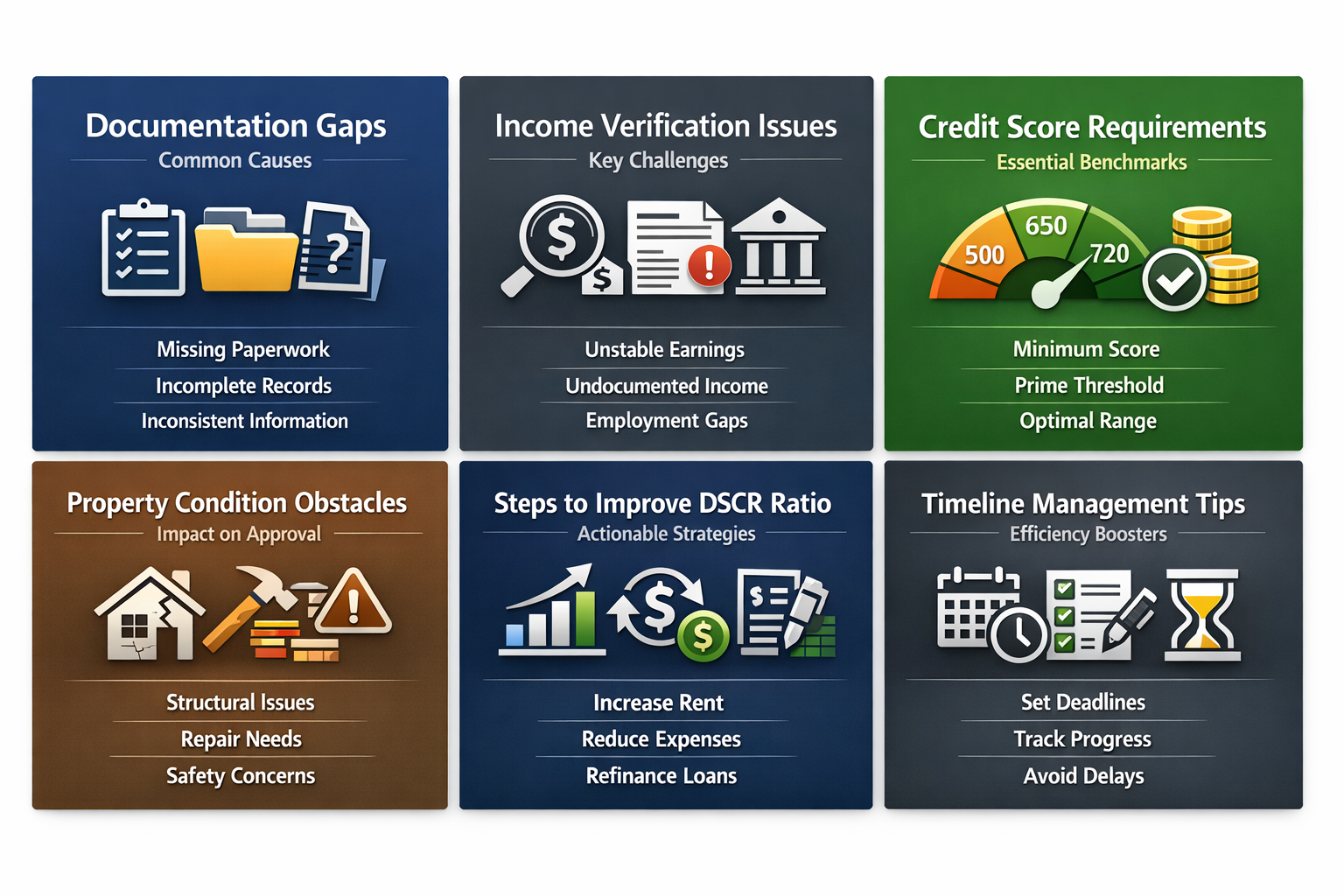
Infographic showing documentation gaps, income verification issues, credit score requirements, property condition obstacles, steps to improve DSCR ratio, and timeline management tips.

Steps to improve your DSCR ratio can make the difference between loan approval and rejection. A higher debt service coverage ratio not only increases approval odds but may also unlock better interest rates.

  1. Increase rental income potential: Make strategic property improvements that justify higher rents, such as updated kitchens, modern appliances, or additional amenities that attract quality tenants
  2. Reduce property expenses: Lower operating costs through energy-efficient upgrades, preventive maintenance programs, or renegotiating service contracts to improve your net operating income
  3. Consider larger down payments: Increasing your down payment reduces the loan amount and monthly debt service, automatically improving your DSCR calculation
  4. Target properties with strong rent potential: Focus on properties in growing markets with stable rental demand and limited supply to ensure consistent income streams
  5. Optimize your loan structure: Work with lenders to find loan terms that balance monthly payments with your property's income potential

Aiming for a DSCR ratio above 1.25 helps you access better loan terms and lower interest rates. This threshold demonstrates strong cash flow coverage and reduces lender risk perception.

Timeline Management and Closing Strategies

Timeline management and closing strategies help investors navigate the DSCR approval process more efficiently. Understanding typical timeframes and potential delays allows for better planning and execution.

  1. Start document collection early: Begin gathering required paperwork before formally applying, including tax returns, bank statements, property documents, and insurance information
  2. Maintain regular communication: Stay in contact with your loan officer and promptly respond to any requests for additional information or documentation
  3. Prepare for appraisal requirements: Schedule property appraisals quickly and ensure properties are accessible and in good showing condition for appraisers
  4. Have backup insurance options: Research multiple insurance providers early in the process to avoid delays if your primary option falls through
  5. Plan for contingencies: Build buffer time into your closing timeline to account for potential underwriting delays or additional requirements

Timely and complete document submission helps prevent delays in securing your DSCR loan. Proactive management of the approval process keeps your investment timeline on track and reduces stress.

Successfully navigating the top DSCR approval challenges requires preparation, attention to detail, and realistic expectations about the process. From addressing documentation gaps to managing income verification issues, understanding these common obstacles helps you position your application for success.

The key lies in proactive preparation and working with experienced lenders who understand investor needs. By addressing potential challenges before they become problems, you can streamline your approval process and secure the financing you need for your real estate investments.

Remember that each property and situation presents unique considerations. Taking time to understand your specific circumstances and preparing accordingly will serve you well throughout the DSCR loan approval process and beyond.

Share this post