Real estate investors navigating the 2026 lending landscape face DSCR loan rates ranging from 7.5% to 9.5%, making it crucial to understand the top 7 factors affecting DSCR rates. These pricing drivers can significantly impact your investment returns and financing costs across your rental property portfolio. Understanding what influences these rates helps you position yourself for better loan terms and maximize your investment efficiency.
Unlike traditional mortgage products aimed at homebuyers, DSCR loans focus on property cash flow rather than personal income verification. This unique approach means the factors that drive pricing differ considerably from conventional residential mortgages. Let's examine the key elements that lenders evaluate when determining your DSCR loan rates.
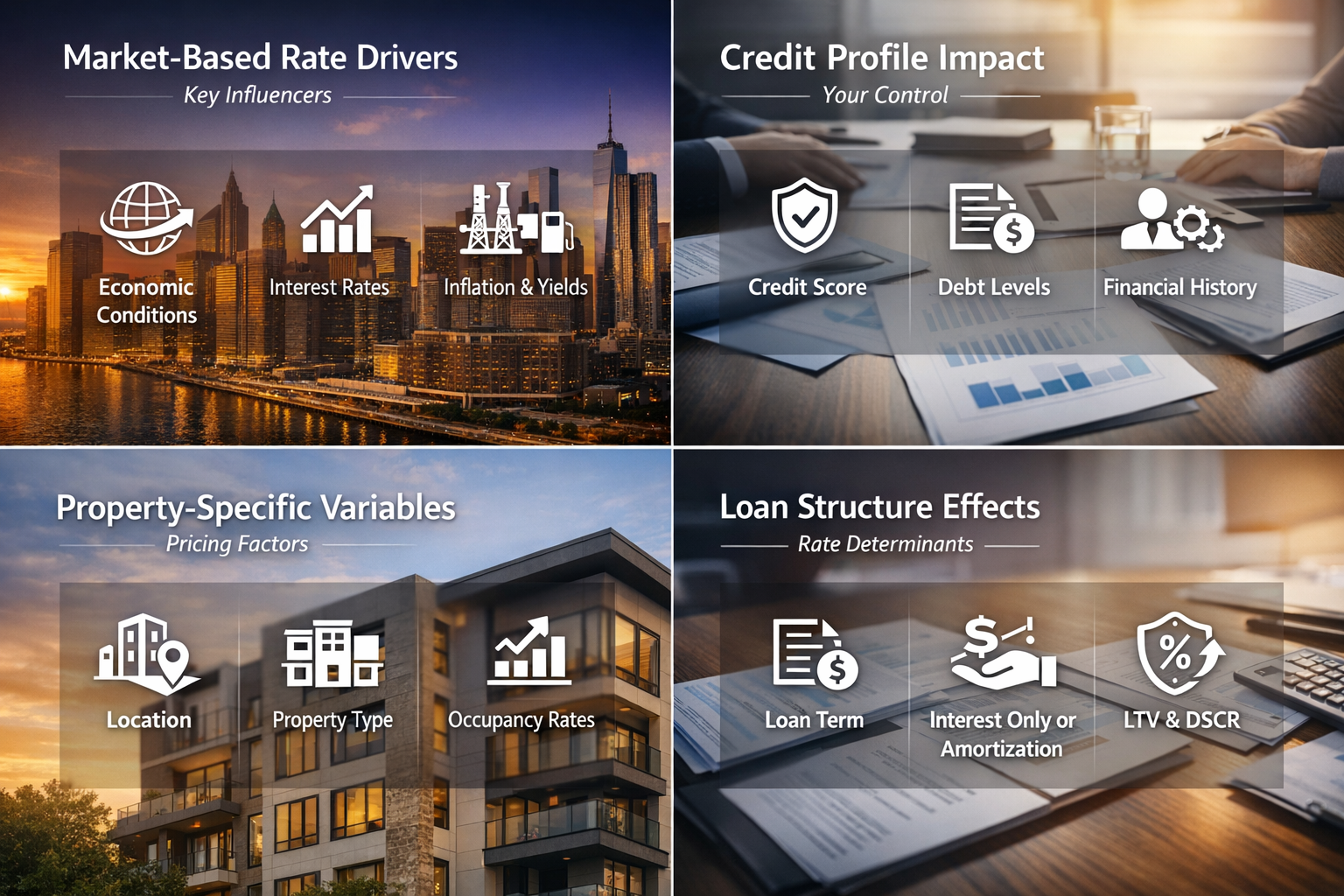
Market-Based Rate Drivers You Can't Control
Market-based rate drivers form the foundation for all DSCR loan rates, and understanding these factors helps investors time their financing decisions more effectively.
5-Year U.S. Treasury Yield Performance: DSCR loan rates typically track closely with 5-Year Treasury yields rather than Federal Reserve rates, making Treasury performance a critical benchmark for your financing costs
Overall Economic Conditions: Broader market volatility and economic uncertainty can create risk premiums that push DSCR rates higher across all lender programs
Investor Demand for Real Estate Financing: High demand for investment property loans in your market area may tighten lending capacity and increase rates
Regulatory Environment Changes: New 2026 dollar thresholds and compliance requirements can indirectly affect loan pricing through increased operational costs for lenders
Your Credit Profile Impact on Pricing
Your credit profile represents one of the most controllable factors in securing competitive DSCR rates, with direct impacts on both approval odds and final pricing.
Credit Score Optimization: Higher credit scores typically result in lower risk premiums, though exact thresholds vary by lender and may range from 620 minimum to 740+ for best pricing
Credit History Depth: Established credit relationships and longer payment histories often translate to more favorable rate adjustments
Debt-to-Income Considerations: While DSCR loans don't require income verification, some lenders may still evaluate overall debt obligations for portfolio lending decisions
Previous Real Estate Experience: Demonstrated success managing investment properties can influence lender risk assessment and potentially improve your investor profile rating
Property-Specific Pricing Variables
Property-specific pricing variables directly influence how lenders assess risk and determine appropriate rate adjustments for your specific investment.
Property Type Classifications: Single-family rentals might receive different pricing than multi-unit properties, with some property types carrying additional risk premiums
Location and Market Dynamics: Properties in high-demand markets like Florida or California may benefit from competitive pricing, while emerging markets could face higher rates
Sustainability and Green Features: Properties with energy-efficient upgrades or green certifications might qualify for preferential pricing as lenders increasingly value sustainable investments
Property Condition and Age: Well-maintained properties with recent updates typically receive better pricing than properties requiring significant rehabilitation work
How Loan Structure Affects Your Rate
The specific structure you choose for your DSCR loan plays a significant role in determining final pricing, with several key elements impacting your rate.
Loan Amount Considerations: Larger loan amounts may qualify for institutional pricing advantages, while smaller loans might face higher per-unit processing costs that get reflected in rates
Expected Payoff Timeline: Lenders often price loans based on anticipated refinance patterns, with shorter expected holds potentially receiving different rate structures
Down Payment and Loan-to-Value Ratio: Higher down payments typically result in lower risk premiums, as they reduce lender exposure and demonstrate stronger investor commitment
Interest Rate Type Selection: Fixed versus adjustable rate options carry different pricing structures, with market conditions influencing the premium between these choices
Prepayment Terms and Flexibility: Loans with prepayment penalties might offer lower initial rates, while flexible prepayment options could result in slightly higher pricing
Portfolio and Relationship Factors
Your existing portfolio size and lender relationships can create opportunities for improved pricing through volume considerations and established track records.
Portfolio Size and Diversification: Investors with larger, well-diversified rental portfolios might qualify for portfolio pricing advantages or relationship-based rate improvements
Banking Relationship Depth: Existing relationships with depository institutions can sometimes translate to preferential pricing for qualified real estate investors
Transaction Volume Potential: Investors planning multiple transactions within a specific timeframe might negotiate volume-based pricing arrangements
Geographic Concentration Strategy: Concentrated investments in markets where lenders have strong presence could result in competitive pricing advantages
Key Timing and Market Strategy Considerations
Understanding timing and market strategy considerations helps investors make informed decisions about when and how to pursue DSCR financing for optimal results. The interplay between market cycles, seasonal patterns, and lender capacity creates windows of opportunity for securing more favorable rates. Investors who monitor these patterns and align their financing activities accordingly often achieve better outcomes than those who approach the market reactively. Rate locks, application timing, and market positioning all contribute to your final financing costs.
Successfully navigating DSCR loan pricing requires understanding both the controllable and uncontrollable factors that drive rates in today's market. While you can't influence Treasury yields or broad economic conditions, focusing on credit optimization, property selection, and strategic timing can significantly improve your financing outcomes.
The current rate environment of 7.5% to 9.5% for DSCR loans presents both challenges and opportunities for real estate investors. By addressing the factors within your control and timing your applications strategically, you can position yourself for the best possible terms. Remember that small improvements in rate can translate to substantial savings over the life of your investment loans.
As market conditions continue evolving throughout 2026, staying informed about these pricing drivers will help you make better financing decisions and maintain competitive advantages in your real estate investment activities.