
LOAN PROGRAMS
APPLY NOW

Real estate investors pursuing DSCR loans face numerous obstacles that can derail even the most promising deals. Understanding these top 5 DSCR deal killers could mean the difference between securing profitable financing and watching opportunities slip away.
DSCR loans offer unique advantages for rental property investors, but they come with specific requirements that can catch unprepared investors off guard. From appraisal complications to documentation gaps, these deal killers have the potential to transform promising investments into frustrating setbacks.
By identifying and addressing these common pitfalls early in the process, investors can significantly improve their chances of loan approval while streamlining their path to property acquisition.
Understanding what are the most common DSCR loan obstacles helps investors prepare for potential roadblocks before they become deal killers.
Q: Which DSCR requirements cause the most loan rejections?
The most problematic areas typically involve property valuation discrepancies, incomplete rental documentation, and title complications. Many investors underestimate how these factors can impact their debt service coverage ratio calculations and overall loan approval chances.
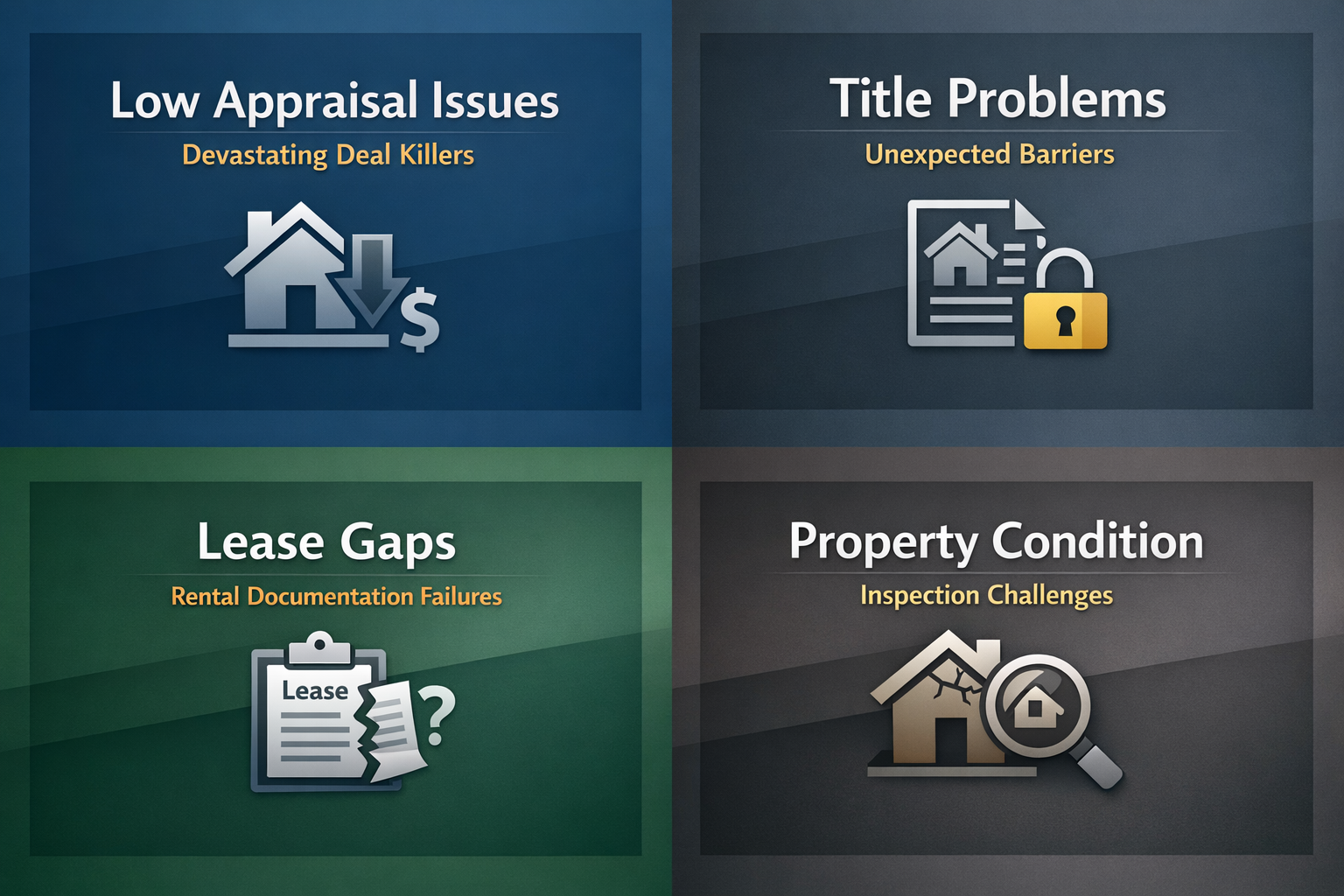
Low appraisal issues represent one of the most devastating DSCR deal killers, often surfacing when investors least expect them.
Title problems create unexpected barriers that can completely stop DSCR loan processing, even when other requirements are met.
Lease gaps and incomplete rental documentation frequently derail DSCR loans because these products rely heavily on rental income verification.
Property condition issues discovered during the loan process can quickly transform promising deals into complex negotiations or complete deal failures.
Debt service coverage ratio calculation errors can doom otherwise solid investment deals when investors misunderstand how lenders evaluate rental income versus expenses.
Successfully navigating DSCR loans requires careful attention to these common deal killers that have derailed countless investment opportunities. Low appraisal issues, title problems, and lease gaps represent just three of the critical areas where thorough preparation can make the difference between approval and rejection.
Smart investors recognize that avoiding these pitfalls starts with comprehensive due diligence and working with experienced professionals who understand DSCR loan requirements. By addressing potential issues early in the process, investors can position themselves for smoother transactions and better financing outcomes.
The key to overcoming these challenges lies in preparation, documentation, and realistic expectations about property values and rental income potential. Investors who take proactive steps to address these common obstacles will find themselves better positioned to secure the DSCR financing they need for successful real estate investments.
