Top 10 DSCR Approval Mistakes That Cost Real Estate Investors
DSCR loans have revolutionized investment property financing, but even experienced investors can stumble when it comes to securing approval. Understanding the top 10 DSCR approval mistakes might be the difference between closing on your next rental property and watching the deal slip away.
These common denial reasons often stem from documentation errors, unrealistic financial projections, and misunderstanding lender requirements. By identifying these investor pitfalls early, you can position yourself for faster approvals and better loan terms on your next DSCR financing application.
Essential DSCR Loan Do's for Approval Success
Following these essential DSCR loan do's for approval success can significantly improve your chances of securing financing. These proven strategies help investors avoid common critical pitfalls that typically lead to application denials.
Maintain accurate documentation: Keep detailed records of all income sources, expenses, and property information to support your application with verifiable data that lenders require.
Use conservative rental income estimates: Base projections on current market rates and comparable properties rather than optimistic assumptions that might not materialize.
Build sufficient cash reserves: Maintain adequate liquidity to cover property expenses, vacancy periods, and unexpected maintenance costs that could affect loan serviceability.
Improve your credit profile: Work on enhancing your FICO score before applying, as higher credit scores often result in better interest rates and loan terms.
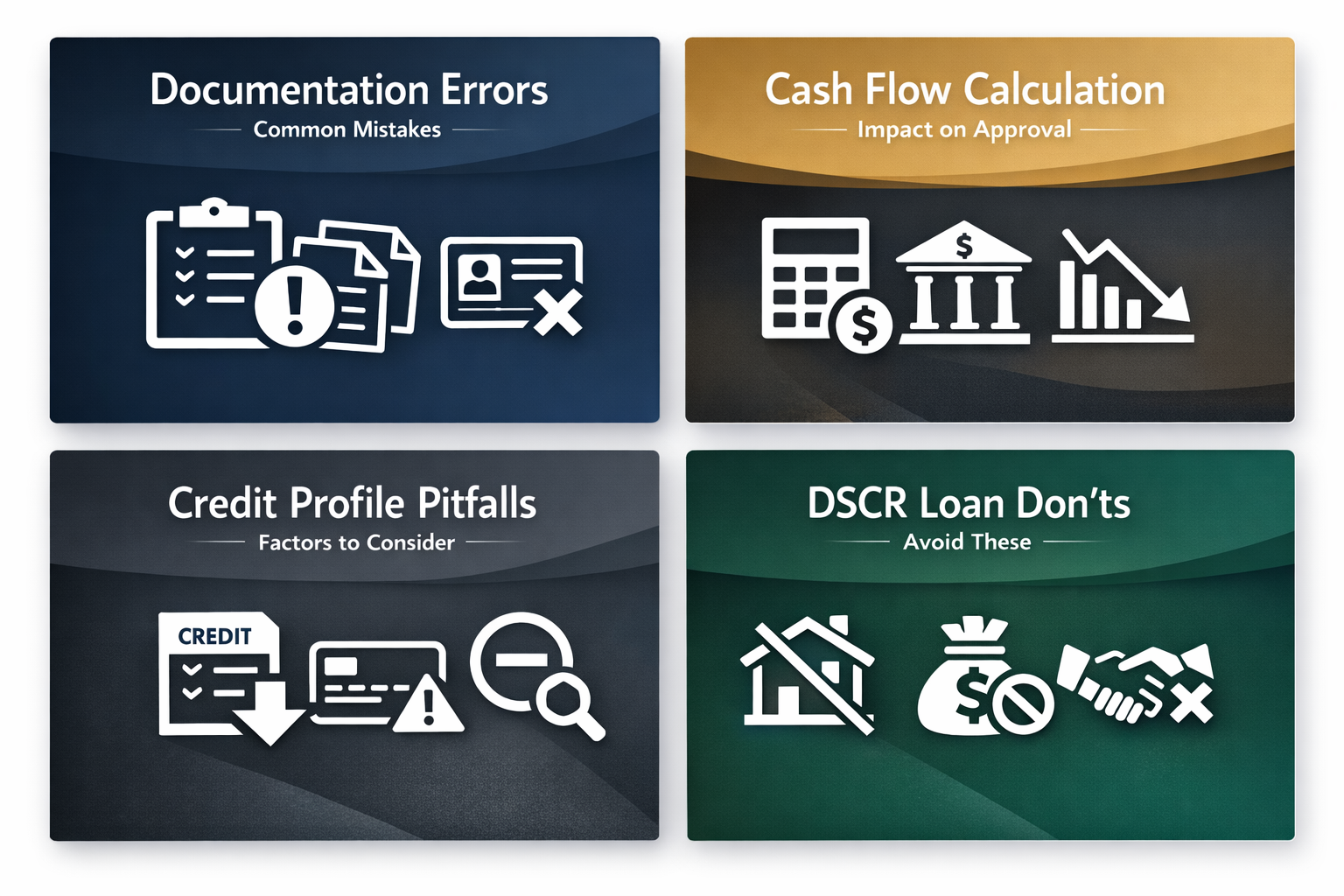
Critical DSCR Loan Don'ts That Lead to Denial
Avoiding these critical DSCR loan don'ts that lead to denial is equally important for securing approval. These mistakes frequently cause even qualified investors to face unexpected rejections.
Don't overestimate rental income: Avoid inflating projected rents beyond realistic market expectations, as lenders typically verify income potential through independent appraisals and market analysis.
Don't underestimate operating expenses: Never minimize property management costs, maintenance expenses, insurance premiums, and property taxes when calculating cash flow projections.
Don't ignore vacancy planning: Failing to account for potential vacancy periods in your financial calculations can signal poor risk management to lenders.
Don't submit incomplete documentation: Missing tax returns, bank statements, or property information can delay processing and potentially result in application denial.
Documentation Errors That Sabotage DSCR Applications
Documentation errors that sabotage DSCR applications represent some of the most preventable yet common mistakes investors make. These issues often create unnecessary delays and can lead to outright denials.
Inconsistent financial statements: Discrepancies between tax returns, profit and loss statements, and bank records raise red flags with underwriters and may require extensive explanations or additional documentation.
Unverifiable rental income claims: Providing rental income figures without supporting lease agreements, rent rolls, or deposit records makes it difficult for lenders to confirm cash flow projections.
Incomplete property information: Missing details about property condition, recent improvements, or operating history can slow the underwriting process and potentially impact loan approval decisions.
Outdated financial records: Submitting tax returns or bank statements that are too old may not accurately reflect your current financial position and could result in additional documentation requests.
Cash Flow Calculation Mistakes Investors Make
Cash flow calculation mistakes investors make often stem from overly optimistic projections that don't account for real-world operating conditions. These errors can significantly impact DSCR ratios and loan approval chances.
Ignoring market fluctuations: Failing to consider how changing rental markets, seasonal variations, or economic conditions might affect property income over the loan term.
Miscalculating debt service coverage: Using incorrect interest rates, loan terms, or payment schedules when determining whether the property generates sufficient income to service the debt.
Overlooking capital expenditures: Not factoring in major repairs, equipment replacements, or property improvements that may be necessary to maintain rental income levels.
Underestimating management costs: Whether self-managing or hiring a property management company, these expenses can significantly impact net operating income calculations.
Credit and Financial Profile Pitfalls
Credit and financial profile pitfalls often catch investors off guard, especially those who focus primarily on property performance rather than personal creditworthiness. These issues can derail even promising DSCR loan applications.
Low FICO scores affecting approval odds: While DSCR loans may have more flexible credit requirements than traditional mortgages, insufficient credit scores can still result in higher rates or outright denials.
Insufficient liquid reserves: Lenders typically require several months of mortgage payments in reserve, and inadequate cash reserves can signal increased default risk to underwriters.
High debt-to-income ratios: Although DSCR loans focus on property cash flow, excessive personal debt loads may still impact approval decisions and available loan programs.
Recent credit events: Bankruptcies, foreclosures, or other negative credit events within recent years can complicate approval processes even when property fundamentals look strong.
Understanding these top 10 DSCR approval mistakes can dramatically improve your success rate when seeking investment property financing. The key lies in thorough preparation, conservative financial projections, and maintaining comprehensive documentation throughout the application process.
Remember that DSCR lenders evaluate both property performance and borrower qualifications. By addressing documentation errors, realistic cash flow calculations, and maintaining strong financial profiles, you position yourself for faster approvals and more favorable loan terms.
The investment property market rewards prepared investors who understand lender requirements and avoid common pitfalls. Take time to review your next DSCR loan application against these criteria before submission to maximize your approval chances.