Real estate investors know that appraisals can make or break a deal. While you might have found the perfect investment property with strong cash flow potential, appraisal challenges could derail your financing plans. Understanding the top 10 appraisal issues investors face helps you prepare for potential obstacles and develop strategies to overcome them. From low comps to condition adjustments, these valuation hurdles require careful navigation to protect your investment goals.
Market-Related Appraisal Challenges
Market-related appraisal challenges often present the most complex obstacles for real estate investors. These issues typically stem from local market conditions that may not accurately reflect your property's investment potential.
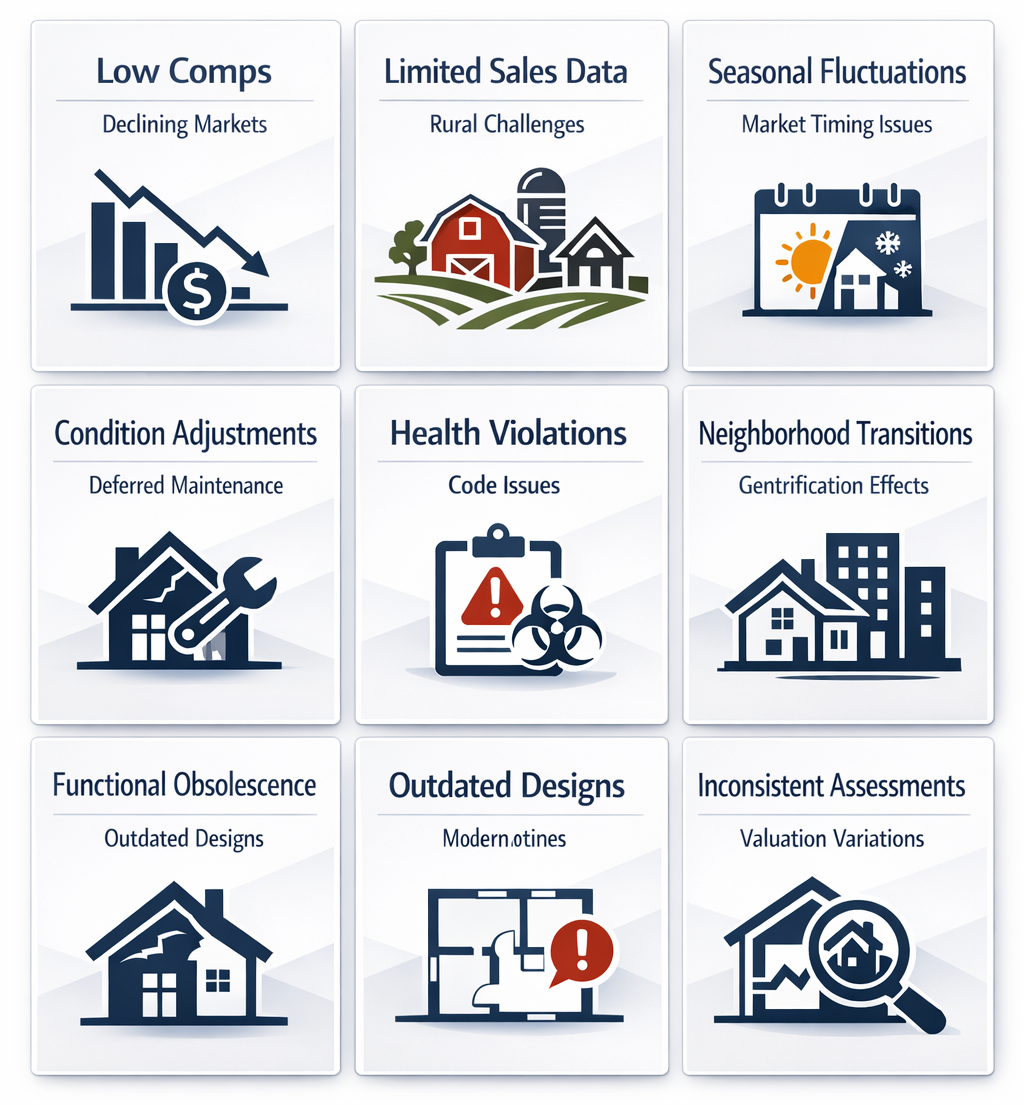
Low comps in declining markets: When recent comparable sales show decreasing values, appraisers might assign lower valuations that don't account for your renovation plans or rental income potential
Limited comparable sales data: Rural or unique markets may lack sufficient recent sales, forcing appraisers to use older or less relevant comparables
Seasonal market fluctuations: Properties appraised during slower market periods could receive conservative valuations that don't reflect peak season demand
Neighborhood transition zones: Properties in areas undergoing gentrification or decline present valuation challenges as appraisers struggle to determine future market direction
Property Condition and Physical Issues
Property condition and physical issues create significant appraisal complications that investors must address proactively. These challenges directly impact how appraisers assess current value and required repairs.
Condition adjustments for deferred maintenance: Properties requiring substantial repairs often receive significant downward adjustments that may exceed actual repair costs
Health and safety violations: Code violations, structural issues, or environmental hazards can result in severe appraisal penalties or deal-killing conditions
Functional obsolescence concerns: Outdated layouts, systems, or designs might receive disproportionate negative adjustments even when rental demand remains strong
Inconsistent condition assessments: Different appraisers may evaluate the same property conditions differently, leading to valuation variations
Income and Rental Property Complications
Income and rental property complications frequently challenge investors seeking financing for cash-flowing properties. These issues arise when appraisers struggle to accurately assess rental income potential.
Rent schedule problems with current leases: Below-market rents, lease expirations, or tenant quality issues can significantly impact income-based valuations
Vacant unit adjustments: Multi-unit properties with vacancies may receive excessive income reductions that don't reflect normal market occupancy rates
Market rent verification challenges: Appraisers might struggle to confirm market rents in areas with limited rental data or unique property types
Cap rate inconsistencies: Varying capitalization rates applied by different appraisers can create significant valuation differences for income-producing properties
Documentation and Process Problems
Documentation and process problems often create unnecessary delays and complications in the appraisal process. These administrative challenges can impact deal timing and investor confidence.
Incomplete property access: Restricted access to units, common areas, or building systems prevents thorough property evaluation and may result in conservative valuations
Missing permits for improvements: Unpermitted renovations or additions might not receive full credit in the appraisal, reducing overall property value
Insufficient comparable research: Limited appraiser research into recent sales or market conditions can result in inaccurate property valuations
Timeline pressure impacts: Rushed appraisal schedules may lead to less thorough evaluations and potentially conservative value estimates
Strategies to Address Low Comparable Sales
Strategies to address low comparable sales require proactive investor involvement and market knowledge. When dealing with low comps, these approaches may help improve appraisal outcomes.
Provide additional market data: Research and present recent sales, pending contracts, or listed properties that support higher valuations in your target area
Highlight unique property features: Document special characteristics, recent improvements, or location advantages that differentiate your property from lower-value comparables
Request appraiser reconsideration: If the initial appraisal seems unreasonable, present compelling evidence for value reconsideration through proper channels
Consider alternative appraisal methods: Discuss income approach or cost approach valuations when sales comparisons don't adequately reflect investment property value
Managing Condition Adjustments and Repair Issues
Managing condition adjustments and repair issues requires careful planning and documentation to minimize negative appraisal impacts. These steps might help protect your property's valuation.
Complete critical repairs before appraisal: Address major health, safety, or functional issues that could trigger significant downward adjustments or financing complications
Document improvement plans: Provide detailed renovation plans, contractor estimates, and timeline information to help appraisers understand post-improvement property value
Obtain professional inspections: Independent inspections can provide objective condition assessments that support reasonable adjustment requests
Negotiate repair allowances: Work with lenders to structure deals that account for necessary repairs while maintaining feasible financing terms
Working with Lenders and Appraisers
Working with lenders and appraisers effectively can help minimize common appraisal issues that plague real estate investors. Building these professional relationships and understanding their perspectives typically leads to smoother transactions and more accurate property valuations that reflect true investment potential.
Successfully navigating appraisal challenges requires preparation, market knowledge, and realistic expectations about property values. While the top 10 appraisal issues investors face can create deal complications, understanding these obstacles helps you develop effective strategies for your investment portfolio. Working with experienced lenders who understand investor needs and maintaining detailed property documentation can improve your appraisal outcomes. Remember that each property and market situation may present unique challenges, so flexibility and professional guidance remain essential for long-term investment success.