Switching Lenders During DSCR Refinance: A Strategic Guide for Real Estate Investors
Real estate investors know that securing the best financing terms can make or break a deal's profitability. When it comes to DSCR loan refinancing, switching lenders during a DSCR refinance might be one of the most powerful tools in your arsenal for optimizing returns. Market conditions shift, better rates emerge, and sometimes your current lender simply can't deliver what they promised.
The ability to change lenders before closing gives savvy investors leverage to negotiate better terms, lower rates, and more favorable conditions. However, this process requires careful timing and strategic planning to avoid costly delays that could derail your investment timeline.
Understanding when and how to execute a lender switch during your DSCR refinance can save thousands of dollars over the life of your loan while ensuring your investment property cash flow remains optimized.
What to Do When Switching DSCR Lenders
What to do when switching DSCR lenders requires a methodical approach that protects your investment timeline while maximizing your negotiating power. Smart investors understand that preparation and timing are everything when it comes to securing better loan terms.
Act early in the refinance process to give yourself maximum flexibility and negotiating room with potential new lenders
Document all communication with your current lender regarding delays, rate changes, or service issues that justify your switch
Prepare a complete loan package including property financials, rent rolls, and DSCR calculations to expedite approval with new lenders
Maintain open lines of communication with multiple lenders simultaneously to compare terms and leverage competitive offers
Secure written rate locks from new lenders before formally notifying your current lender of the switch
Critical Mistakes to Avoid During Lender Changes
Critical mistakes to avoid during lender changes can protect you from costly delays and preserve your investment opportunity. These missteps often turn a strategic move into a financial disaster that impacts your entire portfolio.
Don't wait until the last minute to explore alternative lenders, as this eliminates your negotiating power and creates unnecessary pressure
Don't assume all DSCR lenders are the same in their underwriting requirements, as qualification criteria can vary significantly between institutions
Don't neglect to review closing cost differences between lenders, as these can offset any rate savings you might achieve
Don't switch lenders without understanding how the change might affect your closing timeline and related investment commitments
Don't burn bridges with your current lender until you have a firm commitment from the new lender, maintaining a backup option
Essential Steps for Rate Shopping Success
Essential steps for rate shopping success help investors navigate the competitive DSCR lending landscape effectively. Rate shopping during a DSCR refinance requires strategic timing and thorough comparison of loan terms beyond just interest rates.
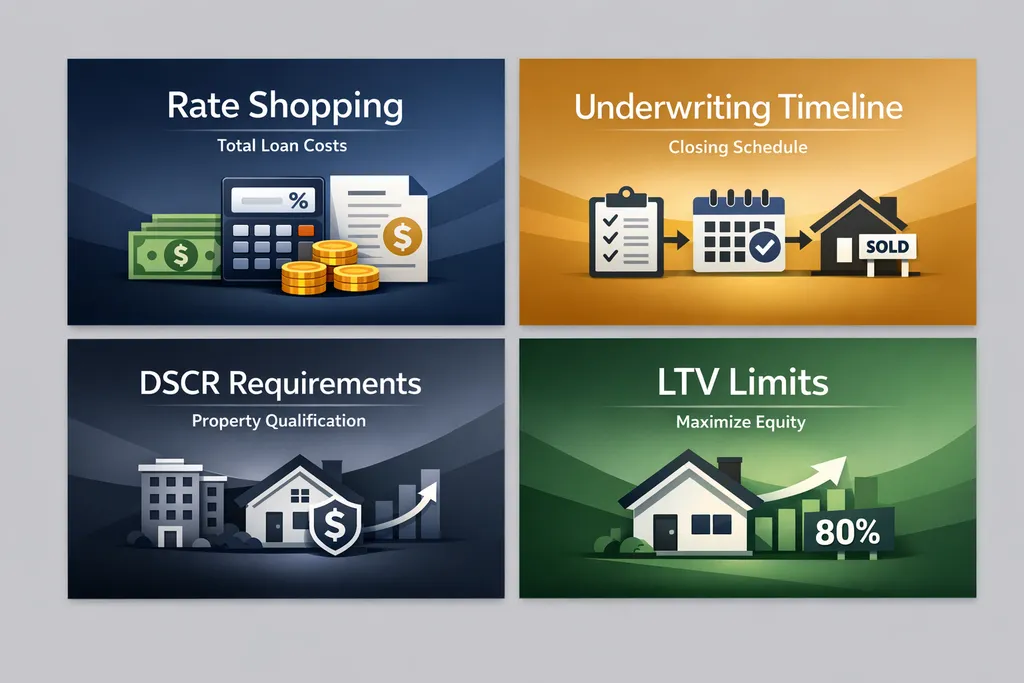
Compare total loan costs including origination fees, processing charges, and closing expenses to determine the true cost difference between lenders
Evaluate each lender's underwriting timeline and track record for closing DSCR loans on schedule to avoid investment delays
Assess the debt service coverage ratio requirements of different lenders to ensure your property qualifies under their specific criteria
Review loan-to-value limits and cash-out options to maximize your refinance benefits and potential equity access
Negotiate rate locks and extension options to protect against market volatility while your application processes through underwriting
Timing Your Approval Transfer Strategically
Timing your approval transfer strategically can mean the difference between a smooth transition and a refinance disaster. Market conditions and Federal Reserve rate changes create windows of opportunity that smart investors learn to recognize and exploit.
Monitor Federal Reserve rate decisions and their impact on DSCR loan pricing since these loans often respond differently than conventional mortgages to rate changes
Initiate lender comparisons within the first two weeks of your original application to maintain maximum flexibility throughout the process
Coordinate your switch timing with property cash flow cycles to ensure any delays don't impact rental income or property management obligations
Plan for a 30 to 45-day buffer in your refinance timeline to accommodate potential delays from switching lenders without affecting other investments
Understanding Process Impact on Investment Returns
Understanding process impact on investment returns helps investors weigh the costs and benefits of switching lenders during their DSCR refinance. The decision should always align with your broader investment strategy and cash flow objectives.
Calculate the break-even point for switching lenders by comparing rate savings over your expected holding period against additional costs and delays
Assess how refinance delays might affect other planned acquisitions or investment opportunities that depend on freed-up capital from the refinance
Evaluate the impact on your debt service coverage ratio and how improved loan terms could enhance your property's cash flow performance
Consider the relationship value with your current lender and how switching might affect future financing opportunities for portfolio expansion
Switching lenders during a DSCR refinance represents both an opportunity and a risk that requires careful evaluation. The key lies in acting early, maintaining multiple options, and understanding how the change affects your overall investment strategy.
Smart investors recognize that the right to switch lenders exists throughout most of the refinance process, but the practical ability to do so diminishes as closing approaches. By preparing thoroughly, timing strategically, and avoiding common pitfalls, you can leverage this flexibility to secure better terms and optimize your investment property's financial performance.
Remember that successful real estate investing often comes down to making informed decisions quickly while maintaining contingency plans. When market conditions shift or better opportunities emerge, having the knowledge and preparation to switch lenders effectively can translate into thousands of dollars in savings over the life of your loan.